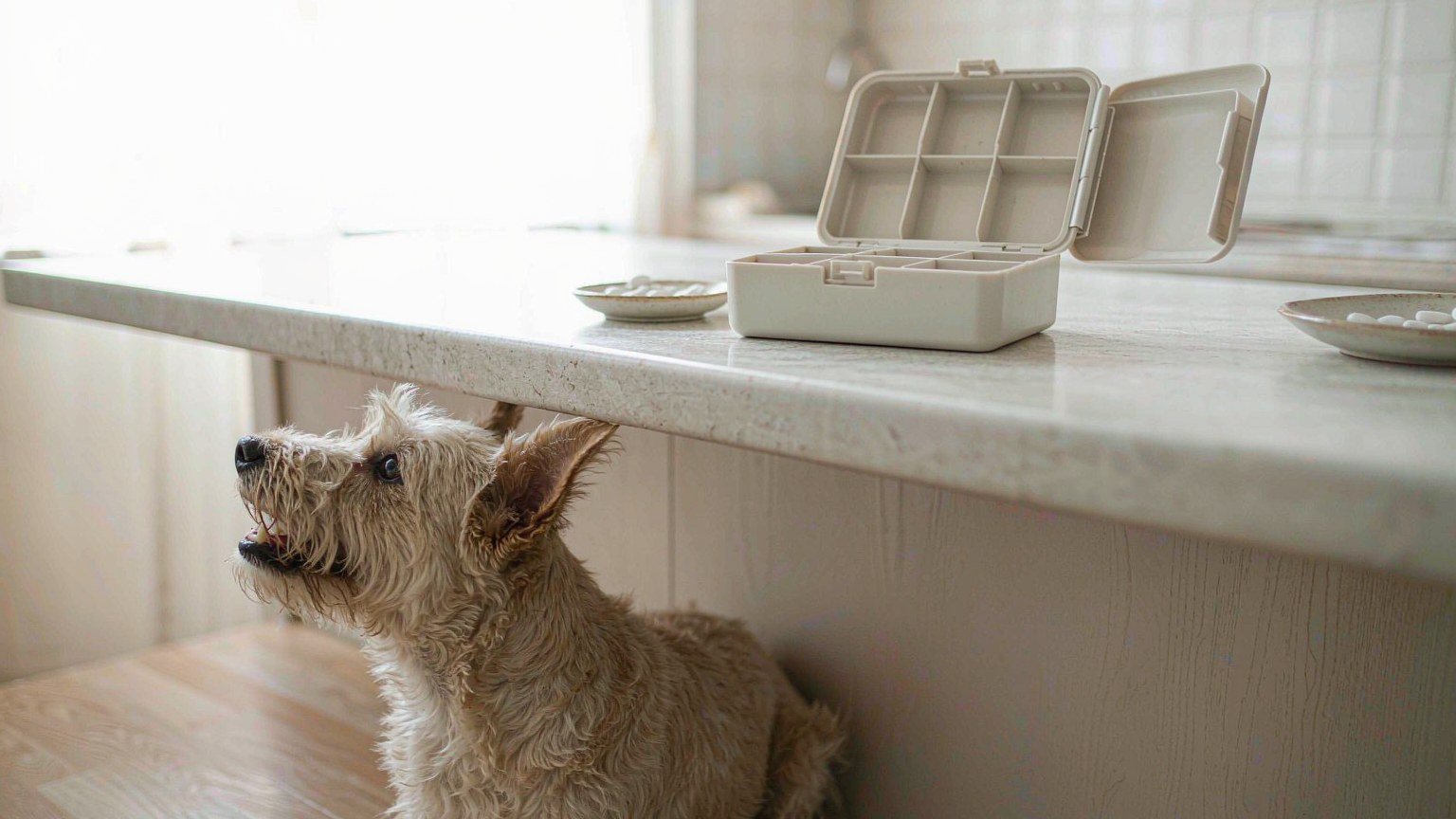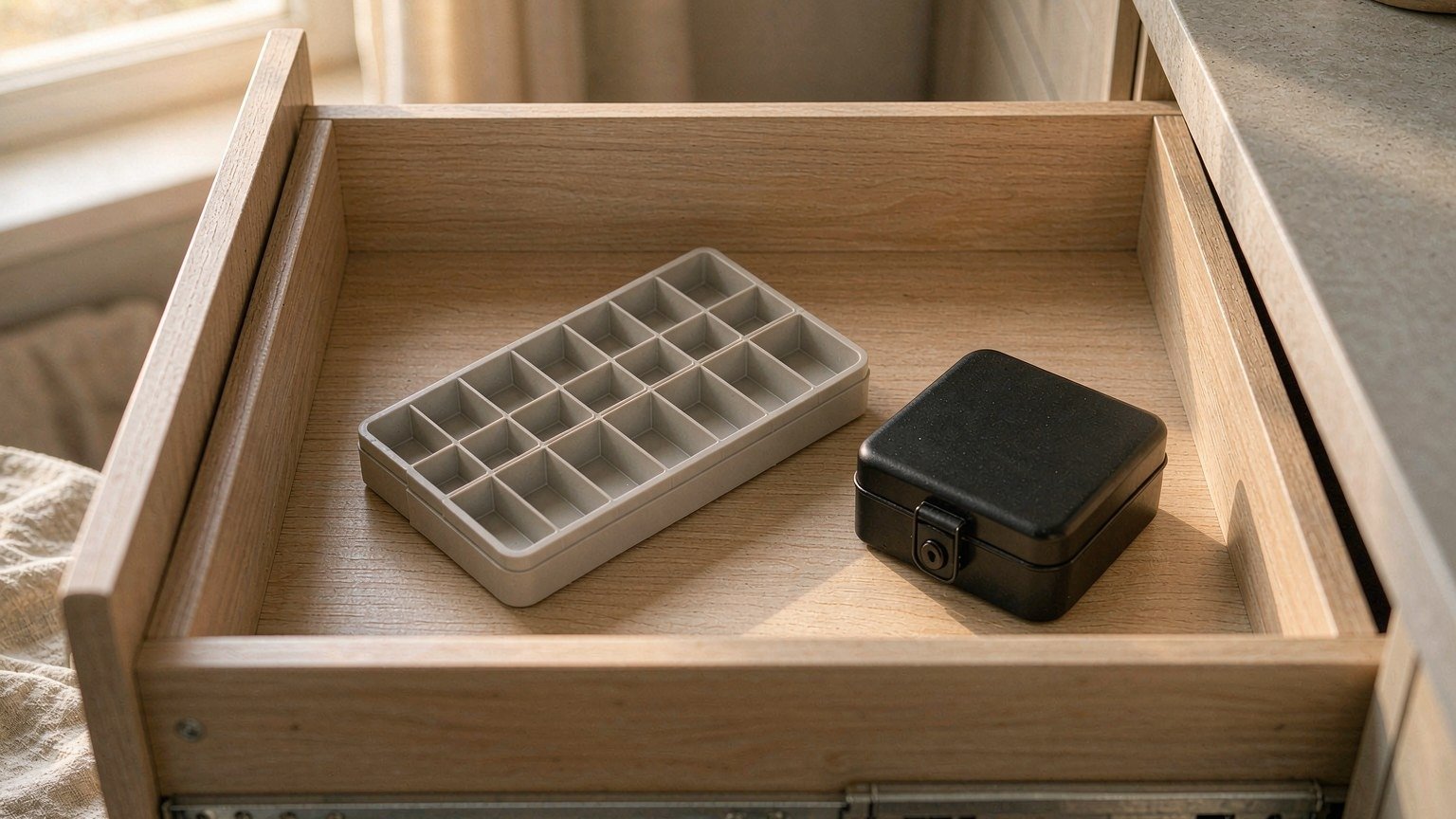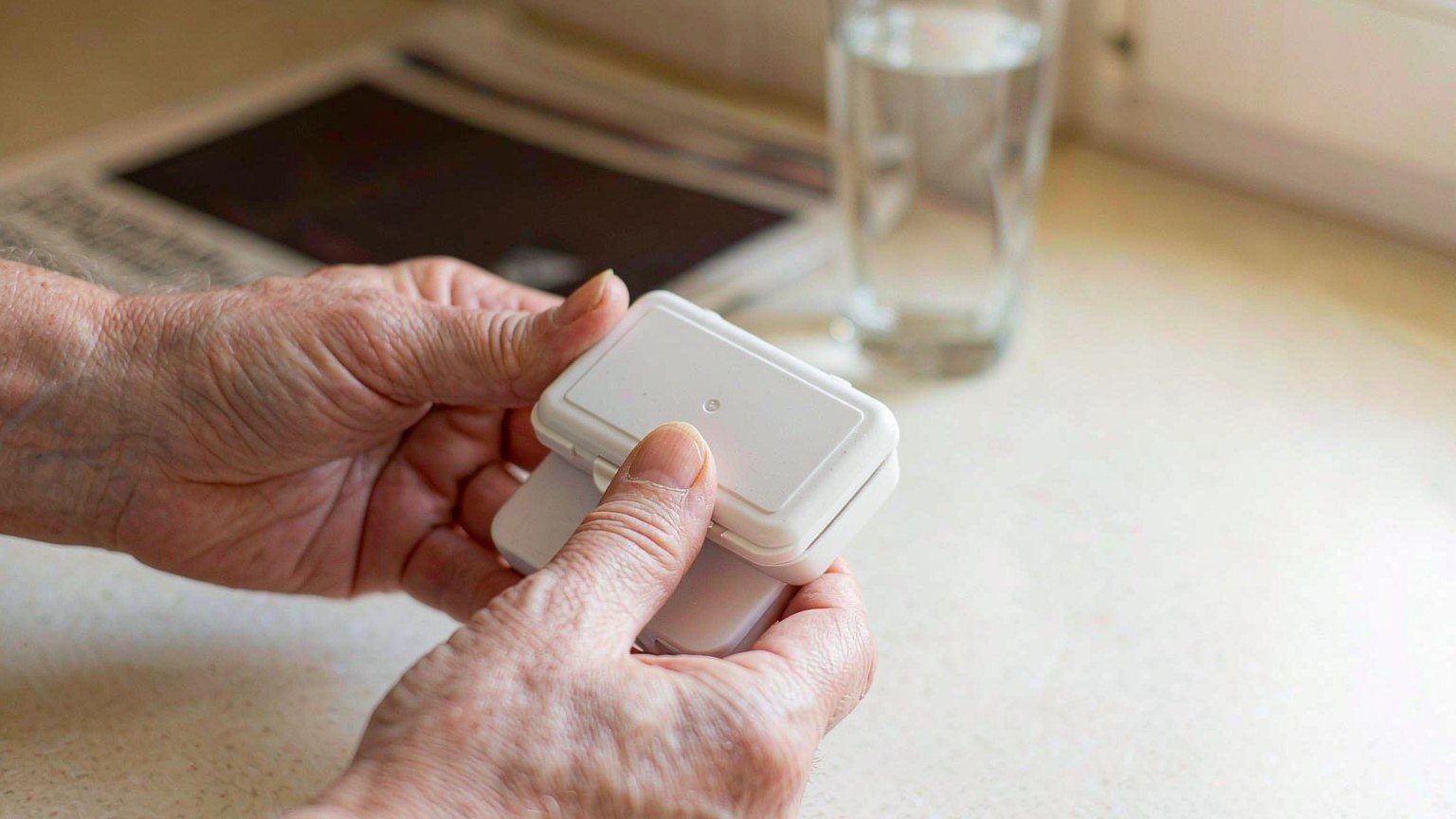






There is a specific kind of quiet embarrassment that shows up when you take medication in front of other people. You tilt the bottle away. You close the pill box a beat too fast. You say “just a vitamin” even when it isn’t. If any of that sounds familiar, you are not overthinking it — and you are definitely not alone.
For something as ordinary as a daily dose, the shame around it runs deep. But the story we tell ourselves — that needing medication means something is wrong with us — is a story worth rewriting. Taking your meds is one of the most basic ways you take care of yourself. This is about how to make that shift, and why the box you keep your pills in either helps or quietly works against it.
The little voice that says “don’t let anyone see”
Most of us learn early that mental health medication, in particular, is something to keep quiet. A 2024 qualitative review of barriers to psychiatric medication adherence found stigma sitting right alongside side effects and forgetfulness as a top reason people struggle to stay on treatment (PubMed, 40495263). Not because the medicine doesn’t work — because the judgement, real or imagined, feels heavier than the pill.
One patient advocate put it more plainly than any study. Writing about why she designed a stigma-forward pill box, she said the years of hiding her organizer “made things worse” — every time she tucked it out of sight, she was reinforcing the idea that her medication was something shameful (Schizophrenic.NYC, “Pill Organizer Stigma”). The box wasn’t the problem. The hiding was.
That matters, because hiding has a cost you can measure. In a study of 332 psychiatric outpatients, people with lower self-stigma stuck with their treatment better, and the ones who had voluntarily stopped their medication in the past scored significantly higher on self-stigma (PMC4966500). Shame isn’t just a feeling. It changes whether the medicine actually makes it into you.
Taking your meds is maintenance, not a weakness
Reframe it the way you already reframe everything else you do for your body. You brush your teeth without calling it vanity. You sleep without apologizing for it. You take the supplement that keeps your joints from aching and call it “just being sensible.” Medication is the same category — routine maintenance for a system that needs it.
The brands built for exactly this audience say it out loud. Stableish, maker of the “Hot Girls Take Their Meds” organizer, states plainly that “taking your meds consistently is one of the most powerful forms of self care” (Stableish product page). The message isn’t “look at my illness.” It’s “I show up for myself.” That shift — from patient to person with a routine — is the whole game.
And it lines up with the data. Across multiple studies, internalized stigma tracks directly with lower adherence (PMC11558759, narrative review). The lighter you hold the shame, the more likely the dose actually happens. Self-care language isn’t soft framing. It’s adherence strategy.
Why a plain clinical box makes the shame louder
Here is the part nobody warns you about: the object you store your pills in can either calm that voice or feed it. A flat white plastic box with tiny printed drug names reads, to your own eye, like evidence that you are “a patient.” Every time you open it, it announces the clinical version of your life.
None of this is about the box being loud in decibels. (If your real problem is that a hard plastic organizer rattles and gives you away acoustically, that’s a different fix — our guide to quiet pill boxes covers that.) This is about the visual: a container that looks like medical supply reinforces the exact message you’re trying to outgrow.
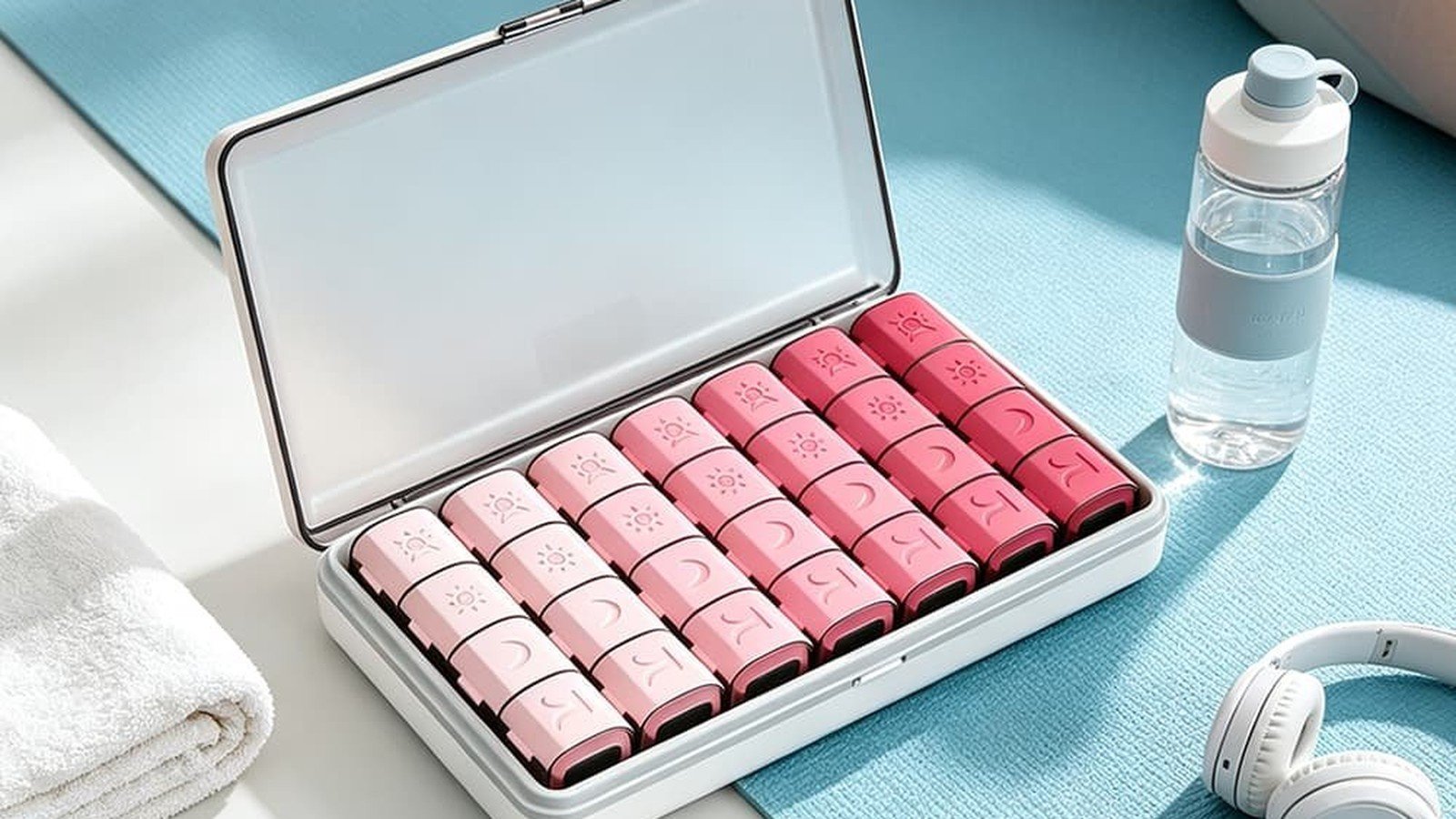
What you want instead is a box that looks like something you’d actually choose — something with color, a shape, a bit of personality. Not a warning label.
A pill box that starts the conversation instead of hiding it
The shift from “hide it” to “this is mine” is easier when the object itself gives you permission. That’s the entire logic behind shame-free medication accessories — and it’s not a niche. Stableish’s bold organizers and Schizophrenic.NYC’s stigma-forward cases both sell because people are tired of apologizing for their own care (Schizophrenic.NYC). The product isn’t clever engineering. It’s a permission slip.
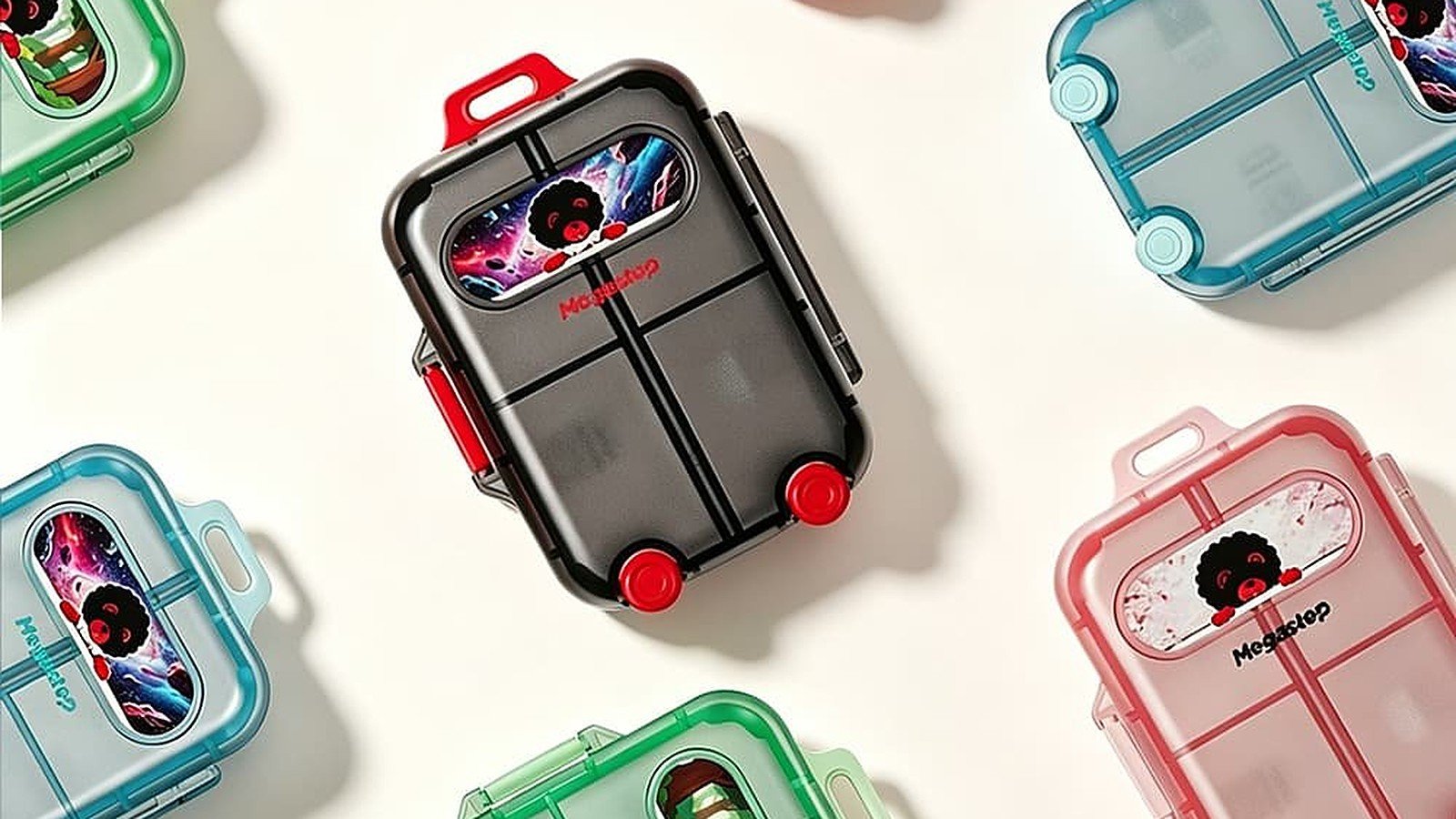
For us, that permission slip has a face. Our Emotion line is built around “Xiao Hong” — a red lion who is just a little brave, a little soft, and always showing up. He is the literal shape of our brand promise, “Always There.” A pill box with him on it doesn’t say “I’m sick.” It says “someone made something caring for the part of my day that’s hard.” That’s a very different thing to leave on the nightstand.
When the container reflects your actual self instead of a diagnosis, carrying it stops being a confession and becomes a small, daily “I’ve got this.”
Small daily rituals that turn a dose into a moment of care
The shame thrives on speed — the furtive swallow, the closed lid, the move on. The antidote is almost annoyingly simple: slow the moment down enough to make it a ritual.
That can be a box with a kind word printed under each day’s lid. A color that makes you breathe out instead of in. A fixed spot on the counter next to the thing you already do, so the dose rides along with your morning instead of interrupting it. None of this is decoration. It’s the difference between “ugh, again” and “ok, I’m taking care of me.”
People underestimate how much the small stuff carries the hard days. On the days the medication feels like a weight, a box that greets you warmly is the difference between skipping it and showing up anyway.
Always There — on the days it feels heavier than others
We won’t pretend every day is light. Some mornings the pill is a reminder of something you’d rather not be managing. That’s real, and the goal was never to paste a smile over it.
The point of “Always There” is smaller and sturdier than positivity: the dose is there, the box is there, the little lion is there, whether the day is easy or not. You don’t have to feel great about taking your meds to take them. You just have to be able to reach for something that doesn’t make you feel worse for needing to.
That’s the whole case for an emotion-led pill box. Not that it cures anything. But that it removes one more small reason to hide — and gives you back one more small reason to keep showing up for yourself.
Finding the right box for your routine
If you’re rethinking your setup, start with what actually fits your life. If part of your routine involves supplements, check first which ones belong in a box at all — some are better left in the original bottle (our guide to what shouldn’t go in a pill box).
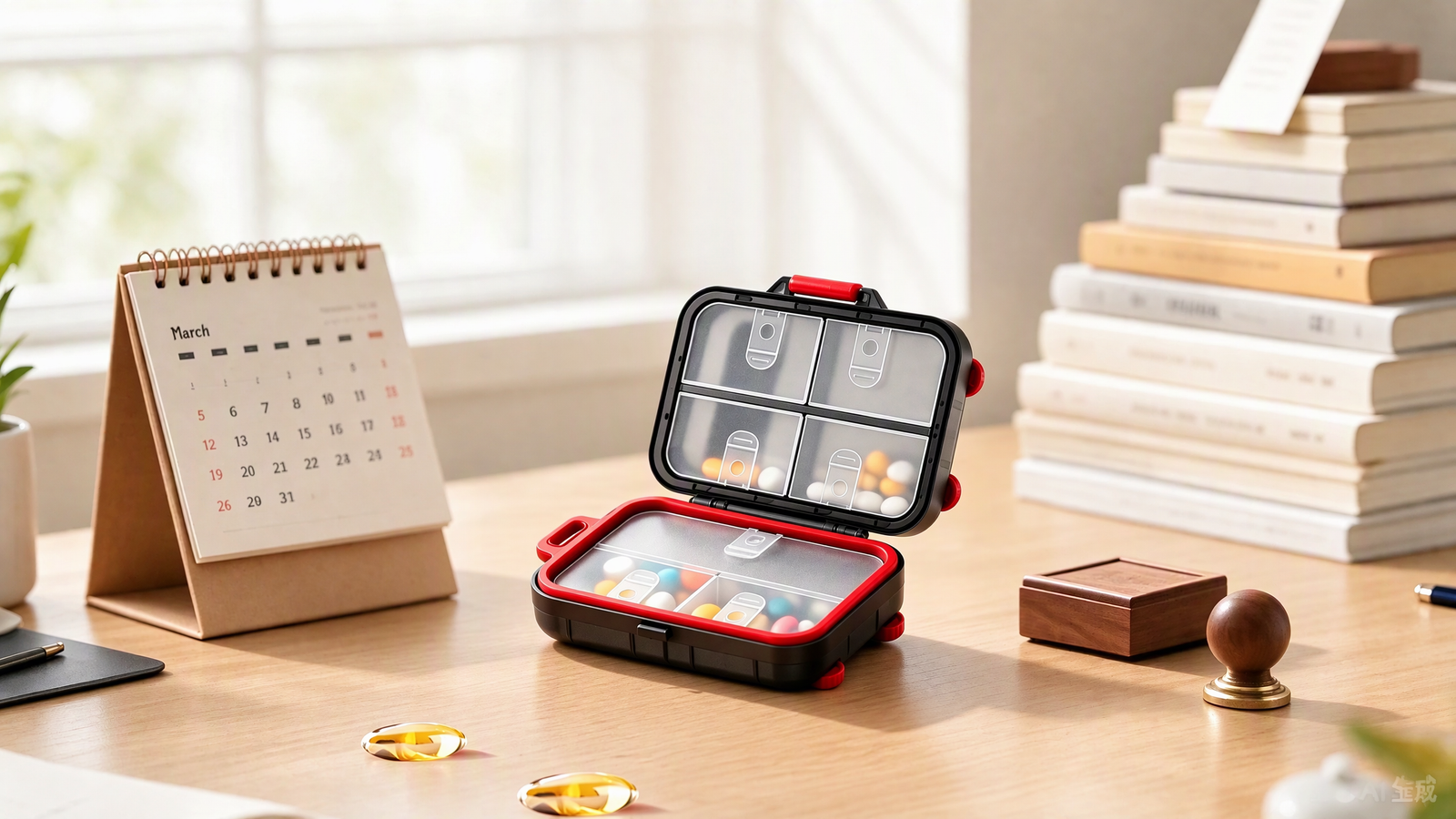
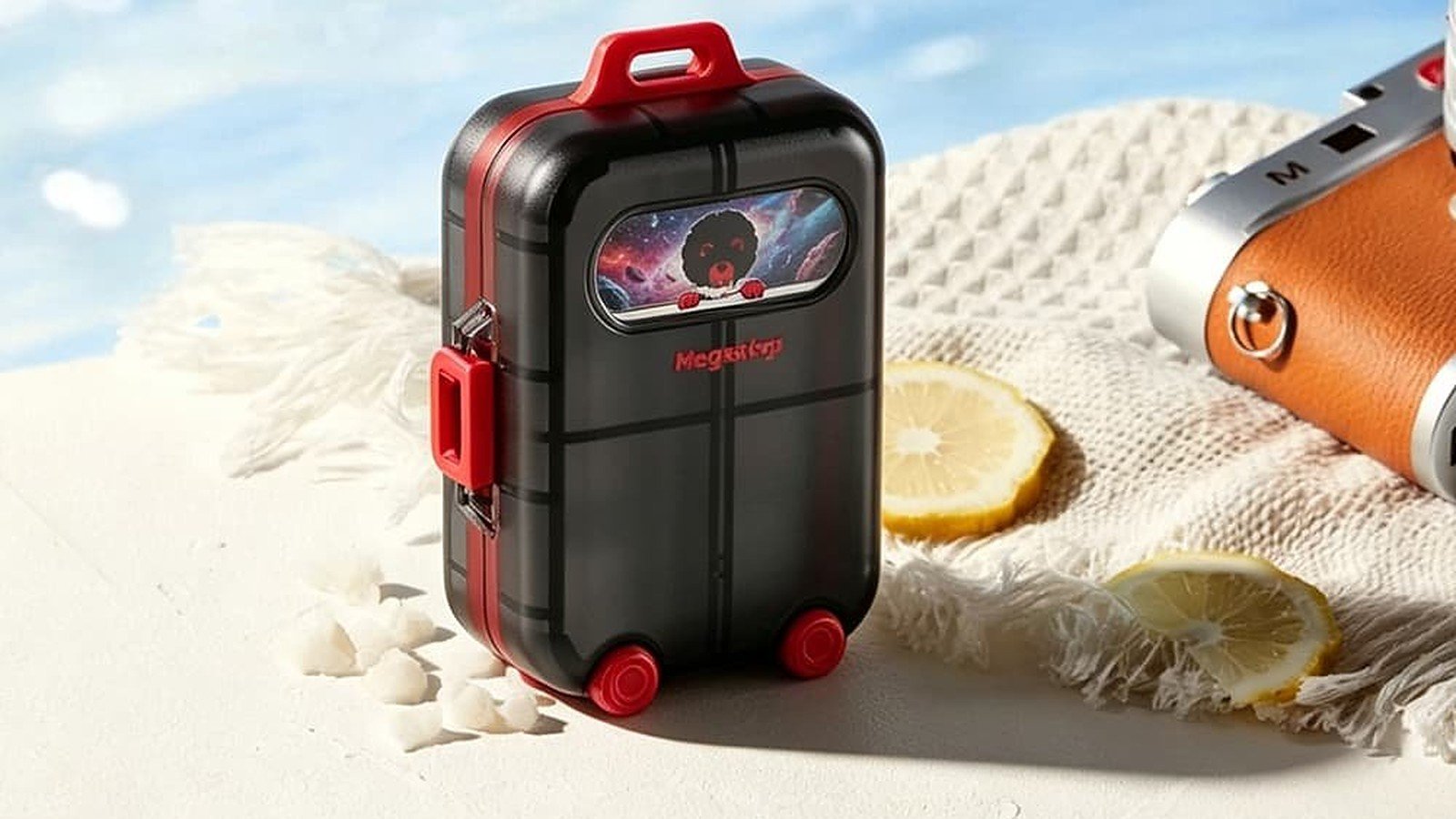
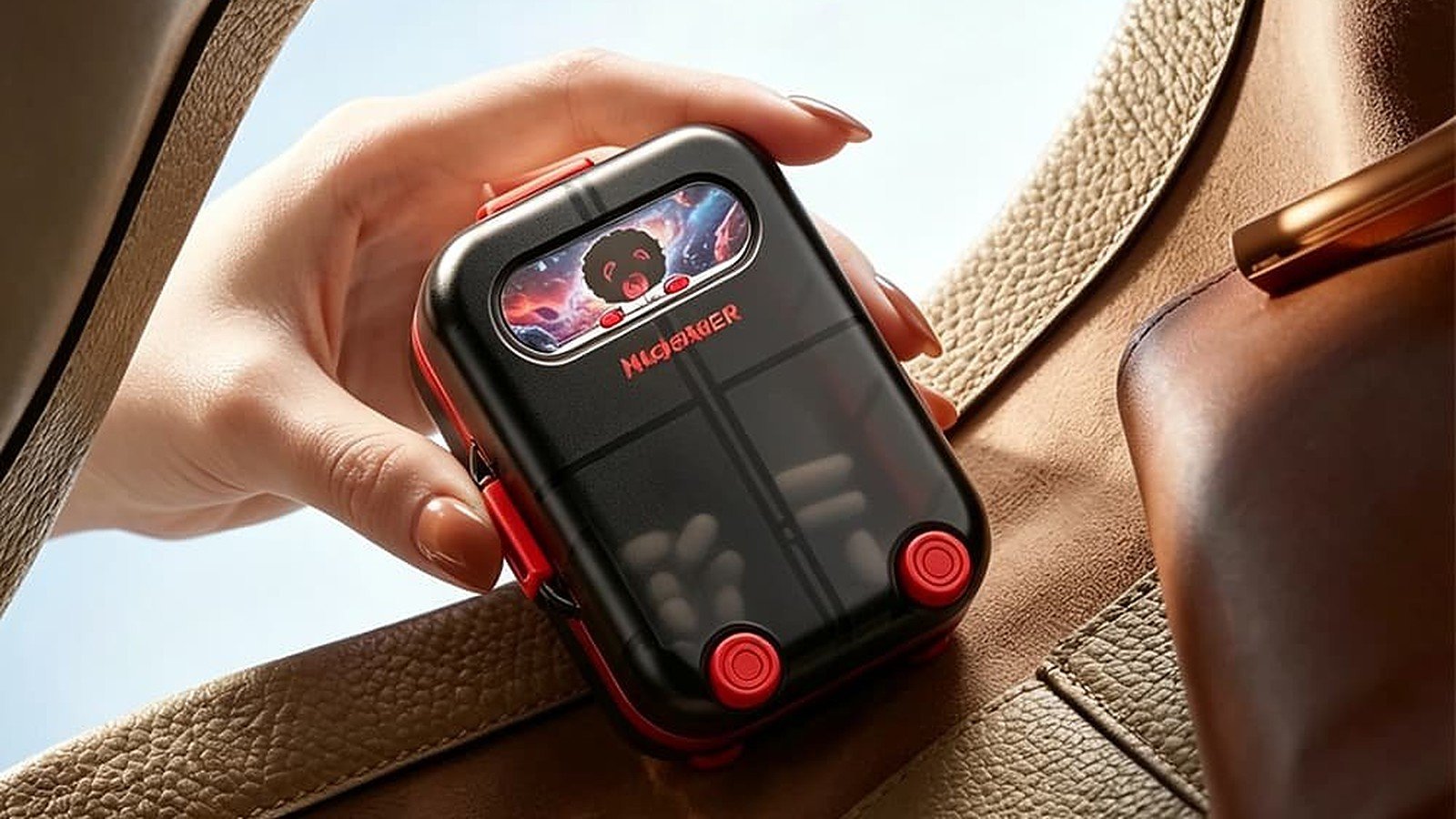
And if the thing that’s been stopping you isn’t the medicine but the object — the plain white case that makes you wince — that’s the cheapest problem to fix. Our Emotion suitcase pill box is built for exactly this: a 7-compartment case that folds open like a tiny suitcase, cheerful enough to leave on the counter instead of hiding in a drawer. It’s one of the boxes in our Emotion line — the same line where Xiao Hong, our red lion, is there on purpose, even on the days that aren’t good ones. The point isn’t that a cute box cures anything. It’s that reaching for something that looks like care, not a confession, is one less reason to skip the dose.
Sources
- Issac A, et al. Barriers and Facilitators to Medication Adherence Among Individuals With Mental Disorders: A Qualitative Systematic Review and Evidence Synthesis. PubMed: https://pubmed.ncbi.nlm.nih.gov/40495263/
- Connection between self-stigma, adherence to treatment, and discontinuation of medication. Patient Preference and Adherence, 2016: https://pmc.ncbi.nlm.nih.gov/articles/PMC4966500/
- Types of Medication Non-adherence & Approaches to Enhance Medication Adherence in Mental Health Disorders: A Narrative Review. PubMed Central: https://pmc.ncbi.nlm.nih.gov/articles/PMC11558759/
- Schizophrenic.NYC, Pill Organizer Stigma: How to Use One Without Shame: https://www.schizophrenic.nyc/pill-organizer-stigma/
- Stableish, Hot Girls Take Their Meds — 7-Day AM/PM Pill Organizer product page: https://stableish.com/products/hot-girls-take-their-meds-7-day-ampm
Not medical advice. This article is about the everyday experience of taking medication and the objects that support it. It does not replace guidance from your prescriber. Never start, stop, or change the dose of any medication without talking to your doctor or pharmacist first.