





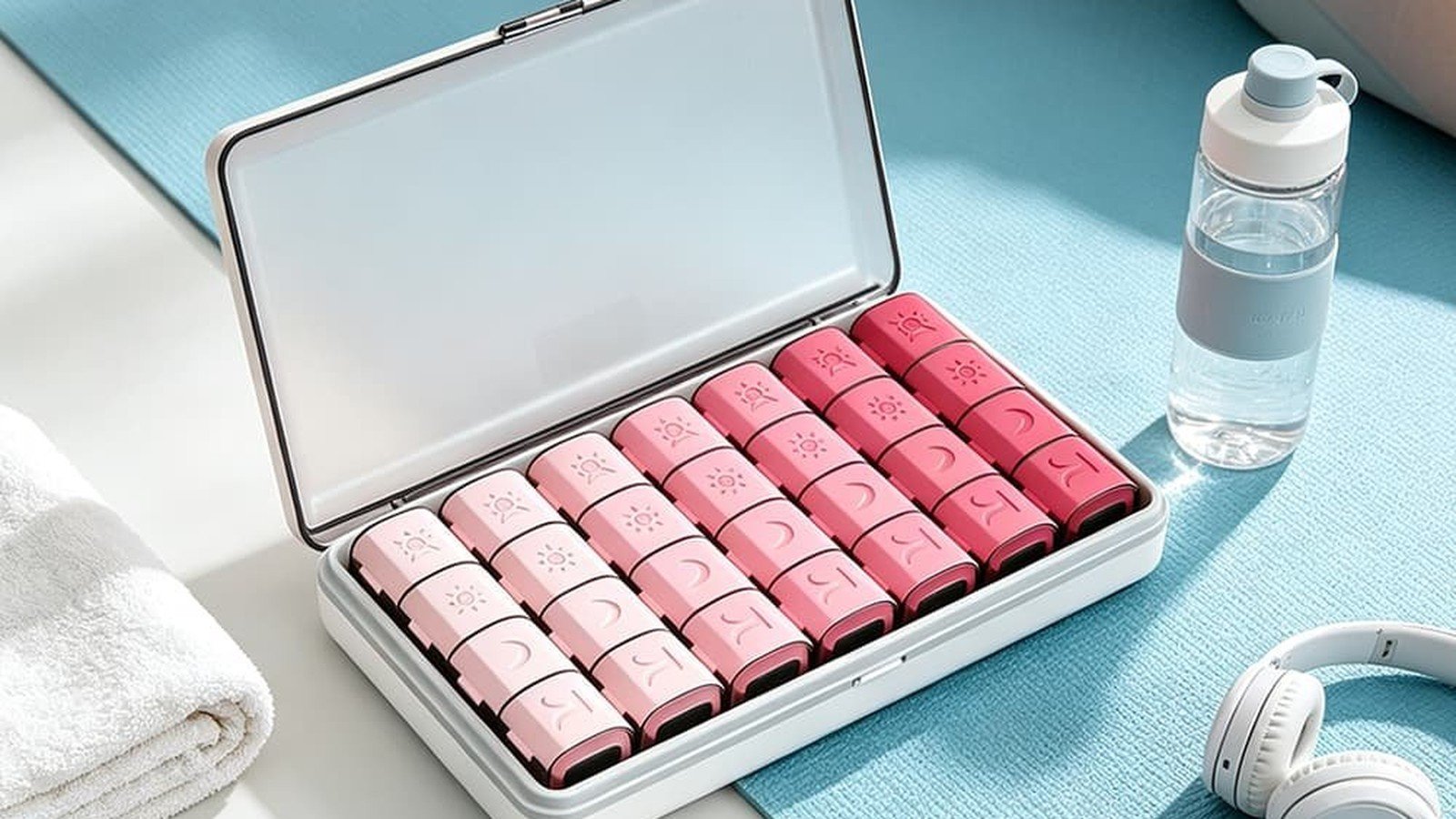
Most of us think of a pill organizer as a backup for a failing memory. You use one when you can’t trust yourself to remember a dose. A new study suggests there might be a better reason to keep one around — and it has nothing to do with forgetting.
In October 2026, Real Simple reported on research published in the Journal of Behavioral Medicine (Springer; DOI 10.1007/s10865-026-00646-6) looking at something deceptively simple: whether the regularity of a person’s daily schedule shows up in their health. The researchers found that older adults who kept steady times for waking, eating, socializing, and sleeping tended to report less pain, fewer low-mood symptoms, and a lower BMI. The twist: the benefit showed up whether or not the person slept well. It wasn’t about willpower. It was about rhythm.
And a pill box, it turns out, might be one of the cheapest rhythm-makers most people already own.
What the study actually found (and what it didn’t)
The study was cross-sectional and small — the kind of work that points to a pattern, not proof. It looked at older adults and measured how regular their daily behaviors were: consistent times for getting up, meals, time with other people, and sleep. The more regular those rhythms, the less pain and fewer depressive symptoms people reported, and the lower their BMI tended to be.
Here is the part worth repeating: the link held even for people who had insomnia. In other words, it wasn’t good sleep doing the work — it was the predictability of the day itself.
But the researchers were careful, and so should we be. One of the experts quoted in the Real Simple piece put it plainly: the study is small and cross-sectional, so “we can’t say the routine caused these improvements.” The finding is an association, not a cure. A pill box does not treat pain, low mood, or weight. What the research does is reframe routine as something with real stakes — not a productivity hack, but a quiet contributor to how a body feels.
Sources: Real Simple, “Why Doing the Same Things Every Day Might Be Better for Your Health Than You Think” (Oct 18, 2026) · Journal of Behavioral Medicine, Springer (DOI 10.1007/s10865-026-00646-6)
Why a pill box is a rhythm-maker, not a discipline tool
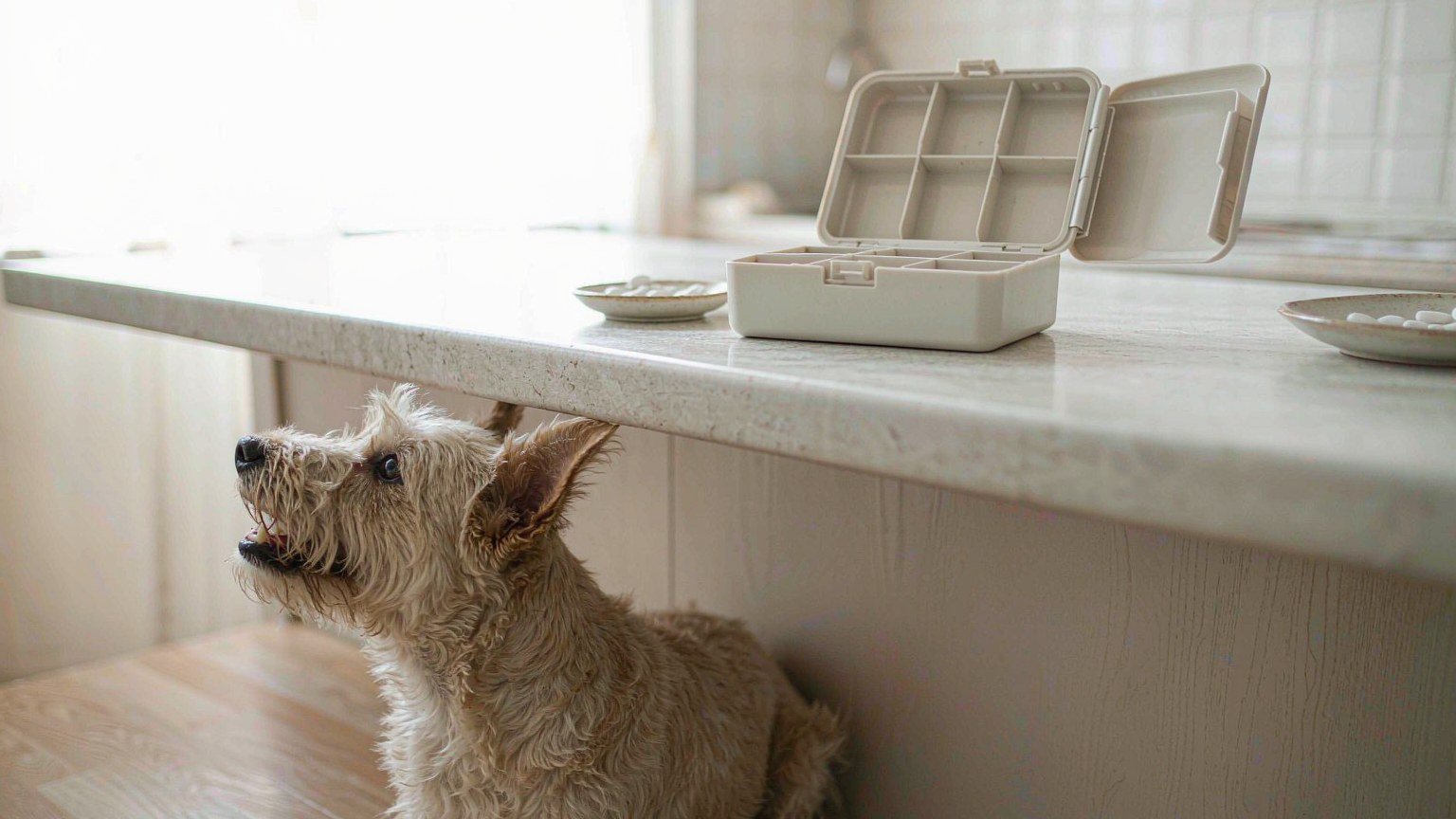
The usual story goes: “I don’t need one, I remember my meds.” That framing treats an organizer as a crutch. But think about what a weekly pill box actually does. It turns “take my medication” into “the 8 a.m. slot, every day, in the same spot on the counter.” The box itself becomes a visual cue — an anchor — that tells your day where it is.
Therapists quoted in the same coverage call predictable daily events “anchors” that structure a life and free up mental energy for things that feel meaningful. A pill organizer is, quite literally, a physical anchor for one small, repeatable act. You don’t need it because your memory is broken. You might want it because a steady day feels better than a scattered one.

The “I remember fine” problem
If you’ve ever thought a pill box wasn’t for you because your memory is sharp, this study offers a different reason to reconsider. The health signal wasn’t about remembering — it was about regularity. People who take their dose at wildly different times depending on the day are missing the rhythm, not the reminder.
A simple organizer won’t make you more disciplined. It will make your routine visible. When every morning looks the same — same slot, same place, same small motion — the day has a backbone. That steadiness is the point, not the memory aid. (If the shame of “needing” a box has ever stopped you, this piece on taking medication as self-care might hit closer to home.)
How to build a daily medication rhythm
You don’t need a perfect schedule. The experts in the coverage are clear: don’t plan every second. Just pick a few activities that reliably happen at the same general time, and protect them. For medication, that means three small moves:
- Anchor it to a habit you already keep. Breakfast, morning coffee, brushing your teeth at night — attach the dose to something that already has a fixed place in your day.
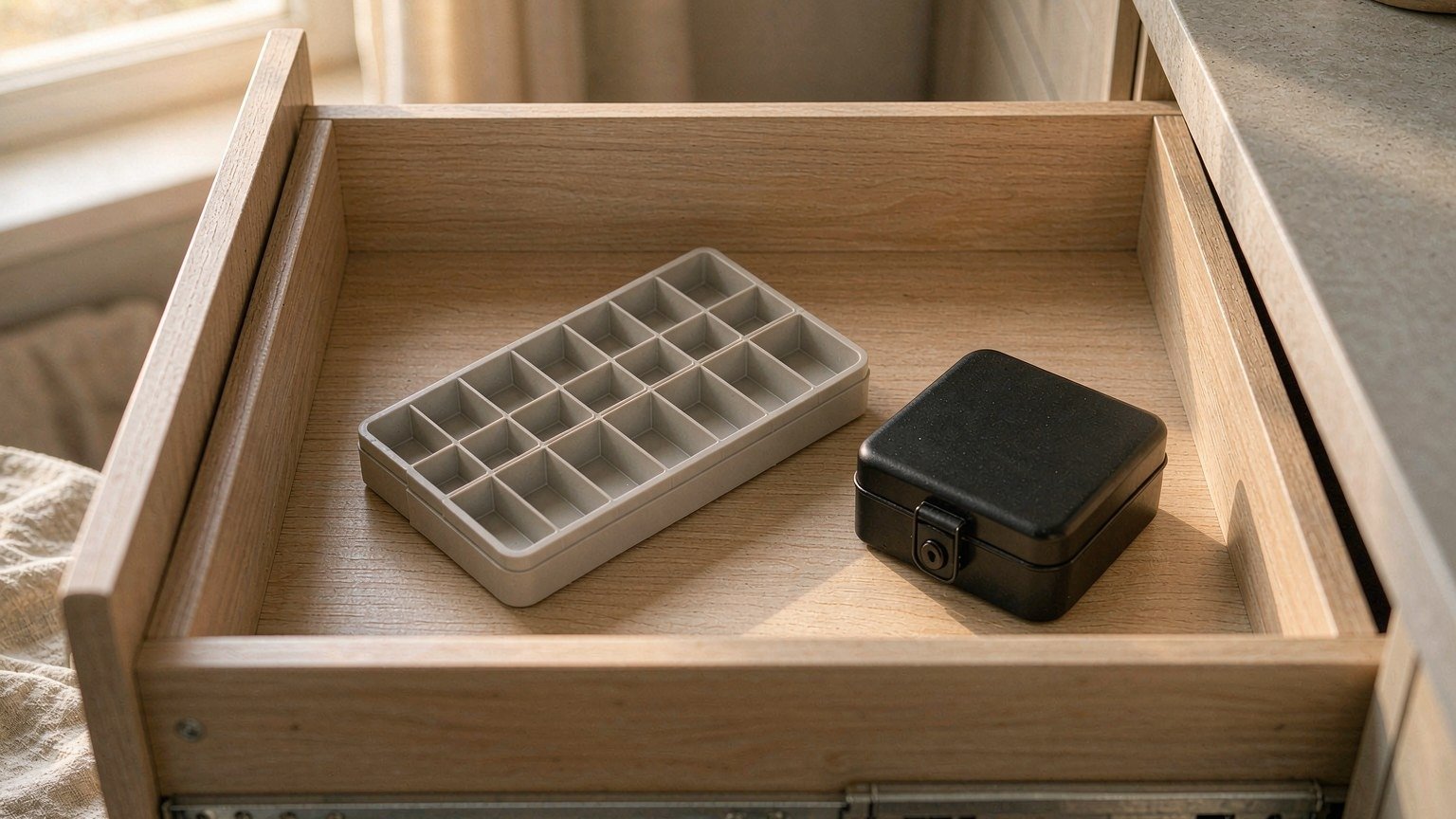
- Use the same spot. One container, one corner of the counter, every time. The visual repeat is the cue.
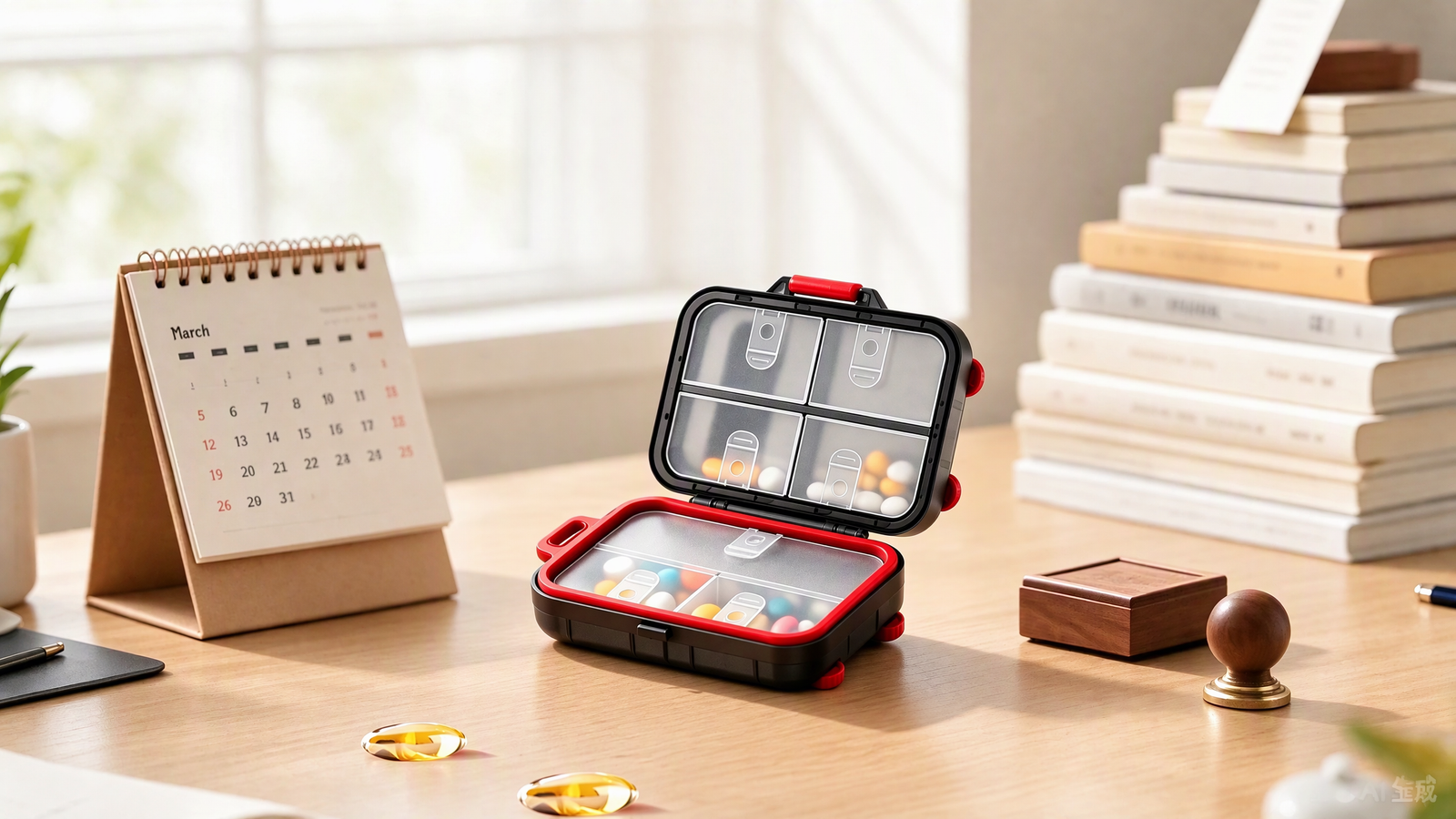
- Make the week one object. A seven-day organizer turns seven separate decisions into a single weekly rhythm you can see at a glance — and notice when a slot is still full.
If you’re setting this up for someone else, the same logic applies — start with one master list and build the rhythm around what they already do. This guide to a weekly pill system walks through the setup step by step.
The gift that gives steadier days
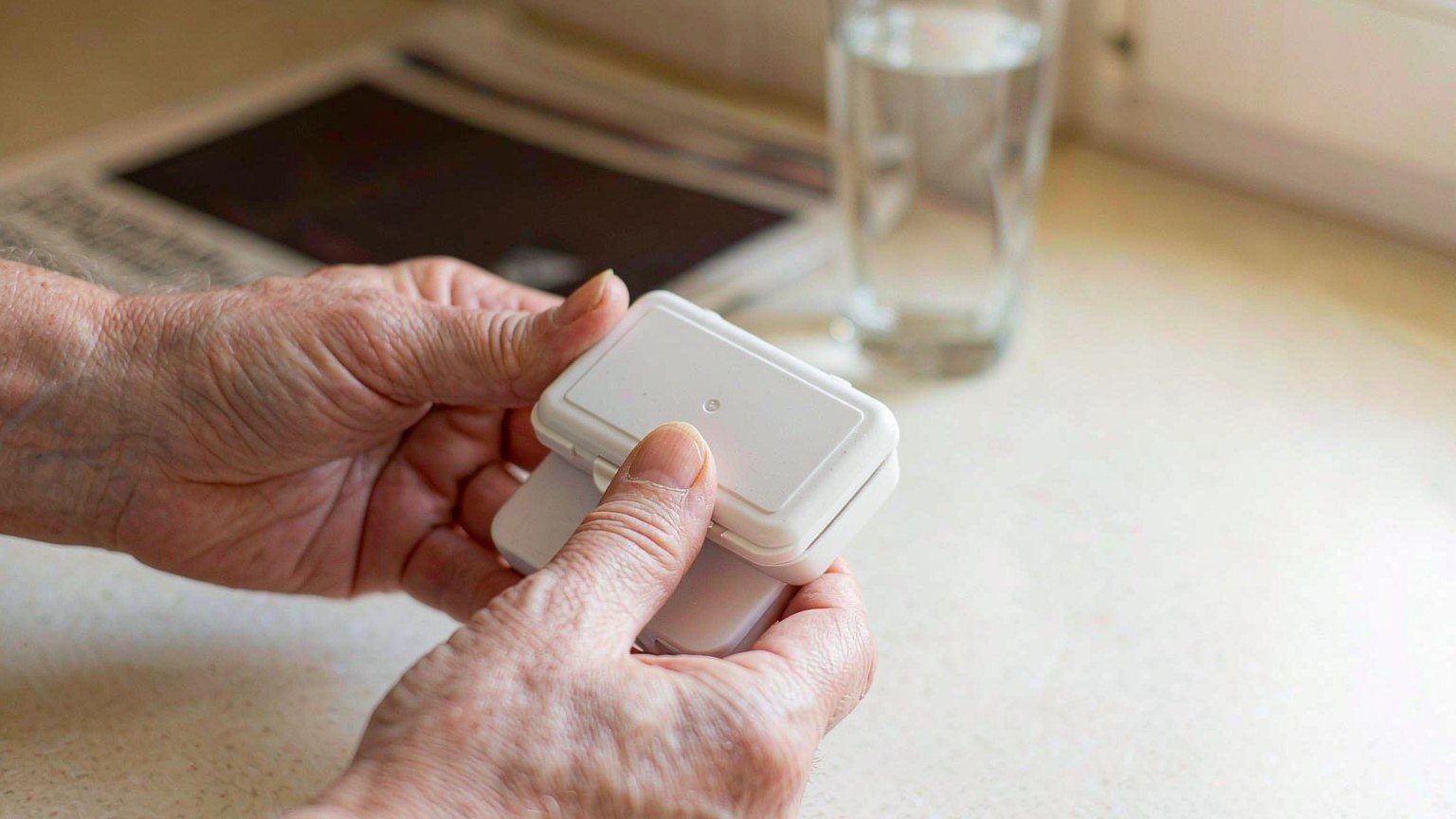
There’s a quieter version of this worth naming, especially around the holidays. When you give an older parent or a friend a pill organizer, you are not handing them a medical device. You are helping them keep their days steady — same time, same place, same small act of care. The Journal of Behavioral Medicine finding is a reminder that steadiness itself is a kind of help.
For someone living alone, or adjusting to a new phase of life after work or caregiving ends, those anchors matter more, not less. A thoughtfully chosen box — something that sits nicely on a shelf and doesn’t shout “medical” — can be a small, dignified way to say you’re paying attention. Here’s how that looks from a distance, when you can’t be there every day.
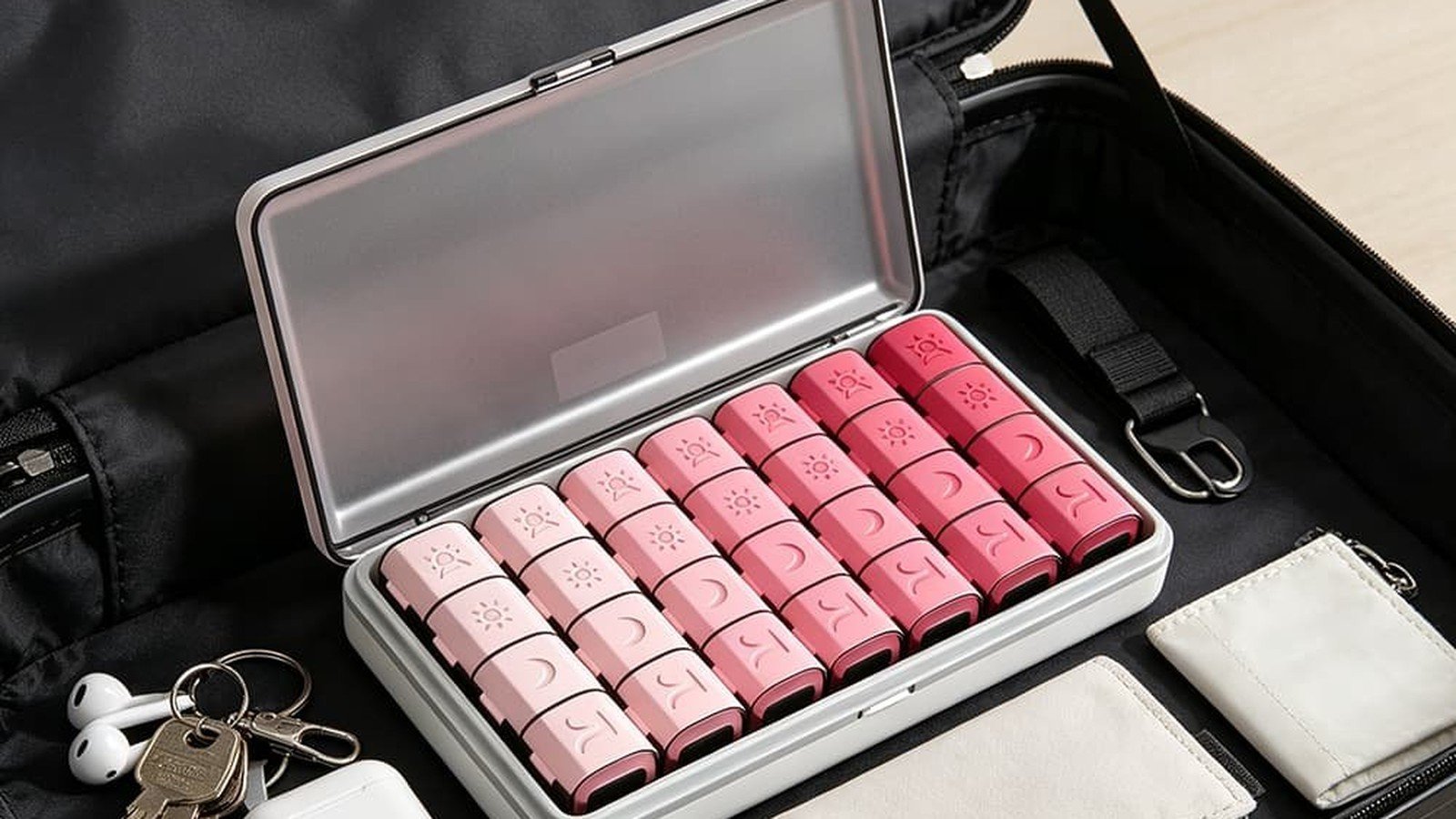
Always There — the small, steady things
Our brand line is “Always There.” It doesn’t mean grand gestures. Most of the time, being there looks like the unglamorous repeat: the same dose, the same time, the same quiet check that today looked like yesterday in the ways that matter. A pill box won’t fix a hard month. But it can give a day a shape — and shape, it turns out, is something the body notices.
If you’re looking for a weekly organizer that makes that rhythm easy to see and keep, our Organizer line is built for exactly that — clearly divided days, a place for every dose, and a form that sits comfortably in a real home rather than a clinic. For a gift that says “I want your days steady,” the Emotion line trades the clinical look for something warmer, because care shouldn’t feel like a hospital.
This article is for general information only and is not medical advice. It does not diagnose, treat, or cure any condition, and it should not be used to make decisions about your health or medication. Always follow your clinician’s guidance and the instructions that come with your prescriptions.
Sources
- Real Simple — “Why Doing the Same Things Every Day Might Be Better for Your Health Than You Think” (published Oct 18, 2026): realsimple.com/why-routines-are-good-for-your-health-12175771
- Journal of Behavioral Medicine (Springer), DOI 10.1007/s10865-026-00646-6