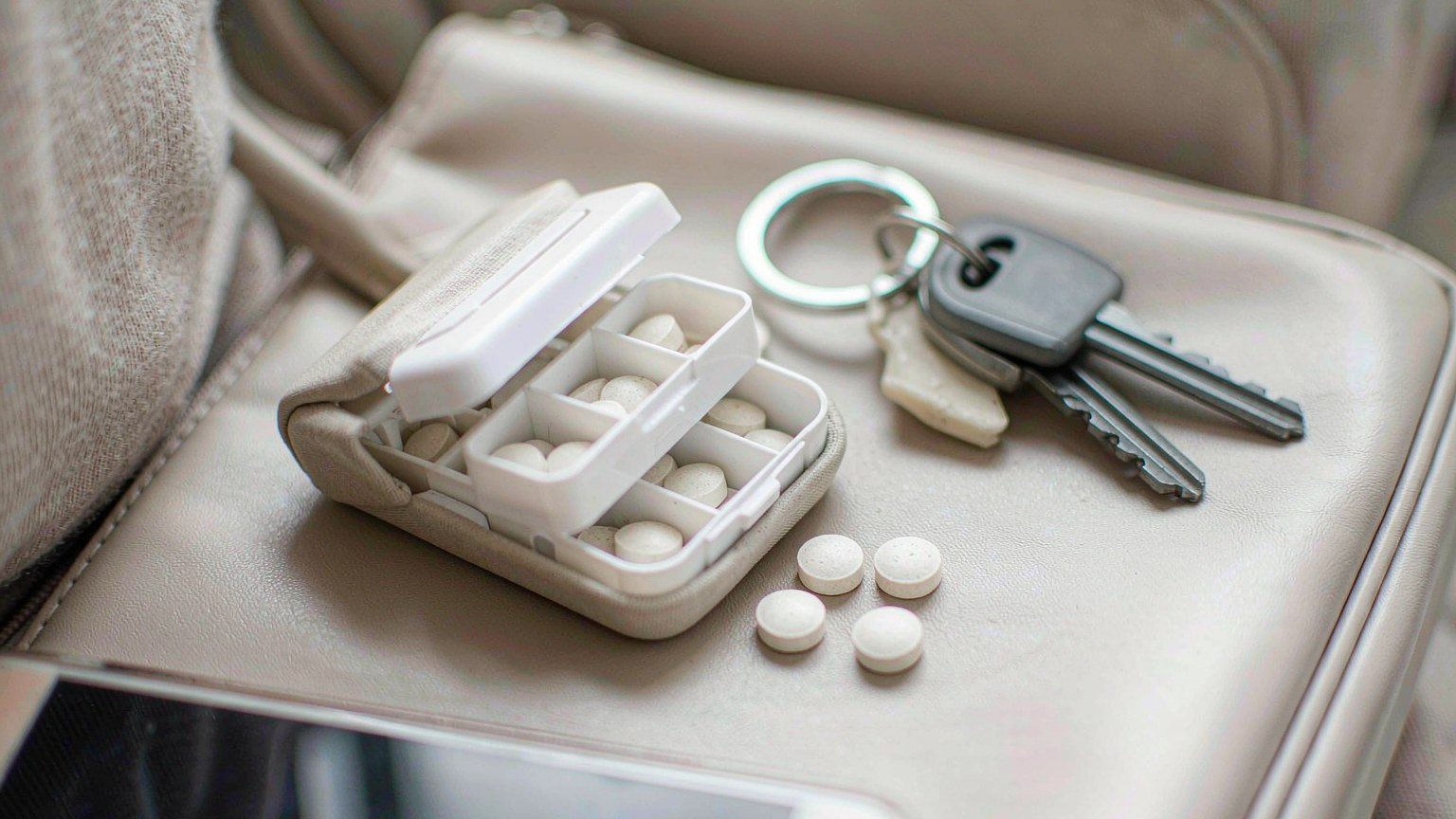







The question comes at the worst moment. You are filling in a form before an appointment, or comparing next year’s drug plan, and it asks for every medicine you take. Not the ones you remember. All of them, with doses. You look at the weekly box on the counter and realize it cannot answer the question: the pills in it have no labels.
This is a small, fixable problem, and the end of the year is when it tends to surface. Here is how to put one written list together, where to get the details from, and how to keep it current without turning it into a second job.
Why this time of year asks for a list you don’t have
If you are on Medicare, the Open Enrollment Period runs from October 15 to December 7, and a plan chosen in that window starts on January 1 of the following year. Medicare’s own guidance on comparing plans says to add all the prescription drugs you take regularly to get the most accurate monthly and yearly cost estimate (Medicare.gov, Joining a plan). The comparison is only as good as the list you type into it. Leave one drug out and the estimate is wrong in a way you will not notice until the pharmacy counter.
Year-end appointments ask the same thing for a different reason. A clinician who does not know what else you take cannot judge whether a new prescription fits alongside it. The US Agency for Healthcare Research and Quality puts it plainly in its patient fact sheet: make sure all of your doctors know about every medicine you are taking, including prescription drugs, over-the-counter medicines and dietary supplements such as vitamins and herbs (AHRQ, 20 Tips To Help Prevent Medical Errors). The same fact sheet notes that one in seven Medicare patients in hospitals experience a medical error, and that many errors grow out of communication gaps between patients and clinicians. The CDC likewise lists “keep a list of your medicines, vitamins, and other supplements” as its first home medication-safety tip, and reports that adverse drug events lead to more than 1.5 million emergency department visits in the United States each year (CDC, Medication Safety and Your Health).
None of that is a reason to worry. It is a reason to write things down once, before someone asks.
What a usable medication list actually contains
A list that says “blood pressure pill, white one” is not a list. The test is simple: could a doctor who has never met you read it and know what you take? Write down these fields for each item.
- Name. The name on the label, including the strength (for example, 10 mg). If it is a supplement, write the brand and the product name, not “vitamin”.
- Dose and timing. How much, how often, and roughly when in the day. “One tablet with breakfast” is more useful than “daily”.
- Why you take it. The condition or the reason it was started. This is the field people skip, and the one a clinician uses most when reviewing whether something is still needed.
- Who prescribed it. The prescriber or clinic name, and a phone number if you have it.
- Everything that is not a prescription. Over-the-counter painkillers, antihistamines, vitamins, minerals, herbal products. AHRQ names these explicitly, because they are the ones people forget to mention.
- Allergies and bad reactions. What happened, not just the drug name. AHRQ lists this as a separate step in the same fact sheet.
Add the date at the top. A list with no date is a list nobody trusts six months later.
Keep the format boring. One page, one line per item, large enough to read without glasses. A notes app works if you will actually open it at the appointment; a printed sheet works better if the person answering questions is a parent, or a son or daughter who came along to help. This is also why the list is worth making even if your own memory is fine — it has to be readable by someone who is not you.
Build it from the bottles, not from memory
Here is the part that catches people out. A weekly pill organizer is good at holding a Tuesday morning dose. It is terrible at telling you what that dose is. Once a tablet leaves its bottle, the name, strength, expiry date and prescriber all disappear. Four white tablets in a compartment are four white tablets. Nobody can identify them from looking, including a pharmacist.
So do not start by staring into the box. Gather the original packaging first. AHRQ recommends what it calls “brown bagging”: bring all of your medicines and supplements to your doctor visits so you and your clinician can go through them together and bring the records up to date (AHRQ, 20 Tips To Help Prevent Medical Errors). A quieter version of the same idea works at home — put every bottle, blister pack and supplement tub on the table and copy from the labels, one by one.

Work through the places medicine hides: the bathroom cabinet, the kitchen shelf, the bedside drawer, the bag you travel with, the car, and the box you already filled for this week. Check the label for strength and directions rather than the shape of the pill. If a container has lost its label, do not guess — take it to the pharmacist and ask what it is, or leave it out of the list and flag it at the appointment. A wrong entry is worse than a missing one.
Some things should stay in their original packaging anyway, which is worth knowing before you empty every bottle into a weekly box. We cover the general rule in Para um rápido refresco do básico, veja pode colocar vitaminas num organizador de comprimidos., and the specific supplements that lose potency in a weekly organizer in what should not go in a pill box. Those are storage questions. This list is a records question, and the two are easy to confuse.
Two records, two jobs
Once the list exists, it helps to be clear about what it is not.
A medication list is a record for other people: a clinician, a pharmacist, a plan comparison form, a family member who steps in when you are unwell. It lives on paper or in a file and changes only when the medicines change. A weekly organizer is a tool for you: it answers “have I taken today’s dose” at 8 a.m. without requiring you to read anything. It gets refilled every seven days. Neither one replaces the other.
If you are setting up that weekly routine for someone else — a parent with memory loss, for example — the setup is its own job, and we wrote it up separately in how to set up a weekly pill system for a parent with memory loss. That guide starts with a master list too, but it uses it to build the filling routine. Here the list is the finished thing.
Keep one printed copy where the medicine lives
A list that sits in a drawer at home is no help in a clinic. Print one copy and keep it with the medicine, not with the paperwork — folded into the bag the organizer travels in, or taped inside the cabinet door where the bottles are. If you help a parent from a distance, keep a second copy yourself and agree who updates it after each appointment.

Update it on three triggers: a new prescription, a dose change, and anything you stop taking. Most people only need to do this a few times a year. Cross out the old line and write the new date at the top rather than starting a fresh sheet — the history is useful when a clinician asks how long you have been on something. And if you cleared out expired medicines recently, that is a good moment to check the list against what is actually left; the process in the October medication clean-out works at any time of year.
One practical note about the container. A weekly organizer with clear, separate compartments makes the list easier to verify, because you can lift a lid and check one day’s contents against one line. Our aluminium slide-out organizer holds a full week in separate drawers that do not tip their contents out when opened upside down. For the smaller set that travels with you, the Silent Portable Pill Box BS1564J has four compartments and a silicone liner. What neither of them does is identify a pill for you. That is what the printed list is for, and it is why the list should travel with the box rather than stay behind.
Start with the bottles on the table. Twenty minutes is usually enough. The next time a form asks what you take, you will have the answer in one place.
This article is general information about keeping a written record of your medicines, not medical advice. It does not recommend any drug, dose, supplement or insurance plan. Decisions about what to take, how much, and when belong to your prescriber or pharmacist. If you are unsure what a tablet is, do not guess — ask a pharmacist. For help comparing Medicare plans, contact your local State Health Insurance Assistance Program (SHIP) for free, independent counselling.
Fontes
Medicare.gov. Joining a plan. (Open Enrollment Period October 15–December 7; coverage starts January 1 of the next year; “Add all the prescription drugs you take regularly to get the most accurate monthly and yearly cost estimate for each plan.”)
Agency for Healthcare Research and Quality. 20 Tips To Help Prevent Medical Errors: Patient Fact Sheet. (Make sure all your doctors know about every medicine you take, including prescription, over-the-counter medicines and dietary supplements such as vitamins and herbs; bring all medicines and supplements to doctor visits, “brown bagging”; tell your doctor about allergies and adverse reactions; one in seven Medicare patients in hospitals experience a medical error.)
Centers for Disease Control and Prevention. Medication Safety and Your Health. (“Keep a list of your medicines, vitamins, and other supplements”; “Make sure your doctor knows about all the medicines, vitamins and other supplements you take”; adverse drug events cause more than 1.5 million emergency department visits in the US each year.)