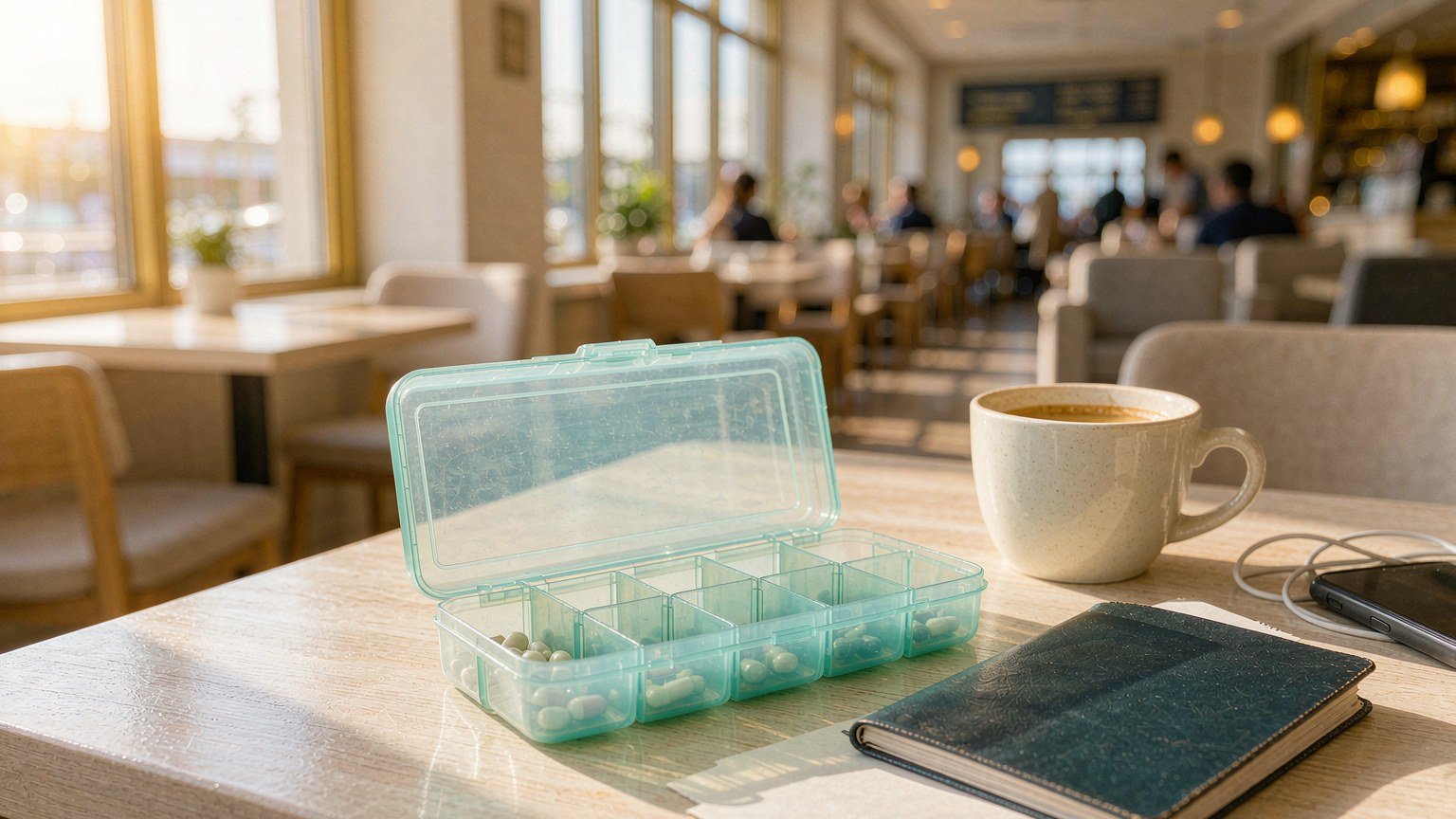







When someone close to you starts forgetting whether they already took their morning pills, the worry is not about the pills. It is about the gap that opens up the moment memory can no longer be trusted. On World Alzheimer’s Day, a lot gets written about the disease. This is written for the person who now holds the list, fills the box, and answers the question — did they already take it? — every single day.
You do not need an app, a subscription, or a device that costs more than a week of groceries. What prevents missed and doubled doses is a small, consistent routine built around four things: one list, one organizer, one person in charge of filling it, and one log. Here is how to set it up.
Start with one master medication list
Before any box or tray comes into the picture, write down everything on one page. Prescription drugs, over-the-counter medicine, and supplements — all of it. For each item note the name (both brand and generic), the dose, how many times a day, the exact times, whether it goes with food, the prescribing doctor, and what it is for. Keep a paper copy near the organizer and a photo of it on your phone.
Update that list the same day anything changes. Bring it to every appointment. When a neurologist adjusts one dose or a GP adds a blood-pressure pill, this list is the only place that shows the current, correct regimen — and it is what a pharmacist needs to catch interactions before they happen.
Choose an organizer that matches the actual schedule
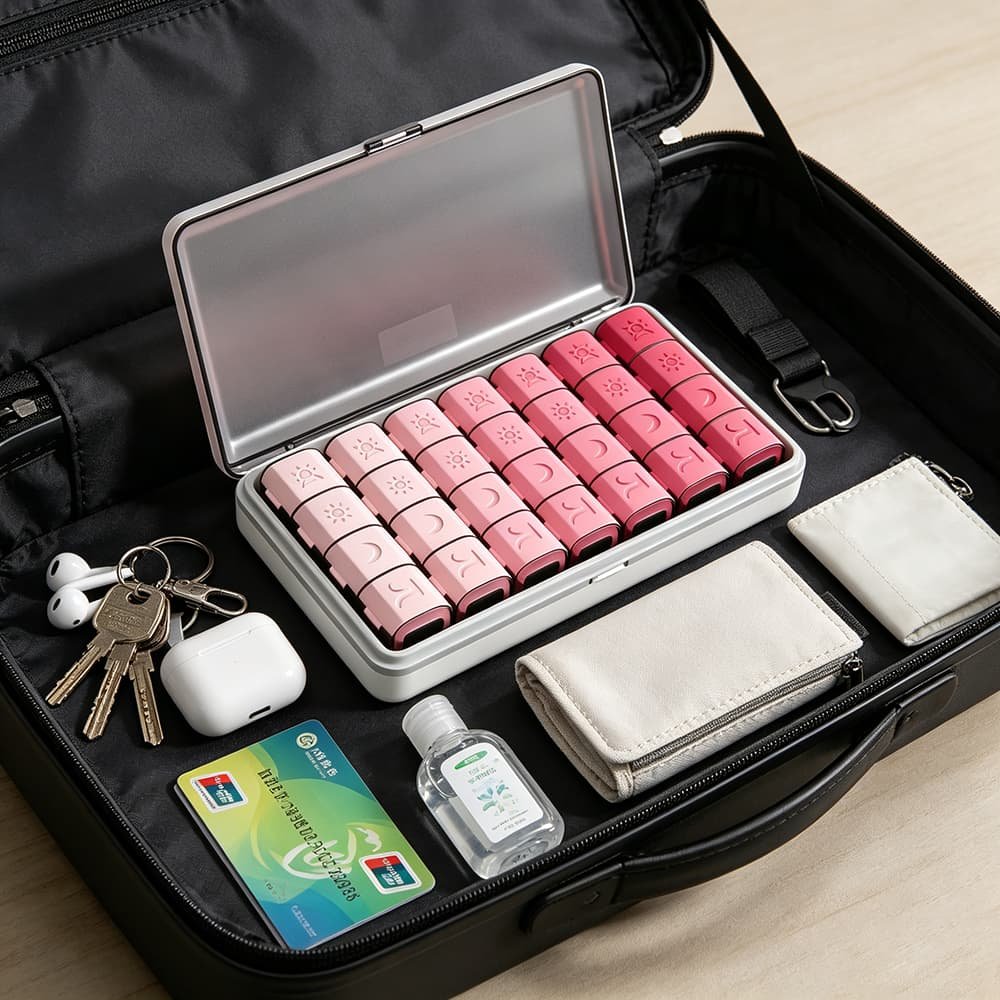
Most people do not take medicine once a day. They take it at breakfast, after lunch, in the evening, and at bedtime. An organizer labeled only with the days of the week leaves the caregiver guessing which dose is due. Look instead for compartments marked Morning, Noon, Evening, and Bedtime.
The compartment itself then tells the story: an empty Bedtime slot at 9 p.m. means the dose is still waiting; a filled one means it is done. That single design choice removes more confusion than any reminder app. A seven-day box with four slots per day covers most home routines without turning the kitchen counter into a pharmacy.
Make one person the “filler”
This is the rule that gets skipped and then causes the error. When two people both “help” top up the box, pills get counted twice or skipped, and nobody can later say what happened.
Pick one person — you, a sibling, the regular aide — to fill the organizer once a week, on the same day, in good light, working from the master list. Everyone else leaves the bottles alone. In one household the spouse fills every Sunday and no one else touches the meds; in another, whoever notices an empty slot tops it up. The first home can look at Wednesday’s empty Noon slot and know the dose was taken. The second home cannot tell the difference between “taken” and “never filled.”
Add a check-off log — and sign at the moment, not later
A full compartment shows what should have been taken. It does not prove what was taken. That gap is where double dosing lives.
Keep a simple grid — dates down the side, dose times across the top — and initial each box the moment the pill is swallowed. Not before, not “later when I get a chance.” The next person who walks up sees an initialed slot and stops.
A real scenario: a daughter gives her father his morning donepezil before work and does not tell the afternoon aide. The aide sees pills on the counter and gives a second dose. A dated, initialed log on the fridge would have shown at a glance that the morning dose was already done. The organizer holds the physical proof; the log holds the written proof. Together they answer the question without asking anyone to remember.
Tie doses to habits that already exist
A system survives tired mornings and shift changes only if it rides on something automatic. Link the morning dose to breakfast, the bedtime dose to brushing teeth, the evening one to a TV show both of you watch. The dose becomes part of the rhythm instead of one more thing to recall.
Phone alarms help, but they work best as a back-up to a habit, not as the only plan. The goal throughout is the same: take the load off memory — both the person taking the medicine and the person keeping track.
What stays in the bottle, what goes in the box
Not everything belongs in the organizer. Some medicines need to stay in their original container: those with special storage rules, light-sensitive tablets, or doses a pharmacist has said to keep separate. When in doubt, ask the pharmacist — many will also offer blister packs where each dose is pre-sorted and sealed, which removes sorting errors entirely.
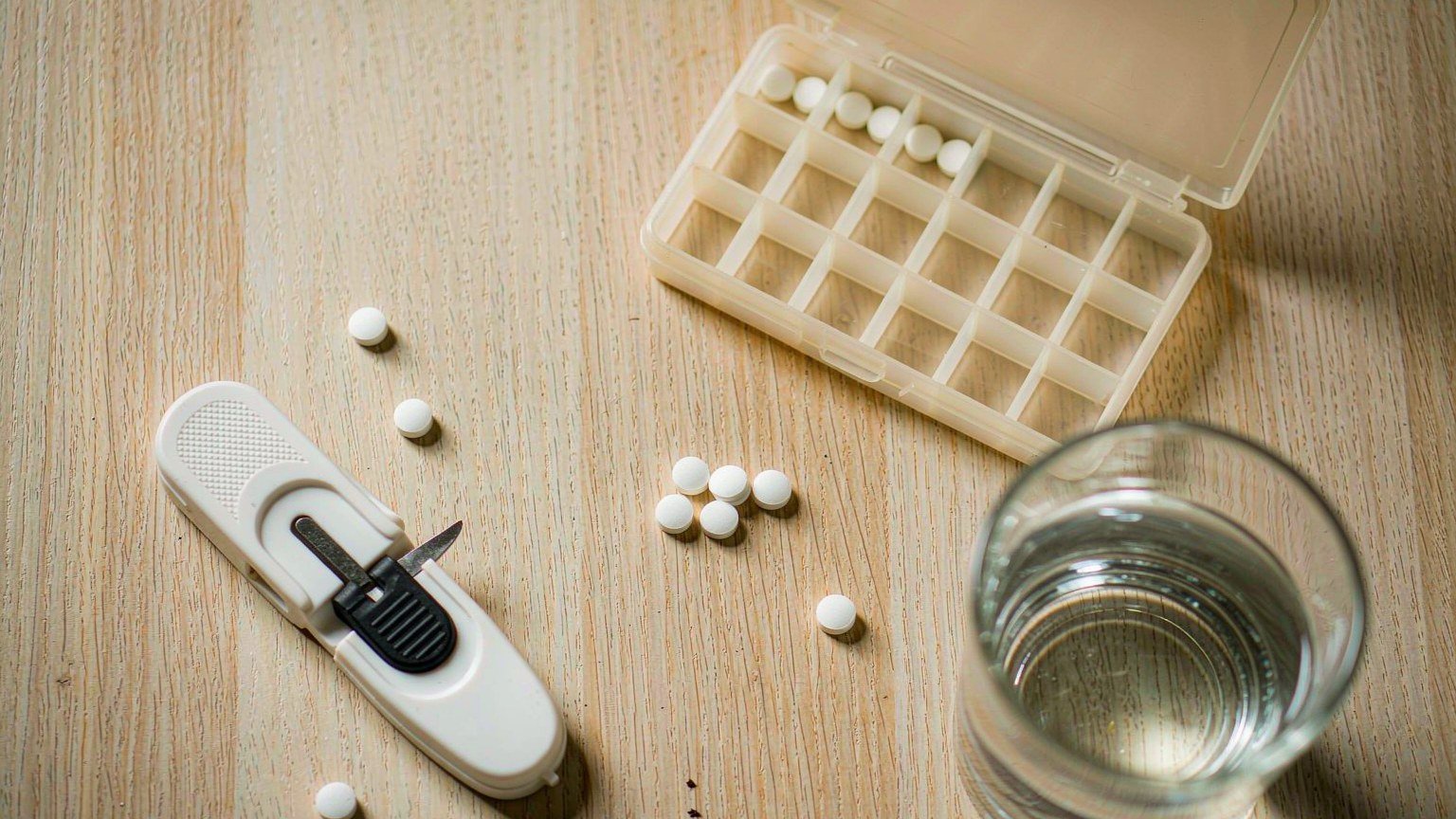
If a dose needs to be split in half, let the pharmacist do it or use a proper pill splitter; never guess at a cut by hand. Split tablets and whole ones can live side by side in the same compartment once they are measured correctly.
Always There — even when memory can’t hold on
There is a phrase we keep at Megastep: Always There. For a family living with memory loss, it takes on a plain meaning. Being there is not about being in the room. It is the Sunday refill, the master list updated the day the prescription changed, the initials on the log at 9 p.m.
The person who remembers for someone else is doing quiet, unglamorous, necessary work. The right system does not replace that person. It makes their job smaller, calmer, and far less likely to end in a scare.

If you are building that system now, a seven-day organizer with clear time-of-day compartments is where most families start — the same kind we make for everyday and travel use. And if the person you care for lives far away, our guide to managing a parent’s medication from a distance walks through the same routine when you are not the one in the room.
This article is for general education only and is not medical advice. Always confirm doses, splits, and storage with a physician or pharmacist, and never change a medication, amount, or schedule without their instruction.