



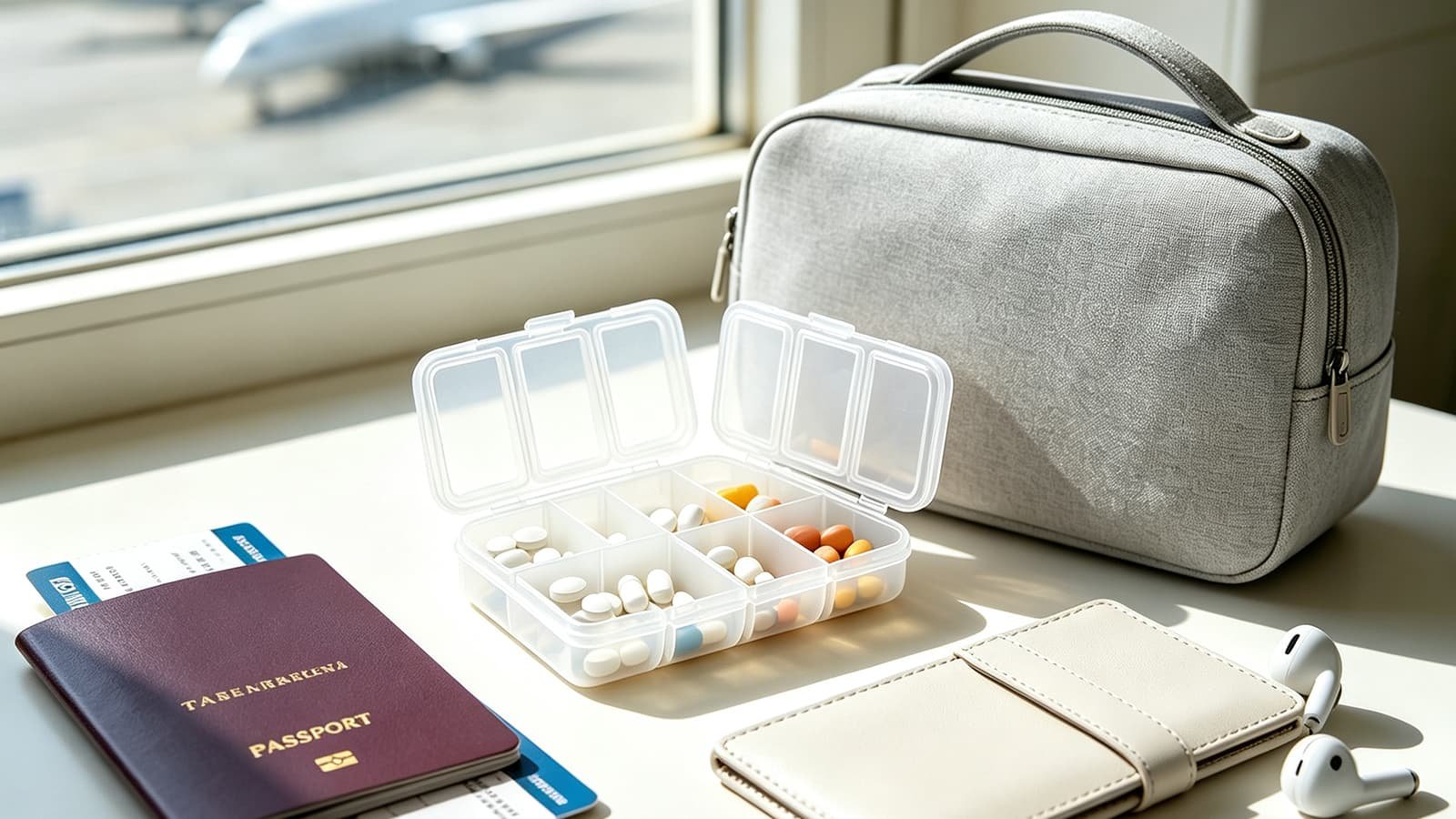
Quick Answer: Yes, you can generally take a pill organizer on a plane. A pill organizer itself is usually allowed through airport security, and pills in solid form are generally permitted. However, prescription medications, controlled substances, liquid medicines, and international travel may have additional requirements. For essential medication, keeping it in your carry-on is generally recommended.
If you are preparing for a flight, you may be wondering whether you can bring your daily pills, vitamins, or supplements in a pill organizer.
For most travelers, the answer is yes. A pill organizer can be a convenient way to keep daily medication and supplements organized while traveling. In the United States, the Transportation Security Administration (TSA) allows medications in pill or other solid forms through airport security, although they are subject to screening.
However, traveling with medication involves more than airport security.
The rules for getting through an airport security checkpoint are different from the rules governing whether a medication can legally enter another country. This distinction becomes especially important when you are carrying prescription medication, controlled substances, or medications that may be regulated in your destination country.
This guide explains how to travel with a pill organizer, where to pack it, when original packaging matters, and what to consider when traveling internationally.
Can You Take a Pill Organizer on a Plane?
Yes, you can generally take a pill organizer on a plane. A pill organizer is normally treated as a container for pills rather than a restricted item. TSA lists medications in pill form as permitted in both carry-on and checked baggage, although they are subject to security screening.
This means travelers can generally use a pill organizer for:
- Daily medication
- Vitamines
- Dietary supplements
- Over-the-counter tablets
- Capsules
- Other ordinary solid pills
A pill organizer can be particularly useful when you want to prepare your doses in advance instead of carrying several bottles throughout your trip.
However, the organizer does not determine whether the medication itself is permitted.
The most important question is not simply:
“Can I bring this pill organizer on the plane?”
It is:
“Are the substances inside the organizer permitted for my flight and destination?”
For domestic travel with ordinary pills, vitamins, or supplements, this is usually straightforward. International travel can require additional preparation.
Are Pill Organizers Allowed Through Airport Security?
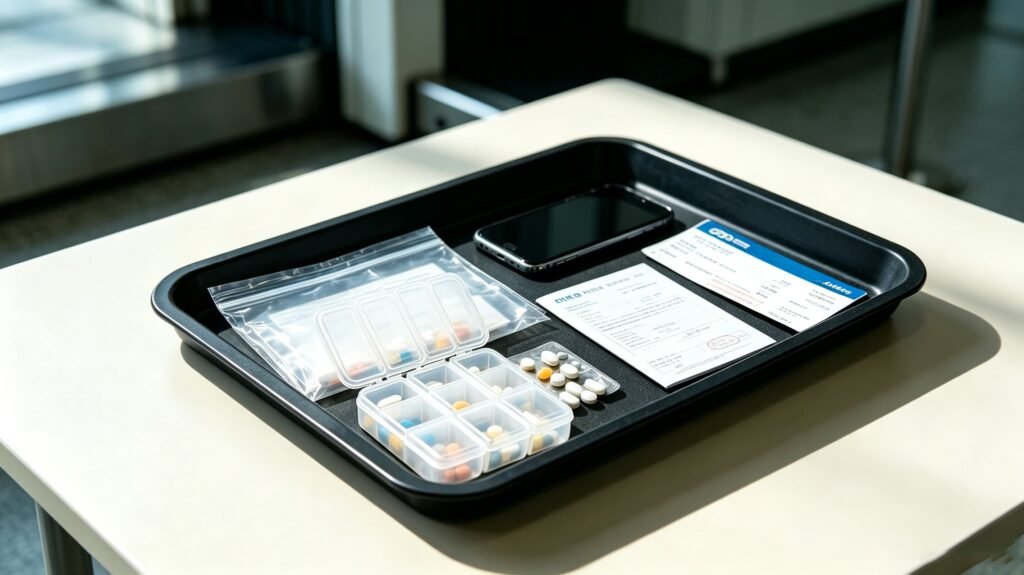
Yes, pill organizers are generally allowed through airport security. Pills and other solid medications can be carried through TSA screening, although security officers may inspect them as part of the screening process.
TSA states that medication in pill or solid form can be carried in unlimited amounts as long as it is screened. TSA also says travelers can carry medication in either carry-on or checked baggage, while recommending carry-on storage when immediate access may be important.
A simple setup can make the screening process easier:
Carry-on bag → medication pouch → pill organizer → supporting medication documents
Keeping these items organized also makes it easier to access them during a long journey.
If security officers need to inspect your medication, having everything together can make the process more straightforward.
Should You Put a Pill Organizer in Carry-On or Checked Luggage?
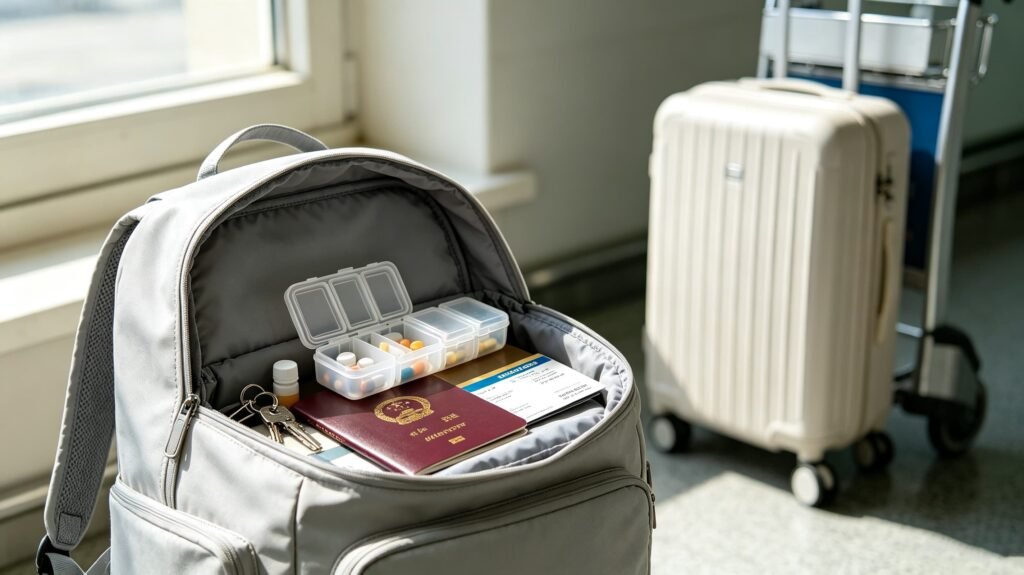
For essential medication, a pill organizer is generally better kept in your carry-on rather than checked luggage.
Checked baggage can be delayed, lost, or separated from you. Keeping essential medication in your carry-on gives you access to it during the flight and reduces the risk of being without an important medication if your suitcase does not arrive with you.
TSA allows medication in both carry-on and checked baggage, but specifically recommends carry-on storage when immediate access may be needed.
Why Carry-On Is Usually Better
Keeping medication in your carry-on can be particularly useful when:
- You may need medication during the flight.
- Your flight is delayed.
- Your checked baggage is lost.
- You have a long connection.
- You need to show medication documentation.
- You are traveling with prescription medication.
- You are carrying medication that may be difficult to replace at your destination.
A useful rule is:
If you would have a serious problem without the medication, keep it with you.
What About Checked Luggage?
For ordinary vitamins or supplements that you do not need during the journey, checked luggage may sometimes be an option depending on applicable airline and destination rules.
However, convenience should not come at the expense of access.
For anything essential, carry-on storage is generally the safer approach.
Do Pills Have to Be in Their Original Bottles When Flying?
Not necessarily under U.S. TSA rules. TSA states that passengers do not generally need to have medications in prescription bottles. However, states can have their own laws concerning prescription medication labeling, and other countries may impose different requirements.
This creates an important difference between domestic and international travel.
Domestic Travel
For many domestic trips, travelers may organize ordinary pills in a pill organizer for convenience.
For example, a weekly organizer can separate medication into:
- Monday
- Tuesday
- Wednesday
- Thursday
- Friday
- Saturday
- Sunday
A multi-compartment organizer can also separate morning and evening doses.
International Travel
International travel requires more caution.
The country you are entering may have its own requirements concerning:
- Medication names
- Active ingredients
- Quantity
- Prescription status
- Controlled substances
- Original packaging
- Doctor’s letters
- Certificats
- Import approvals
For this reason, a good strategy for international travel is:
Use the pill organizer for daily convenience, but keep original medication packaging and relevant documentation available when required.
This approach gives you the organizational benefits of a travel pill organizer without assuming that the organizer replaces legally required information.
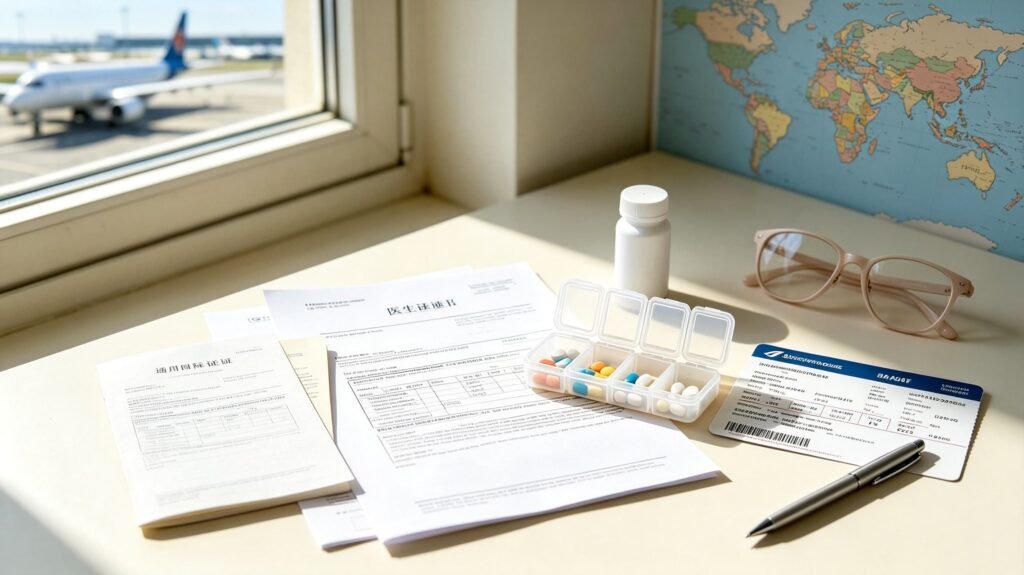
What Is the Difference Between Airport Security Rules and International Medication Rules?
Airport security determines whether an item can pass through the security checkpoint. Destination authorities determine whether certain medication can legally enter the country.
These are two different questions.
| Travel Question | Main Authority | What to Check |
| Can pills pass airport security? | Airport security authority | Security screening rules |
| Can medication go in carry-on luggage? | Airport/security authority + airline | Carry-on requirements |
| Can medication enter another country? | Destination authorities | Import regulations |
| Is the medication controlled? | Destination authorities | Controlled-substance rules |
| Do I need a prescription or doctor’s letter? | Destination authorities | Documentation requirements |
| Does the medication need original packaging? | Destination authorities | Packaging and labeling rules |
Key Takeaway
Passing airport security does not automatically mean your medication is legally allowed to enter your destination country.
This is one of the most important points to remember when traveling internationally.
A pill organizer can solve an organization problem.
It does not automatically solve a medication-import problem.
Can You Travel Internationally With Medication in a Pill Organizer?
Yes, you may be able to travel internationally with medication in a pill organizer, but the rules depend on the medication and the country you are entering.
Ordinary vitamins and supplements may be relatively straightforward, while prescription or controlled medications can require additional documentation or approval.
Before an international trip, check:
- The medication’s active ingredients.
- Whether it is prescription-only.
- Whether it is classified as a controlled substance.
- How much you are allowed to bring.
- Whether original packaging is required.
- Whether a prescription or doctor’s letter is required.
- Whether advance approval is necessary.
Two real-world examples show why this matters.
Traveling to the Netherlands With Medication
Most medicines can be brought into the Netherlands for personal use, but certain medicines are subject to additional requirements.
The Dutch government explains that medicines covered by the Dutch Opium Act can require an official certificate. Examples include certain strong painkillers, sleeping or anxiety medications, ADHD medications, and medicinal cannabis.
If medication falls under the relevant controlled-drug rules, additional documentation may be required when traveling within the Schengen Area.
The Dutch government states that a Schengen Area certificate is valid for 30 days and can cover travel through up to four Schengen countries. For countries outside the Schengen Area, a medical certificate may be required, depending on the destination.
There is another important point for travelers:
A medication passport is not a travel document.
The Dutch government explains that a medication passport records the medicines you use, but it does not replace a required Schengen certificate or legalized medical certificate.
The Dutch government also advises travelers to keep medicines in their original packaging when traveling abroad because this helps foreign officials identify the contents as legitimate medication.
So, if you are traveling to the Netherlands with ordinary vitamins, a pill organizer may be a convenient way to organize your daily doses.
But if you are carrying regulated medication, the organizer should not be treated as a replacement for original packaging or required travel documentation.
Traveling to Singapore With Medication
Singapore’s medication rules depend partly on the active ingredients in the medication.
The Singapore Health Sciences Authority (HSA) states that travelers may need prior approval before bringing certain personal medications into Singapore. Travelers are advised to check whether their medication contains controlled or prohibited substances.
For medications that do not require approval and meet the applicable conditions, HSA allows up to a three-month supply.
HSA also states that travelers should carry a valid prescription or doctor’s letter from their country of residence. Each medication should be kept in its original container or packaging and labeled with relevant information such as the patient’s name, medication name, and quantity from the dispensing pharmacy.
For medications containing controlled substances that require approval, HSA advises travelers to submit their application at least two weeks before arrival.
This example illustrates why international travelers should look beyond the question of whether a pill organizer is allowed.
The important question is whether the specific medication inside the organizer is permitted in the destination country.
Can You Put Vitamins and Supplements in a Pill Organizer?
Yes, vitamins and supplements can generally be organized in a pill organizer for travel.
A pill organizer can make daily supplement routines easier because you can prepare your doses before leaving home.
Instead of carrying several large bottles, travelers can organize supplements by:
- Day
- Morning and evening
- Type of supplement
- Recommended daily dose
Par exemple :
Monday: Vitamin D + Magnesium
Tuesday: Vitamin D + Magnesium
Wednesday: Vitamin D + Magnesium
This can reduce luggage clutter and make it easier to remember your daily routine.
TSA’s current item list permits supplements in both carry-on and checked baggage.
However, international travelers should still check destination-country rules.
An ingredient that is freely sold as a supplement in one country may be regulated differently somewhere else.
Can You Bring Liquid Medication on a Plane?
Yes, medically necessary liquid medication can be brought onto a plane, but it may be subject to additional security screening.
TSA allows medically necessary liquids, gels, and aerosols in reasonable quantities for the trip, including quantities above the normal 3.4-ounce / 100 mL limit when medically necessary. Travelers should notify the TSA officer at the screening checkpoint.
This can include:
- Liquid prescription medication
- Certain liquid medicines
- Medically necessary liquids
- Some medical solutions
If you are traveling with liquid medication, keep it easy to access for screening.
For international flights, also check the rules of your destination country.
Again, airport security permission and destination-country medication rules are separate issues.
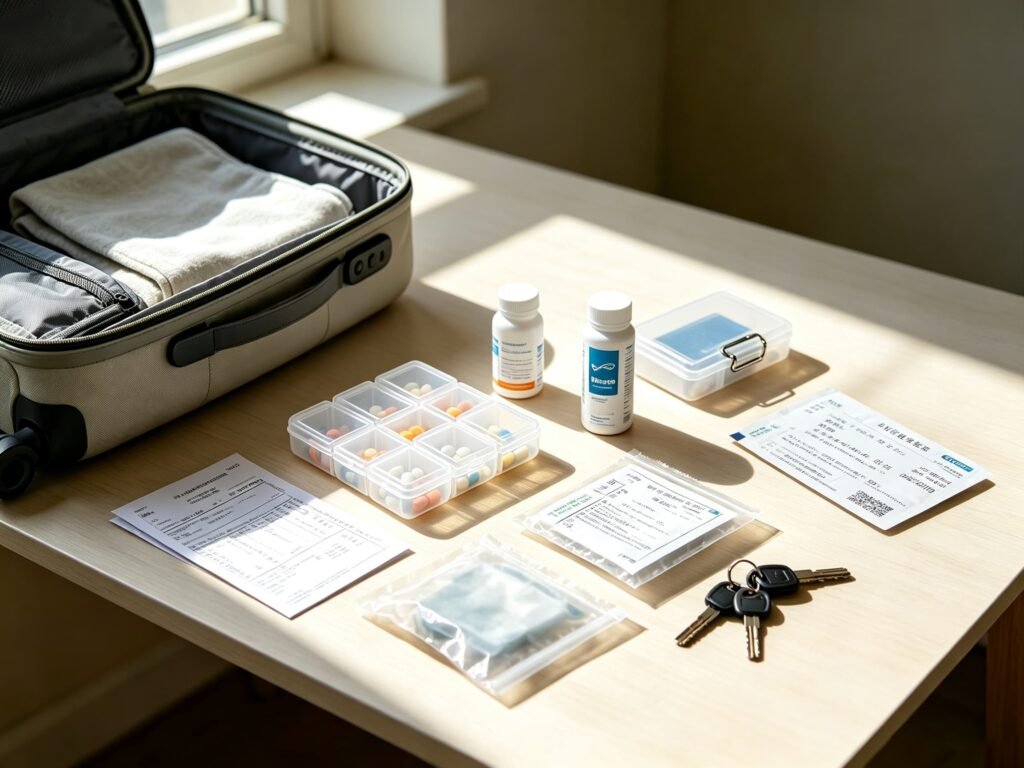
How Should You Pack a Pill Organizer for Air Travel?
A good travel setup does not have to be complicated.
1. Organize Your Medication Before Leaving
Prepare the organizer before you reach the airport.
For a weekly organizer, separate your medication by day.
For a multi-compartment organizer, consider using separate compartments for morning and evening doses.
2. Keep Essential Medication in Your Carry-On
Keep medication you cannot easily replace in your personal item or carry-on.
This reduces the risk associated with lost or delayed checked baggage.
3. Keep Important Documentation Available
Depending on the medication and destination, useful documents may include:
- Prescription
- Doctor’s letter
- Medication list
- Required travel certificate
- Import approval
4. Keep Original Packaging When Appropriate
If you are traveling internationally, keeping original medication packaging can make identification easier and may be required by destination authorities.
5. Avoid Mixing Unidentified Pills
Different pills should not be placed together without a clear system for identifying them.
A good organizer should make your medication routine easier—not create uncertainty.
6. Protect the Organizer From Moisture and Accidental Opening
A travel pill organizer may spend hours inside a backpack, handbag, or suitcase.
A secure closure and moisture-resistant design can provide additional protection during travel.
What Makes a Good Pill Organizer for Flying?
A good pill organizer for travel should be more than just a container with compartments.
Compact Size
A travel organizer should fit comfortably inside a handbag, backpack, or personal item.
Secure Closure
A reliable closure helps prevent compartments from opening accidentally while the organizer is inside your luggage.
Easy Organization
Clearly separated compartments make it easier to manage daily medication, vitamins, and supplements.
Waterproof or Water-Resistant Protection
Moisture resistance can be useful when traveling through airports, hotels, beaches, or outdoor environments.
Quiet Operation
A quiet organizer can be convenient when you need to open it discreetly in an airplane cabin, hotel room, office, or other shared space.
Portable Design
A travel pill organizer should be easy to carry every day rather than something you only use while packing your suitcase.
A Practical Pill Organizer for Travel
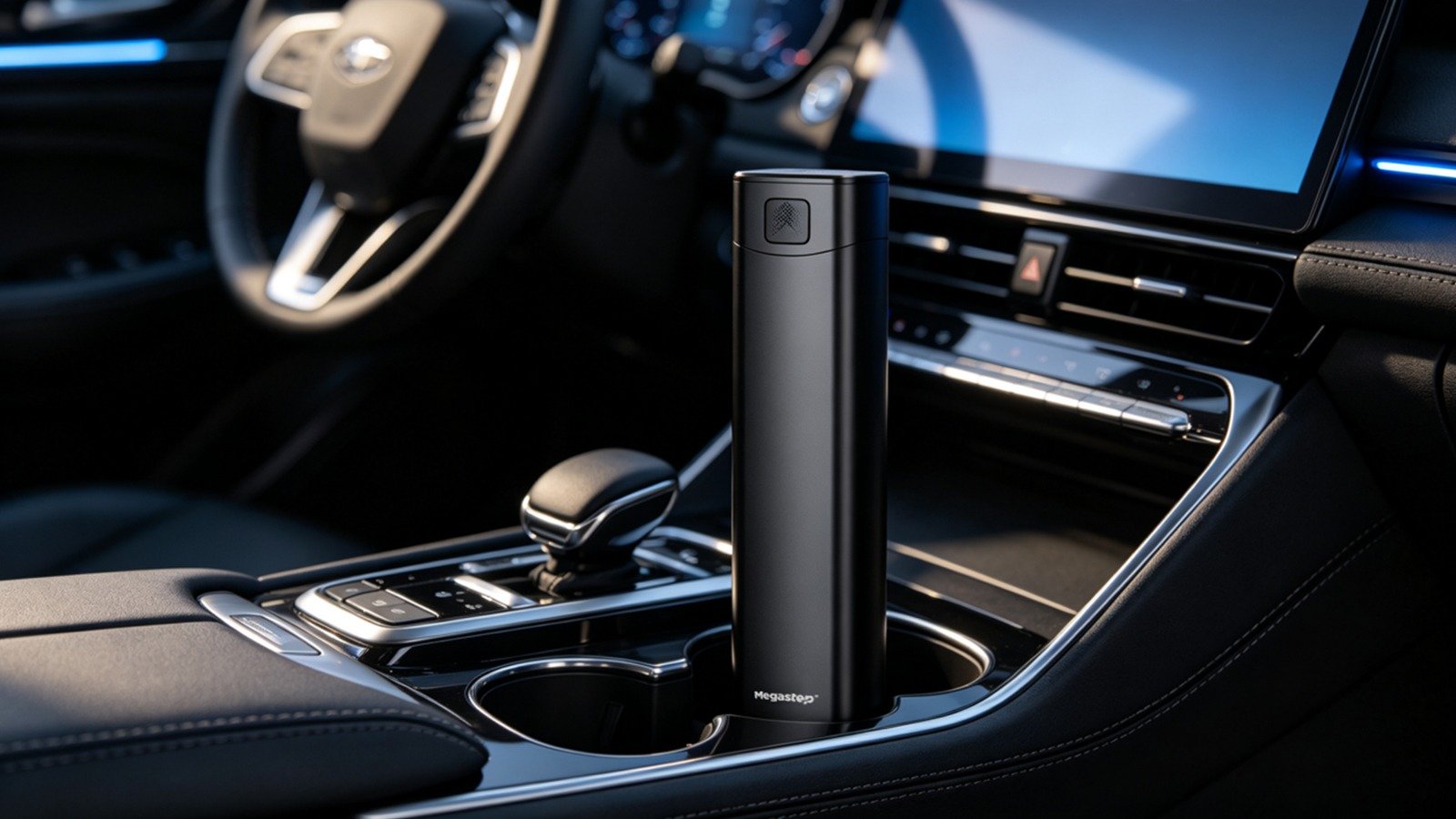
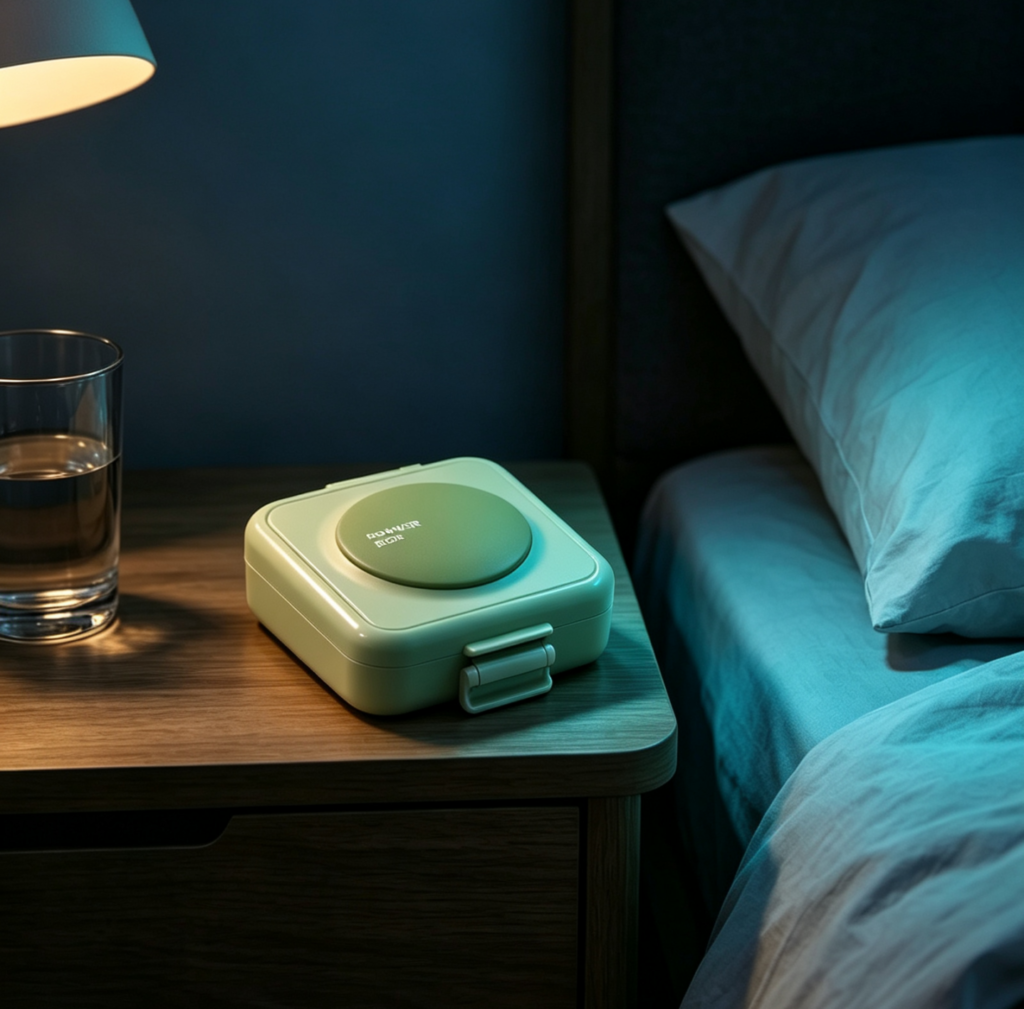
For travelers who want a compact organizer for everyday pills, vitamins, or supplements, the Boîte à comprimés portable silencieuse Megastep BS1564J is designed with several travel-friendly features.
Its compact portable design, silent operation, and waterproof protection make it suitable for people who want a convenient way to organize pills and supplements while traveling.
The important distinction is that a travel pill organizer is an organizational tool. It should not be considered a replacement for original medication packaging or documentation when those are required.
What Are the Most Common Mistakes When Traveling With a Pill Organizer?
Even when a pill organizer is allowed on a plane, travelers can still make avoidable mistakes.
Mistake 1: Assuming Airport Security Rules Apply Everywhere
TSA rules apply to U.S. airport security. They do not determine whether a medication can legally enter another country.
Mistake 2: Putting Essential Medication in Checked Luggage
If you need medication during your journey, keeping it in your carry-on is generally a better choice.
Mistake 3: Throwing Away All Original Packaging
Original packaging can help identify medication and may be required by destination-country regulations.
For example, the Netherlands advises travelers to keep medicines in their original packaging.
Singapore’s HSA also requires original containers or packaging under its applicable personal-medication rules.
Mistake 4: Mixing Pills Without Identification
A convenient organizer should still allow you to identify each medication correctly.
Mistake 5: Waiting Until the Last Minute
Some countries require documentation or approval before you travel.
Singapore, for example, advises travelers who need approval for certain controlled medications to submit applications at least two weeks before arrival.
Frequently Asked Questions
Can I take a weekly pill organizer on a plane?
Yes, a weekly pill organizer can generally be taken on a plane. TSA allows medications in pill and other solid forms through security screening. A weekly organizer can be used to separate doses by day, although international travelers should check destination-specific medication rules.
Can I put vitamins in a pill organizer when flying?
Yes, vitamins can generally be placed in a pill organizer for travel. A compact organizer can simplify daily supplement routines and reduce the need to carry multiple bottles. However, travelers going abroad should check the rules governing supplement ingredients in their destination country.
Do pills have to be in their original bottles when flying?
Not necessarily under U.S. TSA rules. TSA does not generally require medications to be in prescription bottles. However, individual state laws and international destination requirements can differ, so keeping original packaging available is often a practical choice for international travel.
Can I bring prescription medication in a pill organizer?
Generally, a pill organizer can be used for convenience, but prescription medication may have additional requirements. For international travel, consider keeping the original packaging, prescription information, and any required medical certificates or approvals with you.
Can I take medication internationally in a pill organizer?
You may be able to, but the pill organizer itself does not determine whether the medication is legal to import. Check the destination country’s rules for the specific medication, including active ingredients, quantity limits, controlled-substance rules, documentation, and packaging requirements.
Can I bring liquid medication on a plane?
Yes. Medically necessary liquid medication is allowed through TSA screening, including quantities above the normal 3.4-ounce / 100 mL limit when medically necessary. It is subject to additional screening, and travelers should notify the TSA officer at the checkpoint.
Should medication be in my carry-on or checked luggage?
Essential medication is generally better kept in your carry-on. TSA allows medication in both carry-on and checked baggage but recommends carry-on storage when immediate access is important.
Can airport security inspect my pill organizer?
Yes. Medication and pill organizers can be subject to security screening. TSA states that medications must undergo screening, and officers can conduct additional inspection when necessary.
Final Thoughts
Yes, you can generally take a pill organizer on a plane.
For ordinary pills, vitamins, and supplements, a compact pill organizer can make traveling easier by keeping daily doses organized and accessible.
The most important things to remember are:
- Keep essential medication in your carry-on.
- Organize pills clearly before your trip.
- Check airport security requirements.
- Do not assume airport security rules apply to international medication imports.
- Keep original packaging when appropriate.
- Carry prescriptions, doctor’s letters, or other documentation when required.
- Check controlled-medication requirements before international travel.
- Check the official rules of your destination before departure.
The key distinction is simple:
A pill organizer can make your medication easier to organize, but it does not replace the legal requirements for traveling with medication.
For domestic travel, the process is often straightforward. For international travel, especially with prescription or controlled medication, checking the rules in advance can prevent unnecessary problems at the border.
If you are looking for a compact organizer for vitamins, supplements, or everyday pills while traveling, a purpose-built travel pill organizer can also make your daily routine more convenient.