

Walk down a beauty aisle now and you will pass things that look like dessert. A blush that wobbles when you touch it. A lip gloss with the shine of a jelly sweet. A phone case you could almost bite. Then walk into the supplement section and the contrast is strange: the products people put in their bodies have never looked more considered, while the boxes they put them in have barely changed in thirty years.
That gap is closing. A design language built around softness, bounce and candy colour is moving from makeup bags into the small cases people use to organise supplements. It has a name in the trend world — Gimme Gummy — and this article unpacks what it actually means for a supplement storage box, which parts are worth paying for, and which are a passing costume.
What “gummy” means when it is not about sweets
In Pinterest’s 2026 Predicts report, Gimme Gummy describes a turn toward texture: surfaces that are bendy, springy, translucent and glossy. Pinterest names bendy phone cases, elastic cheek tints, probiotic treats, rubberised nail art and three-dimensional jewellery as the forms to watch. The company ties the trend to Gen Z and Millennials and to a craving for sensory, tactile objects after years of flat, matte minimalism. (Pinterest Predicts 2026, Gimme Gummy)
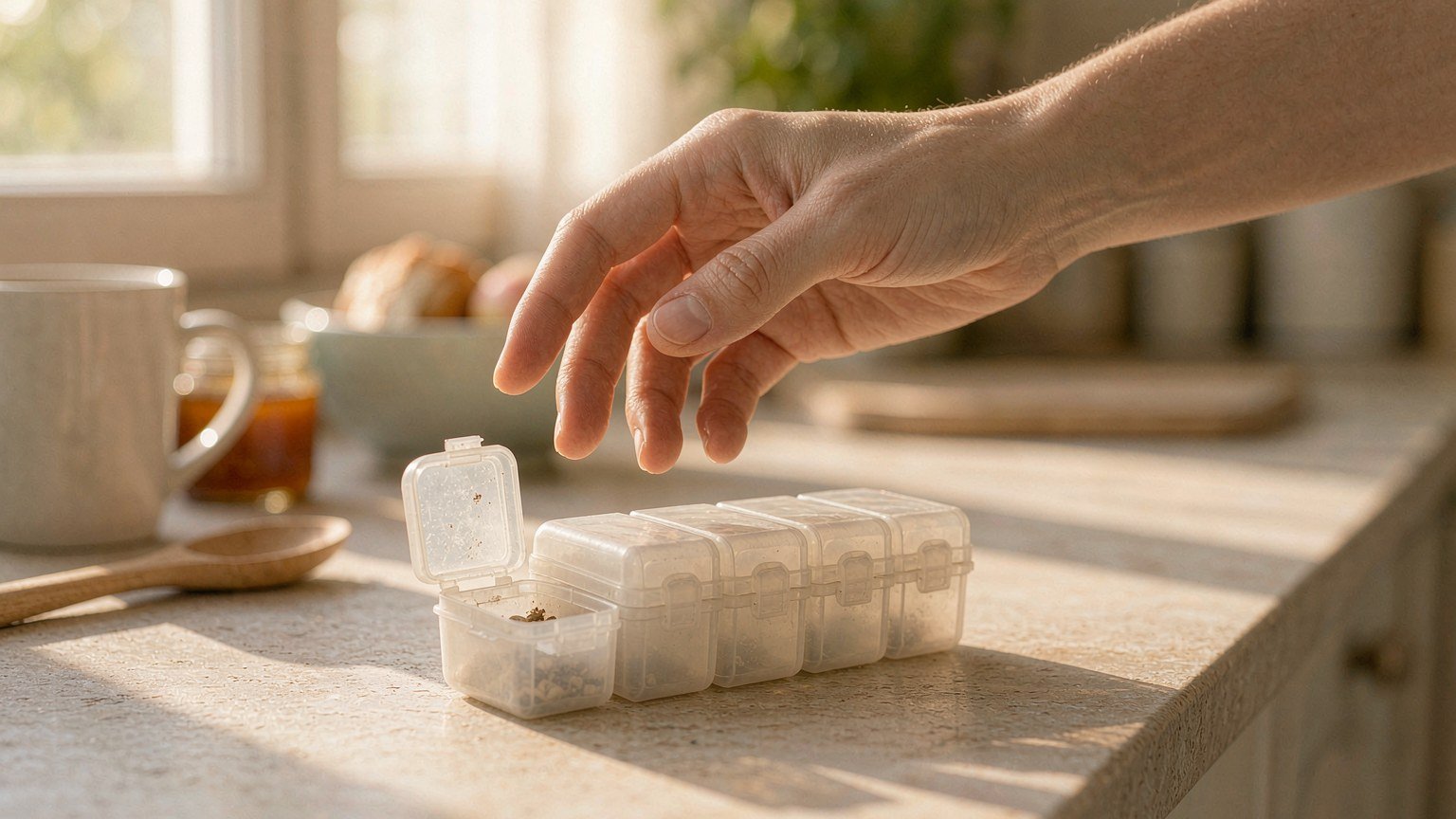
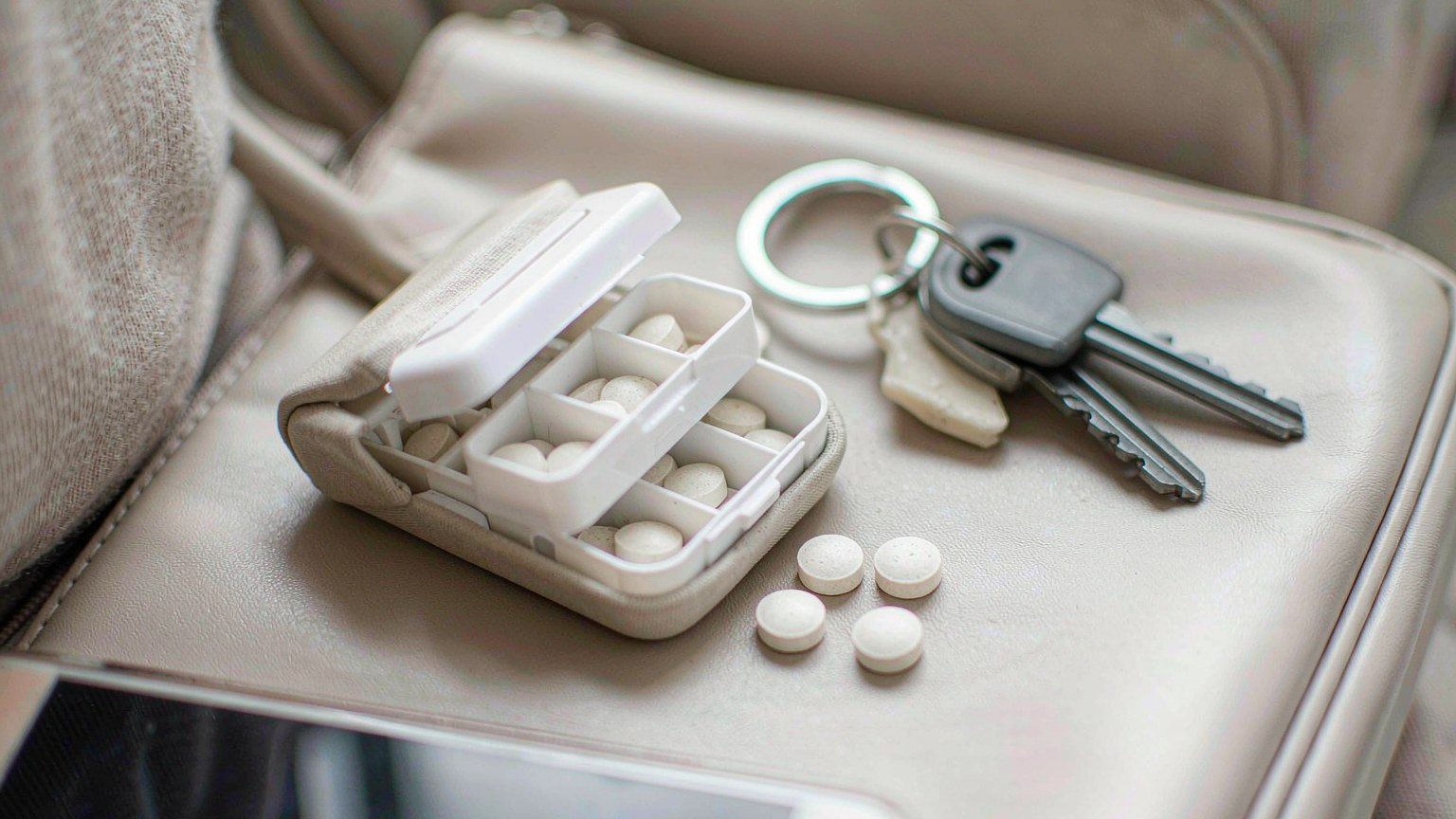
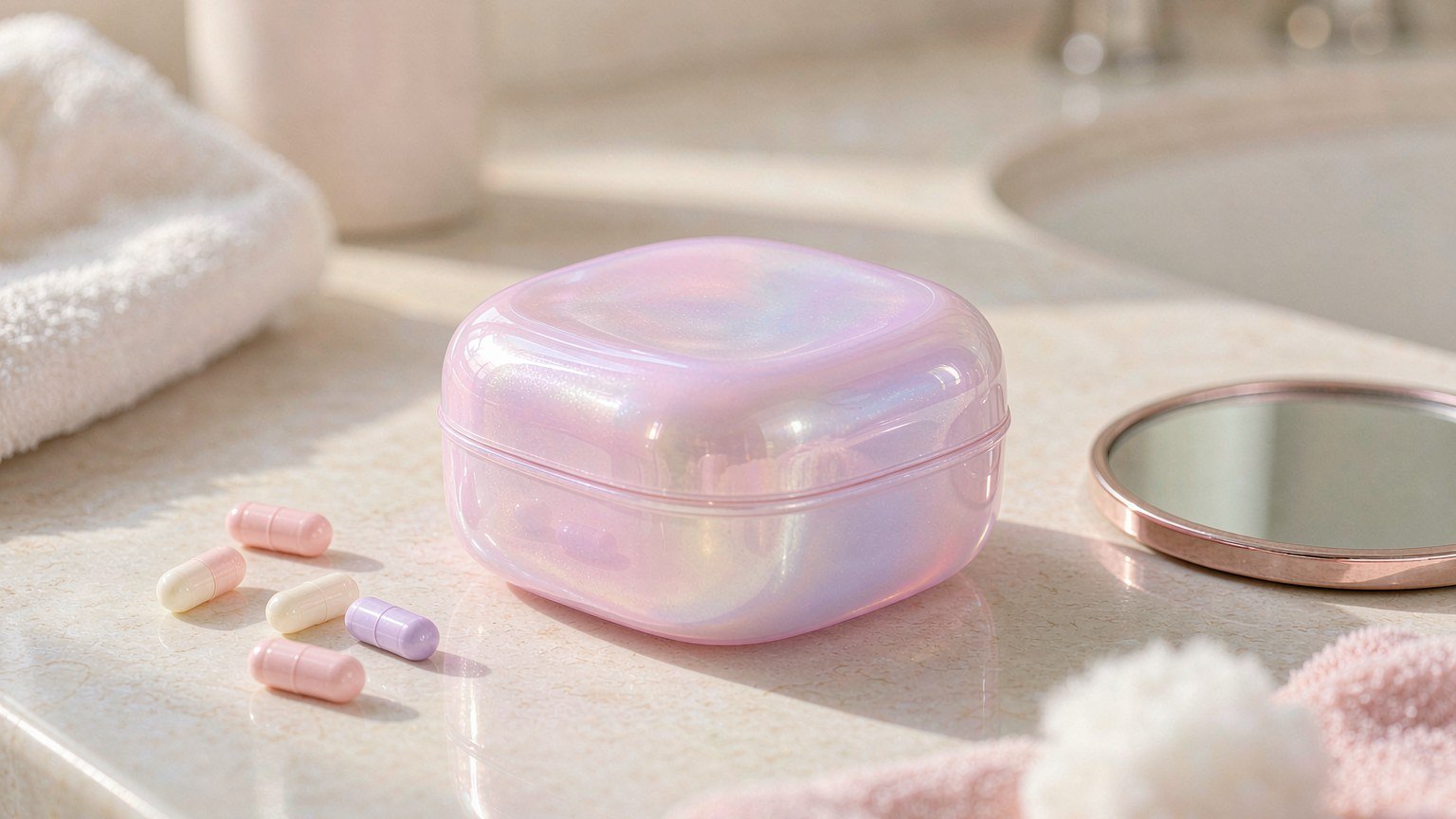
Translated into a daily object, it means three things. Colour moves from clear and clinical to candy — pearlescent pink, citrus orange, milky lavender. Surface moves from hard glossy plastic to something with a softer, almost cushioned feel. Shape moves from the flat seven-lid grid to rounded forms: a compact, a lipstick tube, a small block that stacks. None of this changes what the object does. All of it changes whether you want to leave it on the counter.
There is a real product behind the search noise. Milk Makeup’s Cooling Water Jelly Tint is a solid, translucent stick that physically wobbles, and reviewers keep describing it as something they want to eat. Fwee’s Lip and Cheek Blurry Pudding Pots offer a soft, marshmallow-like give. Even packaging is being moulded in rubberised, soft-touch finishes to mimic the same feel. (The Times of India, on gummy makeup taking over Sephora)
The numbers are about beauty, not storage
Here is where honest reporting matters. Pinterest recorded jelly blush searches up 130 percent, jelly candy aesthetic up 100 percent, gummy bears aesthetic up 50 percent, and yokan — a Japanese jelly sweet — up 60 percent. Those are search changes inside Pinterest, measured globally in English, and they describe interest in a beauty and lifestyle look. (Pinterest Predicts 2026, source notes)
They are not sales figures for supplement storage boxes, and no one has published a number for how many people bought a candy-coloured organiser because of a Pinterest trend. Treat the figures as a signal of taste moving in a direction, not as a market size. That distinction gets lost easily, so it is worth stating plainly: the aesthetic is real, the demand for this specific product in that exact colour is not yet measured.
How the beauty shelf moved into the supplement drawer
The crossover is not abstract. Beauty products are being designed to be worn and carried rather than kept on a shelf. RMS and Hart released a lip-and-cheek balm inside a gold-filled necklace. Sarelly makes a lip balm that clips onto a bag as a charm. Lanolips paired its ointment with a phone holder, on the logic that you never leave home without your phone or your balm. (Free People, 2026 Beauty Trends)
Analysts have a word for the wider shift: toyification. Fragrance and beauty are borrowing from toys, becoming objects people collect, display and customise rather than simply use. Personalised charms and keychains are the clearest expression, and the same instinct is showing up on bags and phones. (Symrise, “The kidult korner”, 2026)
A supplement storage box sits naturally in that story. It is small, it is carried daily, and it is one of the few health objects a person can choose the look of. Once the people using it see themselves as customers with taste rather than patients following instructions, the container becomes part of the outfit. That change is explored in more depth in how this category moved from purely medical to something you carry.

The shapes actually showing up on bathroom counters
Four forms recur in the design-led end of the category, and each borrows directly from a beauty object.
The compact. A round, flat case that opens to a mirror on one side and divided compartments on the other. It reads as makeup at a glance and solves a genuine problem — you can check what is left without tipping anything out.
The lipstick tube. A slim cylinder that fits a handbag and holds one or two doses. The appeal is discretion and the small ritual of twisting it open; the limit is capacity, so it suits a single daily supplement rather than a full week.
The stackable block. A rounded cube in translucent candy plastic, with magnetic faces that let you join two or three together. Colour works as a labelling system here — one shade for morning, another for evening — without printed day labels.
The charm case. A tiny container on a ring or strap, clipped to a bag. It carries an emergency dose and doubles as the accessory. This is the most direct descendant of the beauty-as-jewellery idea.
The design question running through all four is the same one that shapes a good compact: does the form survive contact with daily use? A box that looks like a lipstick but spills in a handbag has traded function for a photograph. The stronger designs keep the familiar mechanics of a good organiser — a lid that stays shut, compartments that do not cross-contaminate — and change only the skin.
Why people are buying the box, not just the supplement
This is the part that a purely functional explanation misses. Small, low-cost purchases have become a deliberate mood habit. Datassential’s Little Treat Culture report found 77 percent of Gen Z consumers have a little treat at least once a week, against 66 percent of consumers overall. A Circana survey of more than a thousand US consumers found 73 percent consider treats important to their quality of life and 62 percent say they are part of their self-care routine. (Yahoo Finance, on Datassential and Circana little-treat data)
Bank of America’s research puts the figure for Gen Z buying themselves small treats to lift a bad day or celebrate a good one at 92 percent. The same reporting notes that 55 percent of Gen Z said financial pressure has delayed a major life decision, which helps explain why the affordable version of a luxury feeling carries so much weight right now. (CNBC Select, on the Gen Z little-treat economy)
Read through that lens, a candy-coloured supplement storage box is not a frivolous upgrade to a boring task. It is the object that makes a daily routine feel chosen rather than imposed. There is a psychological cost to a container that announces illness, and that side of the story is covered in why taking supplements became a form of self-care, not a secret.

How to tell a good design from a costume
A soft colour is easy to copy. A box that stays pleasant to use after six months is harder. Five checks separate the two.
Does it close reliably? A magnetic lid or a firm snap matters more than the finish. Check that the closure holds when the case is tipped sideways in a bag.
Is the surface right for the job? A soft-touch coating feels lovely and can trap grease and marks. For something handled daily, a smooth harder shell in a candy colour often ages better than a rubberised one. If a compartment is soft, make sure it can be removed and washed.
Does it stay food-safe? A supplement case holds things you swallow. Look for materials rated for food contact rather than judging by appearance — the standards that matter are the ones for food-contact plastics, not the colour chart. Guidance on what belongs in a weekly organiser and what does not covers the storage side in more detail.
Can one part change without replacing the whole? The most durable version of this trend is the outer layer, not the container: a different coloured sleeve, a charm, a personalised tag. If your taste shifts next year, a changeable layer keeps the box instead of sending it to a drawer.
Is there something you can actually do with it? The products that travel furthest have a small, satisfying action — a lid that clicks, a stack that snaps together, a drawer that slides. A box that is only pretty gives you nothing to show or repeat.
None of this requires paying a designer premium for a plastic shell. It requires noticing whether the object was designed around a real routine or around a product photograph.
Where a supplement storage box fits in all this
The gummy look is a layer, not a reinvention. Underneath it, the same rules apply as to any good organiser: compartments that hold the right number of doses, a closure you trust, materials safe for what goes inside. At Megastep we make supplement storage boxes built around those basics, including a folding case that already borrows the language of something you carry rather than something you hide. If you are choosing one for daily use, start with how it will be used, then pick the colour.
This article is general information about storage and design, not medical advice. For questions about your supplements, dosage or timing, speak to a pharmacist or your healthcare provider.
Quellen
Pinterest Predicts 2026 — Gimme Gummy (search trend data and source notes):
https://business.pinterest.com/ko/pinterest-predicts/2026/gimme-gummy/
The Times of India — “Gummy” makeup: the texture taking over Sephora (Milk Makeup Jelly Tint, Fwee pudding pots):
https://timesofindia.indiatimes.com/articleshowprint/126639660.cms
Free People — 2026 Beauty Trends (lip balm charms, lip-and-cheek necklace, phone holder):
https://www.freepeople.com/2026-beauty-makeup-trends-blog/
Symrise — “The kidult korner: where beauty, accessories and toys meet in 2026” (toyification, personalised charms):
https://blog.symrise.com/the-kidult-korner-where-beauty-accessories-toys-meet-in-2026/
Yahoo Finance — Gen Z little-treat habit (Datassential Little Treat Culture Report; Circana 2025 survey):
https://finance.yahoo.com/small-business/articles/gen-zs-little-treat-habit-193708848.html
CNBC Select — Gen Z little-treat economy (Bank of America and Deloitte survey figures):
https://www.cnbc.com/select/gen-z-little-treat-economy-financial-tools/