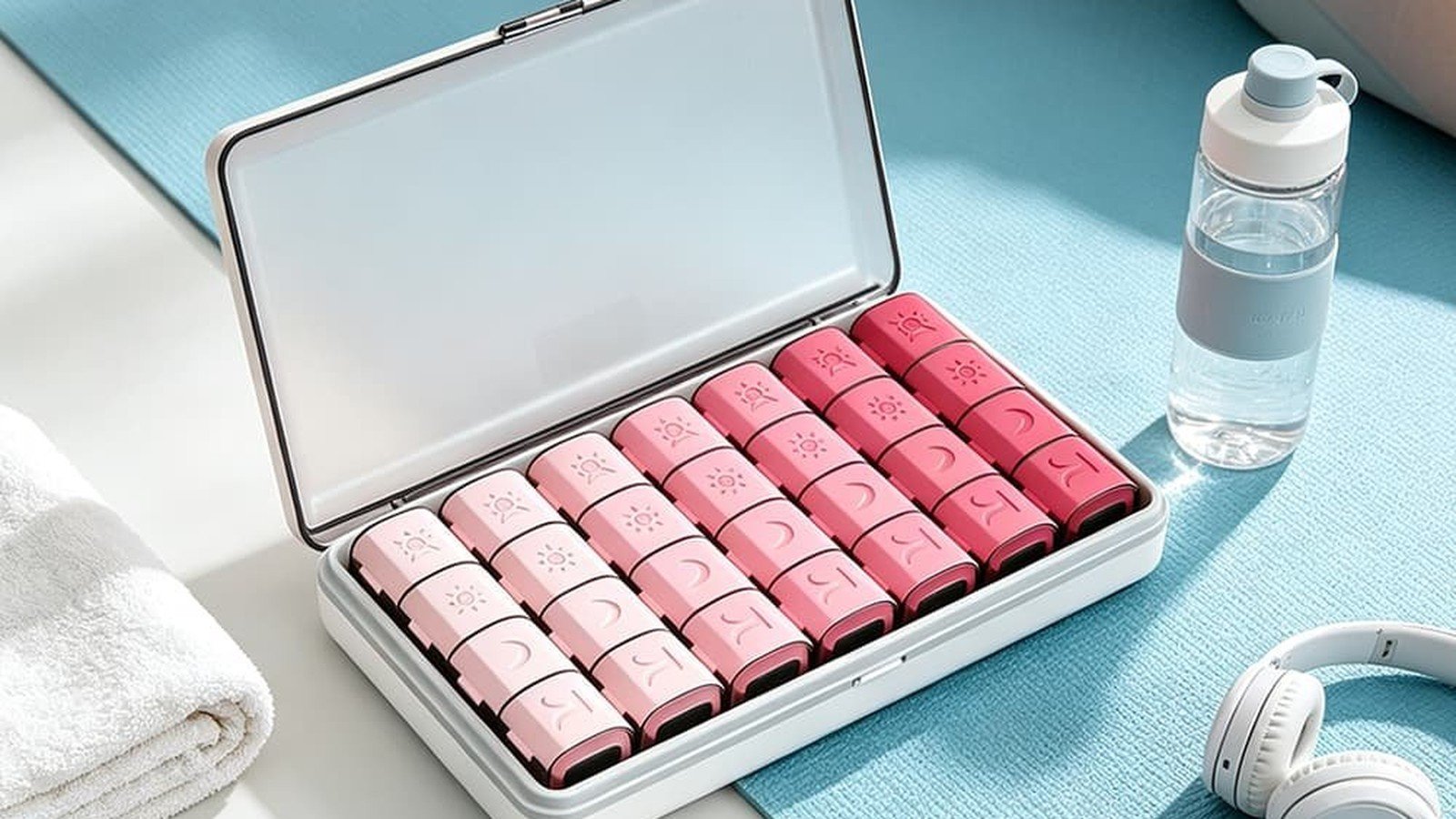






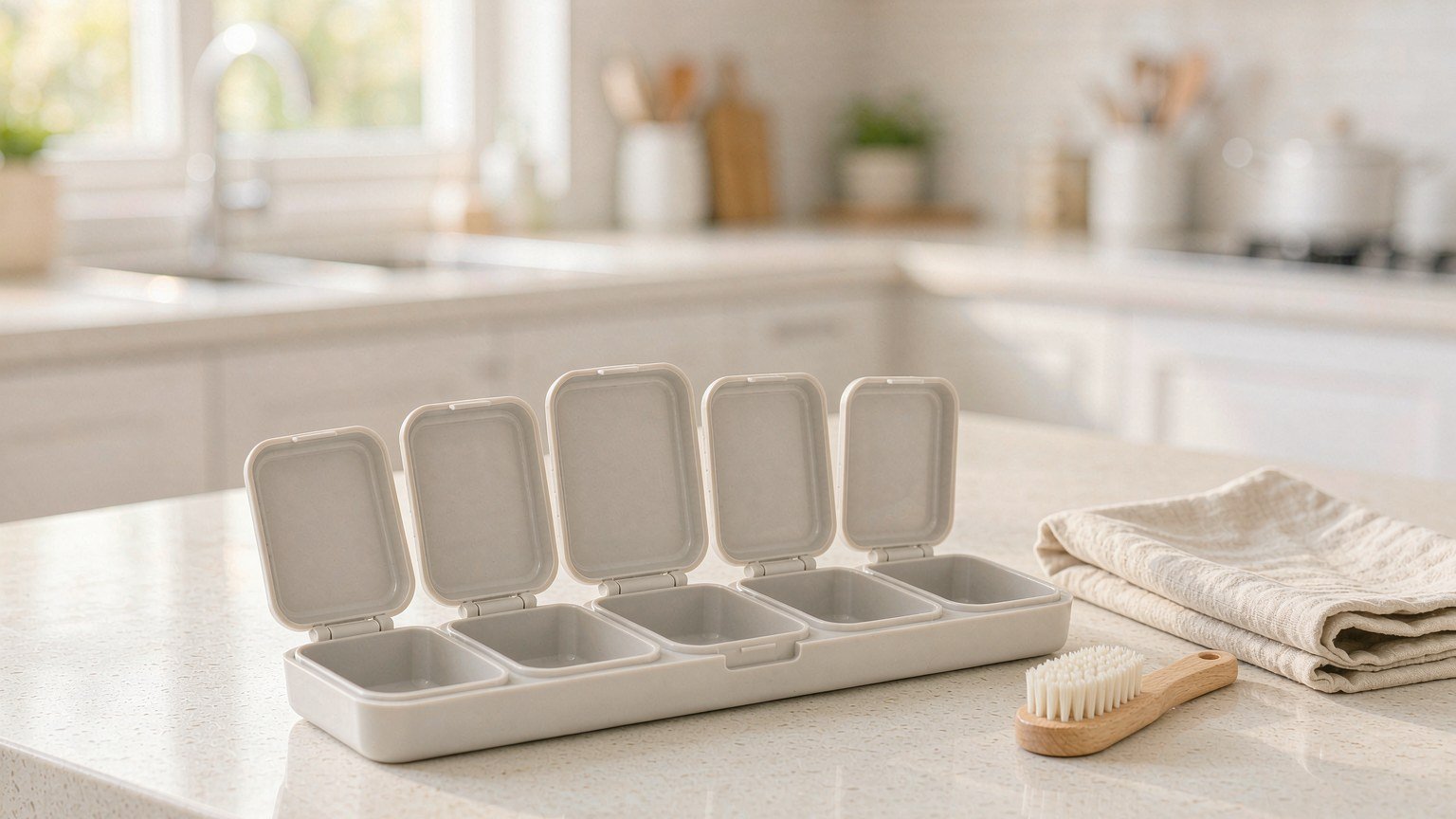
A pill organizer spends its whole life holding medication, and that is exactly why it gets dirty. Every time the lid closes, the tablets inside rub against the plastic and against each other, and a fine film of tablet material settles into the corners and hinge grooves where a quick rinse never reaches. Left alone, that film becomes a layer that makes pills stick, traps moisture, and turns a tool you rely on into something you should not trust.
This guide covers how to clean a pill organizer without damaging it, how often to actually do it, and the point at which cleaning stops helping and replacement is the answer.
What actually builds up inside a pill organizer
The dust in the bottom of a compartment is not ordinary dirt. It is tablet material — coating, binder, and powder worn off as pills shift around in the box. Soft or uncoated tablets shed it faster, and a box that rides in a bag, where it gets shaken, sheds it faster still. Because some of that dust is active medication, you tap it into the trash rather than blowing it into the air, and you wash your hands afterward.
It is worth knowing that this buildup is measurable, not imaginary. A study of 32 hospital pillboxes published in the International Journal of Environmental Research and Public Health tracked contamination through a full cycle: it ran at 13% right after the boxes were decontaminated, climbed to 63% after they were filled with medication in the pharmacy, and reached 88% after a week of real use. Then the boxes were washed the usual way — and contamination dropped back to a level statistically no different from the starting point. The takeaway for a home organizer is simple: the box really does accumulate something, and one ordinary wash really does reset it.
How often should you clean it?
Once a week, on the day the box runs empty and right before you refill it. That timing does two things. It means you never have to unload doses to wash the thing, because there are no doses left to unload, and it means the habit attaches to a task you already do every week, so it does not depend on remembering a separate chore.
A few situations call for more attention than the weekly reset:
- Monthly fillers: if you pre-sort a month at a time, a weekly wipe-down of the empty compartments and the hinge line still makes sense between the full washes.
- Travel and commuting: a box that lives loose in a bag collects residue and pocket lint faster. Give it a rinse when you get home.
- Humid stretches: in a damp climate or a rainy season, the same box that was fine in winter starts feeling tacky inside. Shorten the interval rather than waiting for the schedule.
The clean that will not wreck the box
The method matters as much as the frequency, because the wrong one leaves you with a warped lid and a box that pops open in your bag. Here is the sequence:
- Empty and tap it out. Open every lid, turn the box over the trash, and tap the loose powder out. Do not rinse medication dust down the sink and do not blow it into the air.
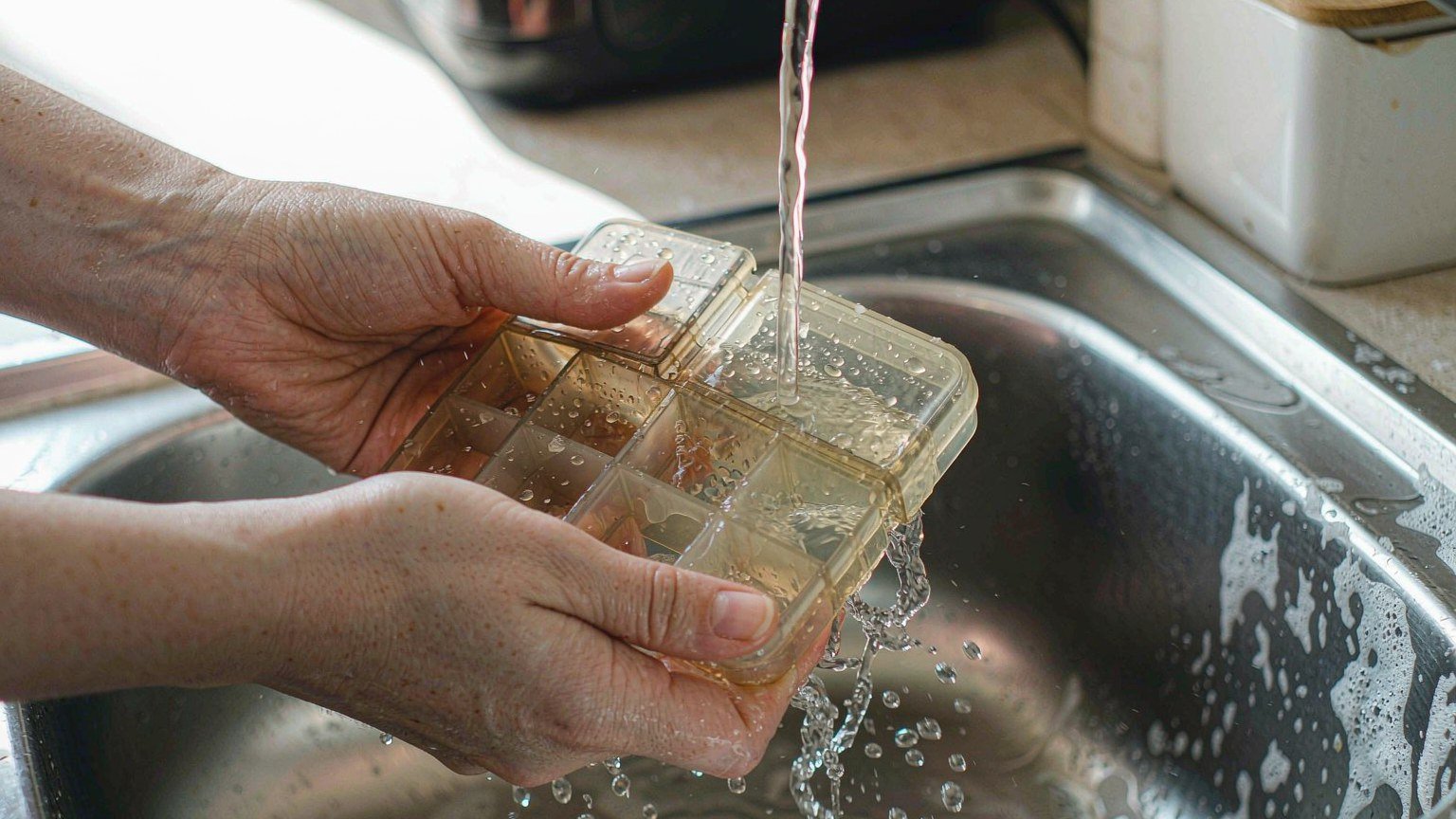
- Wash in warm, not hot, water with a drop of mild dish soap.
- Brush the seams. The corners and the hinge grooves are where residue hides, and a cloth cannot reach them — rinsing alone leaves it behind. A soft bottle brush or an old soft toothbrush does the job in a few seconds per compartment.
- Rinse thoroughly. You do not want soap film drying inside the compartments your pills will sit in.
- Dry it upside down, with every lid propped open. This is the step covered next, because it is the one people rush.
Then there is the list of things not to do. Skip the dishwasher unless the manufacturer explicitly labels the box top-rack dishwasher-safe — heat warps thin lids and hinges, and a lid that no longer latches is worse than no lid at all. Never pour boiling water over it, and keep it out of the microwave, the oven, and in front of a radiator or hairdryer. Skip abrasive scrubbers too, which scratch the plastic and give residue somewhere new to grip. On boxes with printed day markings, avoid cleaners that lift the printing; an unlabeled organizer is its own hazard, because you can no longer tell Tuesday from Thursday.
If you want to go further than soap and water, a wipe with isopropyl alcohol can help, but check the box first: alcohol fades printed labels on many organizers, and it has to evaporate completely before the box goes back into service.
Drying is the part everyone skips
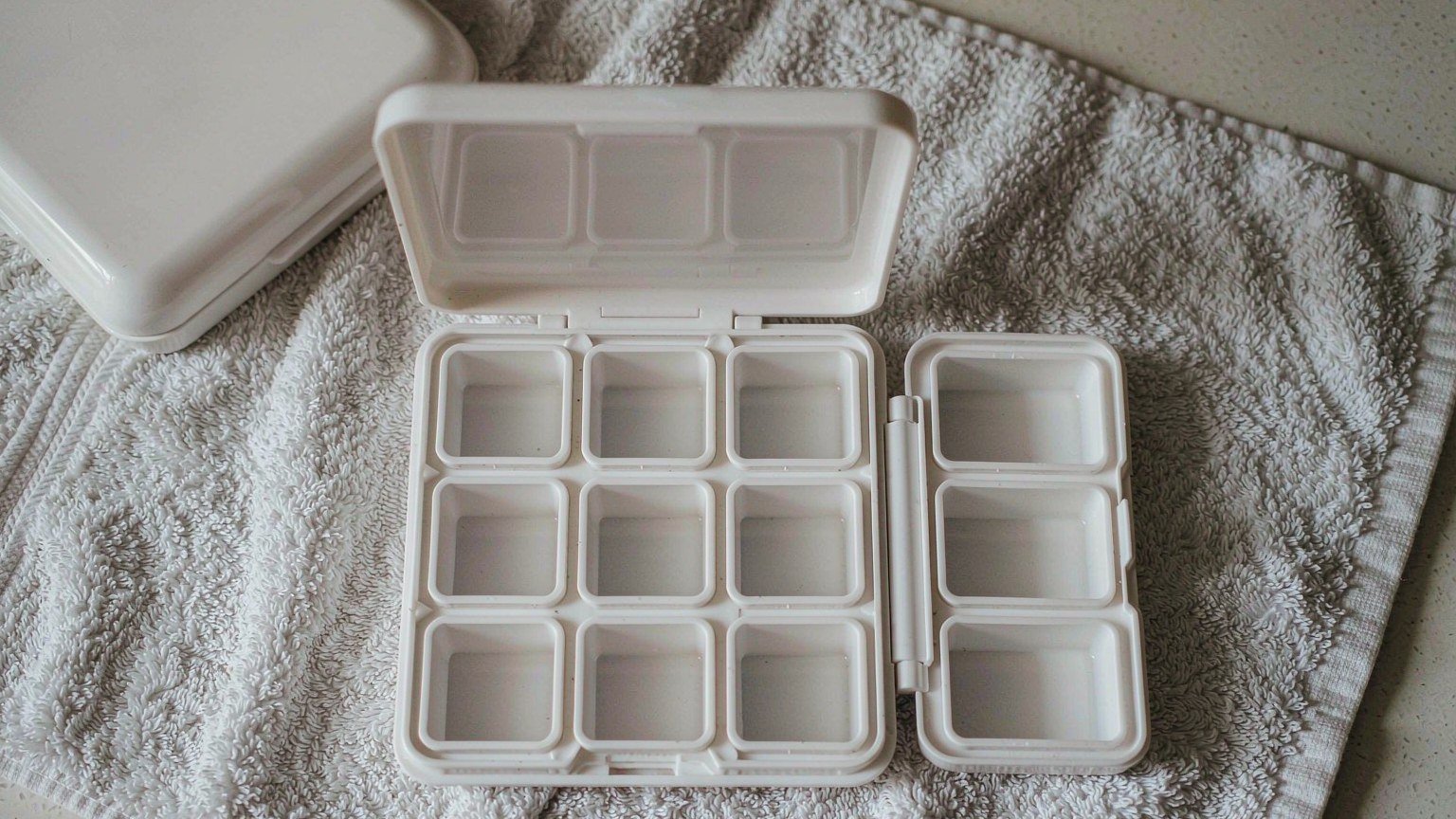
A box that goes back to work damp will ruin the week you just filled into it. Trapped moisture makes tablets stick together, degrades them at the edges, and softens some capsules until they deform. Set the washed box upside down on a clean towel with all lids open and leave it in open air until there is no trace of moisture anywhere — including the hinge grooves and under the lip of each lid. That usually means several hours, not a quick pat with a towel.
If you cannot spare the downtime, the cheapest fix is a second organizer. Rotate them: fill one while the other dries, and you always have a dry box ready. Two inexpensive boxes, alternating, beat one expensive box standing wet on the counter.
Where you keep it matters as much as how you clean it
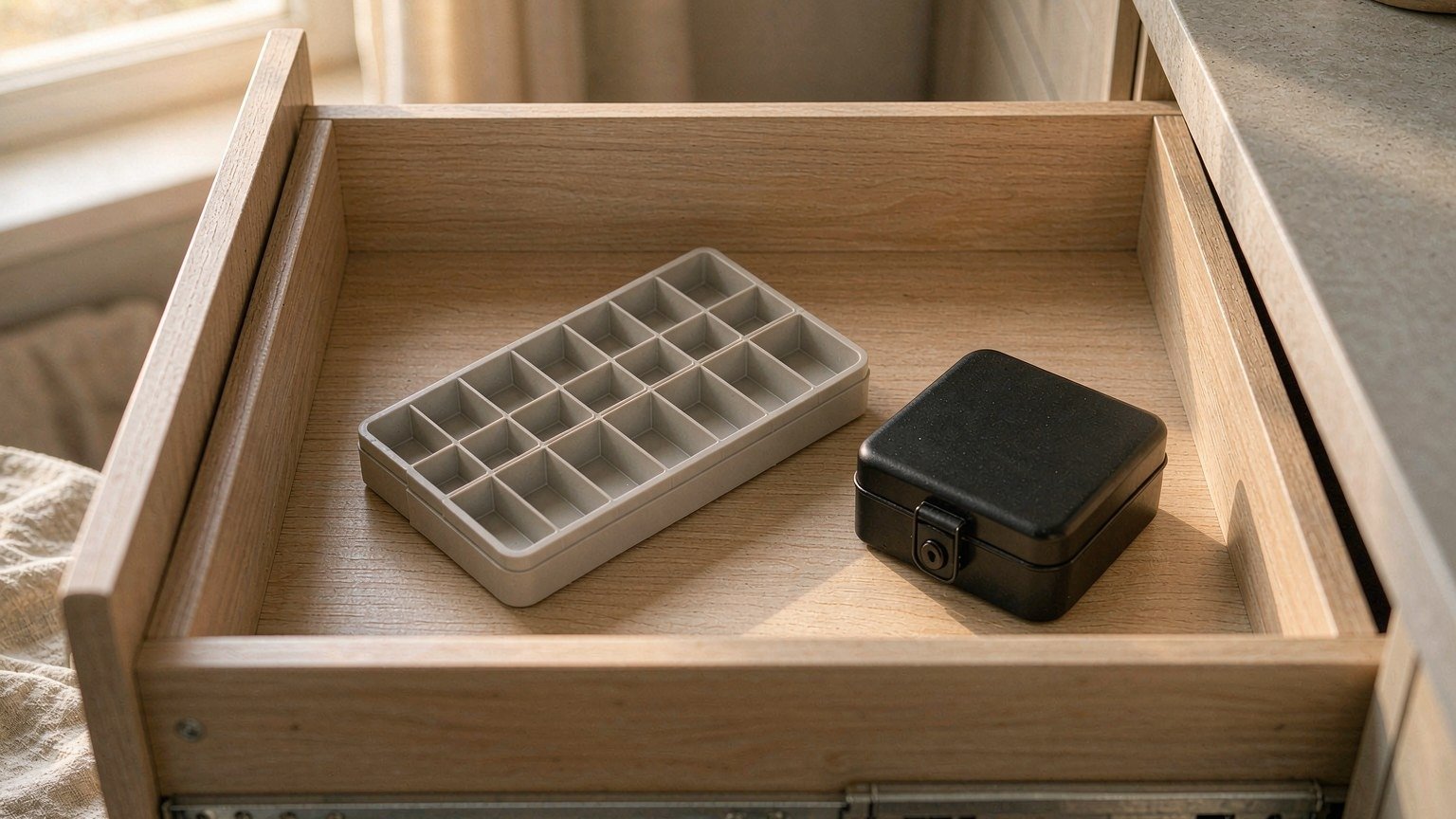
The bathroom counter is the traditional home for a pill box and one of the worst places for it. The heat and moisture from a shower do not stay in the shower, and they work against everything the wash just accomplished. The U.S. National Library of Medicine is direct about this: store medicines in a cool, dry place such as a dresser drawer or a kitchen cabinet away from the stove and the sink, because heat and moisture can make pills less potent or speed up spoilage. Keep the box out of direct sunlight as well, since light degrades some medications over time.
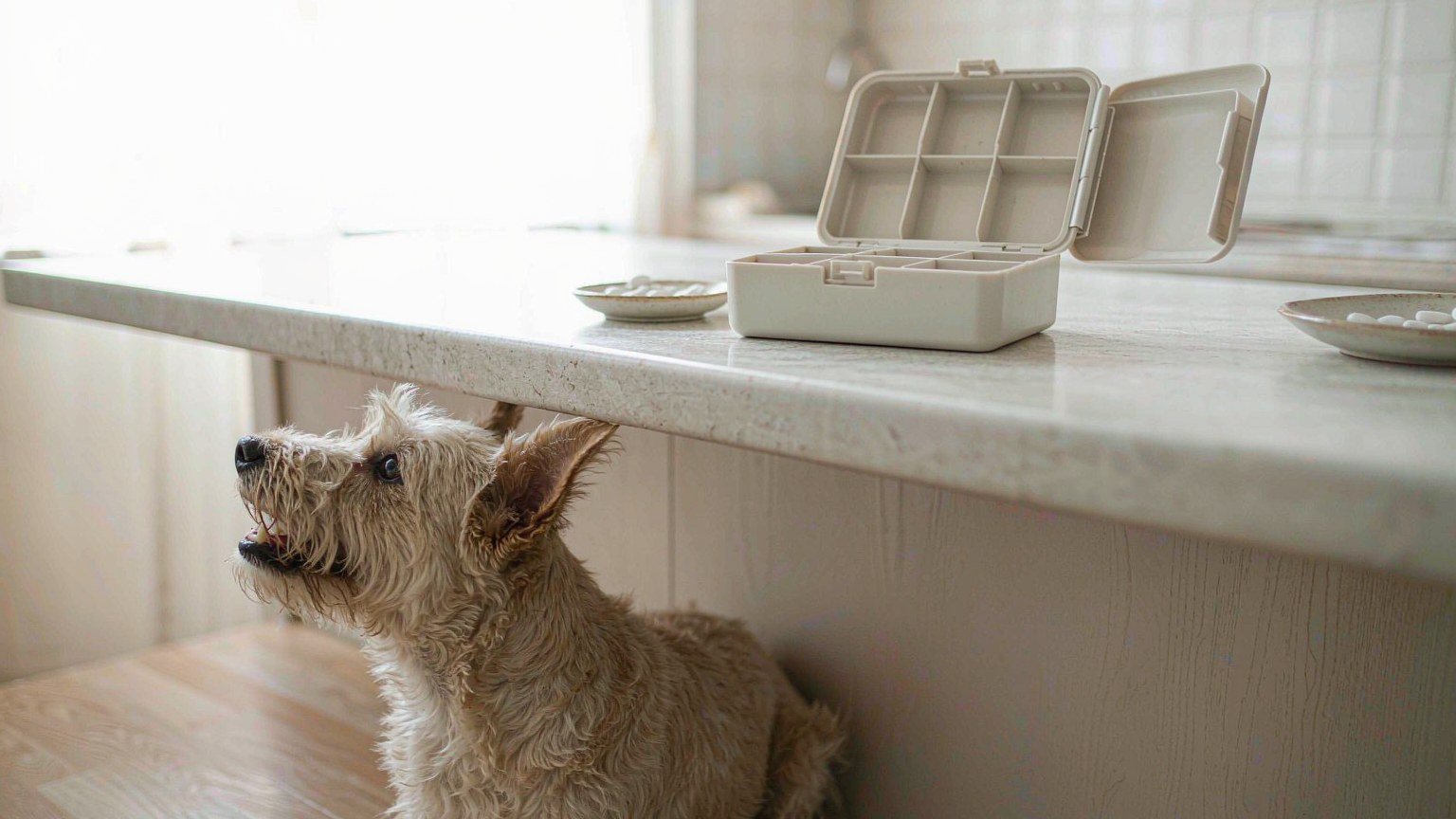
If your main concern is damp air rather than grime, the moisture problem has its own mechanics — we cover it in how humidity ruins your vitamins. And if the box holds anyone else’s medication, keep the organizers separate and clearly labeled, stored apart; mixing them up is the failure that matters most. When the box comes out, it should also close fully and go back up and out of reach of children. The CDC estimates that roughly 100 young children are taken to an emergency room every day after getting into medicine left within reach, so a latched lid stored high is part of the routine, not an afterthought.
When to stop cleaning and replace it
Organizers are inexpensive items, and there is a point where cleaning is no longer the fix. Replace the box when:
- A lid no longer closes with a solid snap.
- The plastic has cracked, or gone cloudy in a way that no longer washes clean.
- The printed day markings have worn off.
- An odor lingers after a wash, or stains will not lift out of the corners.
Treat a daily-use organizer roughly the way you would a toothbrush on a long cycle: expect to retire it after about a year of steady service, sooner if you travel with it or fill it monthly. The reason is not aesthetic. Cracks and worn seams are exactly the surfaces that hold residue and moisture the wash can no longer reach.
A box that is easier to keep clean
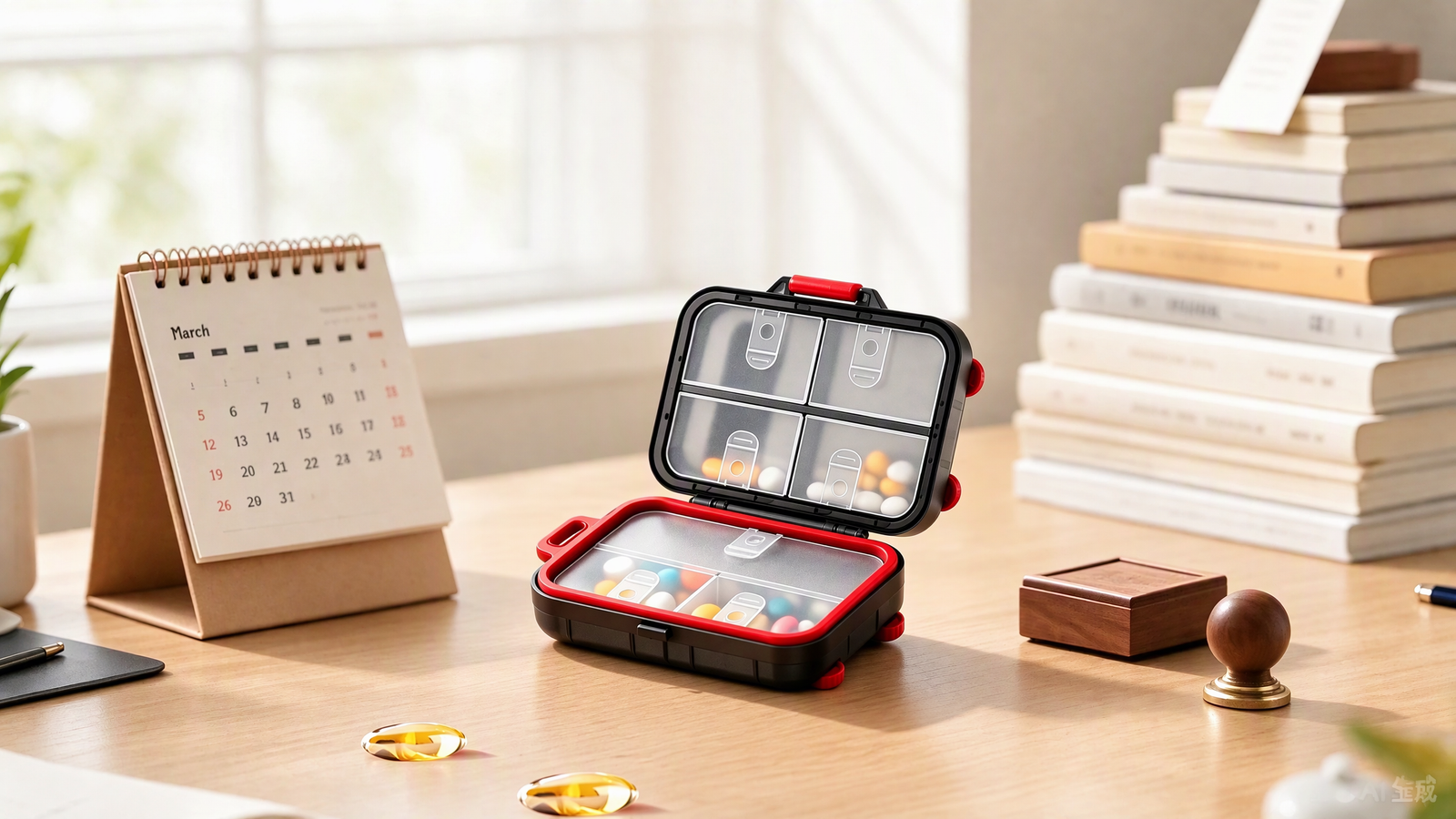
How a box is built decides how hard it is to maintain. Smooth, non-porous compartments with wide openings rinse out in seconds, while deep seams and narrow grooves keep you scrubbing. Our aluminum slide-out drawer organizer was designed around wipe-clean surfaces and a lid that stays shut, and the silent portable pill box gives you the same simple interior in a pocket-sized case. Either one dries fast, which is the whole game when you clean on refill day.
If you want the fuller picture of what belongs in a box and what does not, our piece on supplements that should not go in a pill box pairs well with this one — a clean box does not help if the wrong pills are sitting in it. For a quick refresher on the basics, see can you put vitamins in a pill box.
This article is general information about organizing and storing medication and is not medical advice. Follow the storage and cleaning instructions that came with your organizer, and ask a pharmacist or doctor about anything specific to your medication.
Sources
- Dussart, C., Boulliat, C., Camal, I., Bourgeois, D., & Carrouel, F. (2019). Safety Evaluation of Individual Pillboxes to Control Cross-Contamination in the Drug Circuit in Hospitals. International Journal of Environmental Research and Public Health, 16(20), 3878. DOI: 10.3390/ijerph16203878.
- U.S. National Library of Medicine (MedlinePlus). Storing your medicines.
- U.S. Centers for Disease Control and Prevention (CDC). Up and Away Campaign Resources — Medication Safety.