





You land in a city six time zones away and your phone flips to local time — but the pill you take every morning doesn’t know what a timezone is. Do you take it now, at “your” 8 a.m., or wait for the local 8 a.m. that’s still hours off? This guide is about that exact gap: how to keep your medication on schedule when the clock under your feet disagrees with the clock in your head, using a travel pill organizer and a couple of alarms.
Why a time difference breaks your dosing rhythm
Most daily medication is timed by interval, not by the sun. A pill meant to be taken “every 8 hours” or “once a day” is really meant to be taken a fixed number of hours after the last one — your body doesn’t restart its count when you step off a plane. The trouble is that “once a day” feels tied to morning, and morning now happens at a different wall-clock hour. Skip the gap and levels drift; double up to “fix” it and you can overshoot. The fix isn’t willpower — it’s a system that anchors dose time to something stable.
The rule that settles it: dose by time-since-last, not local time
The U.S. Centers for Disease Control and Prevention (CDC) puts it plainly: when you travel, take medicine by the hours since your last dose, not by the local time of day Traveling Abroad with Medicine. If your dose is every 8 hours, it’s every 8 hours whether the sun agrees or not. That single rule removes most of the panic: you’re not deciding “morning or night,” you’re counting hours from the last pill.
Shift gradually instead of jumping
For a trip across several zones, a hard jump to local time rarely goes smoothly — especially if you take something more than once a day. Travel-health guidance suggests moving about one to two hours a day toward the destination schedule, using phone alarms plus a clearly labeled organizer (a “dosette” box) to stay accurate while your body catches up Travelling with medicines, PMC. A trick that works for a lot of people: keep one alarm set to home time for the first day or two, so you always know when your “real” dose is due, then switch to local time once you’ve landed and adjusted. One rule with no exceptions — don’t double up or skip a dose to cover the gap on your own. If you take diabetes, epilepsy, blood-thinner, or hormonal medication, get a written schedule from your pharmacist or doctor based on your flight times before you leave; as one UK pharmacy guidance notes, do not change or add a dose to compensate for a time difference without professional advice Dear’s Pharmacy.
Lock your “home time” with a weekly organizer and an alarm
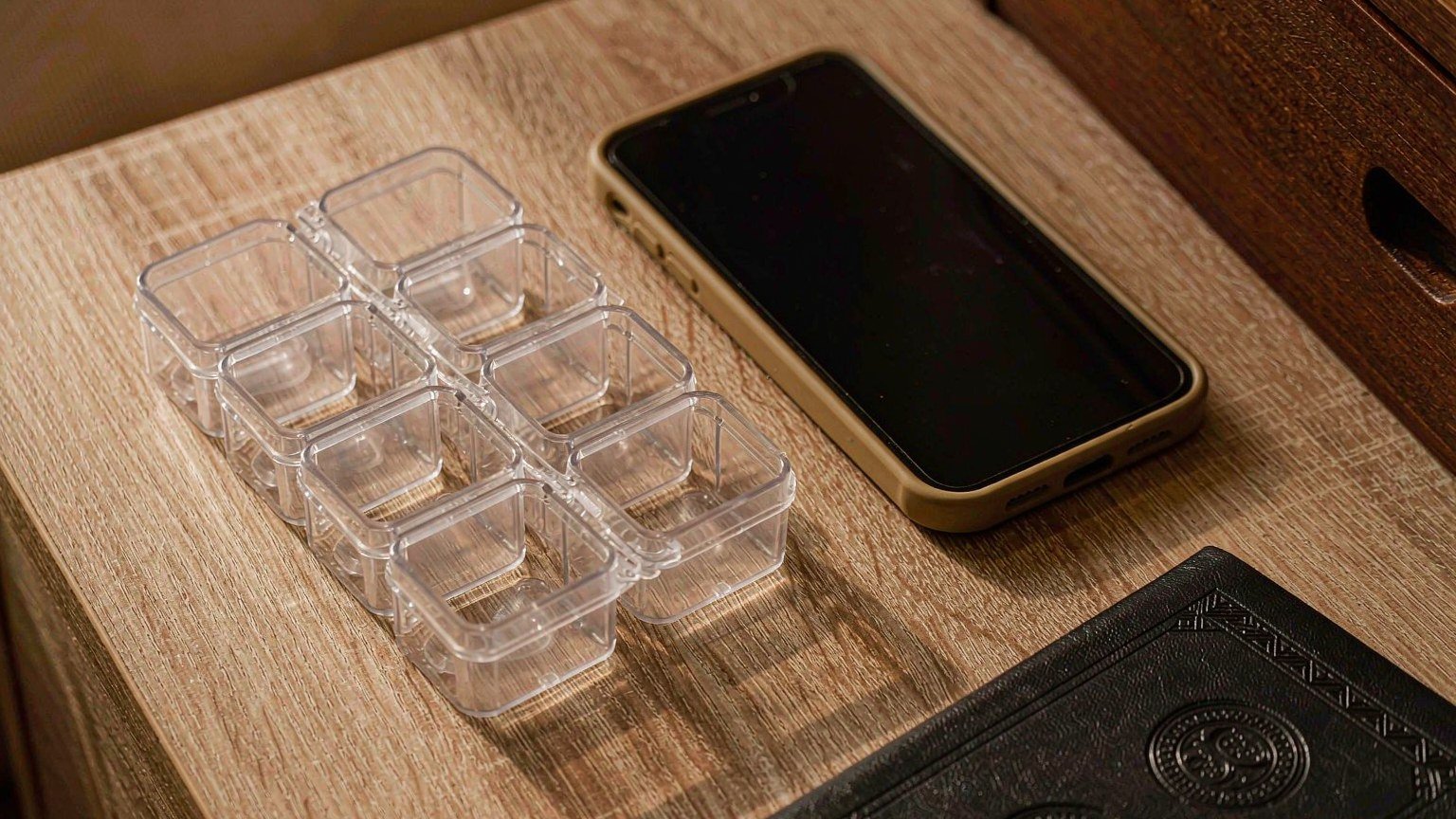
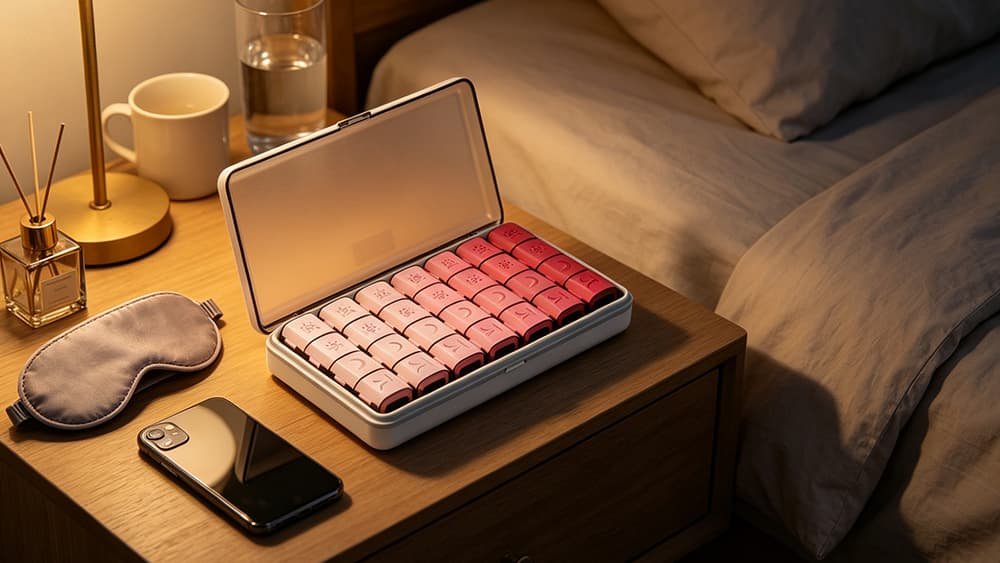
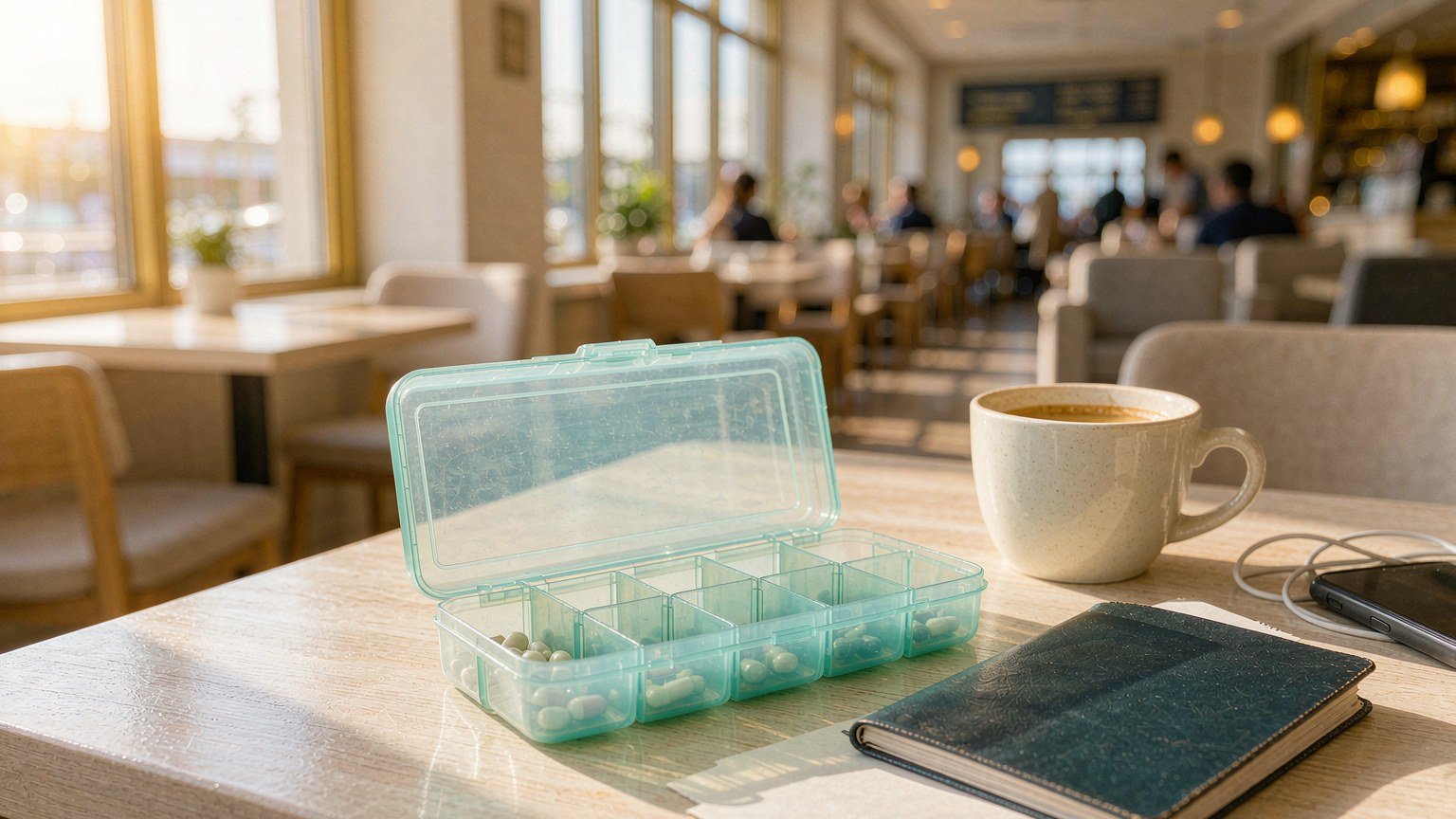
A multi-day organizer does the heavy lifting here. Fill it before you leave, label each slot by home-time dose (not “Monday morning” but “dose 1, dose 2…”), and let the compartments be your visual proof of what you’ve taken and what’s next. Pair it with two alarms: one on home time for the travel days, one on local time for after you adjust. You stop negotiating with a strange clock and start following the box. For help picking materials and layouts, our guide to choosing a portable pill organizer covers the trade-offs.
Multiple stops, and the paperwork that travels with you

Multi-city trips just repeat the math: re-anchor to home time at each leg, and only switch to local once you’ve settled. The carry-on rule still applies — keep all medication with you, never in checked luggage, with enough for the whole trip plus delay days CDC. For international legs, prescription medicine stays in its original labeled container with copies of your prescription; many countries allow only about a 30-day supply and may ask for a doctor’s letter. Check the destination’s embassy before you fly — our guide to taking a pill organizer on a plane covers airport security and the “original bottle” myth, and our travel packing guide has the full checklist.
One organizer built for exactly this
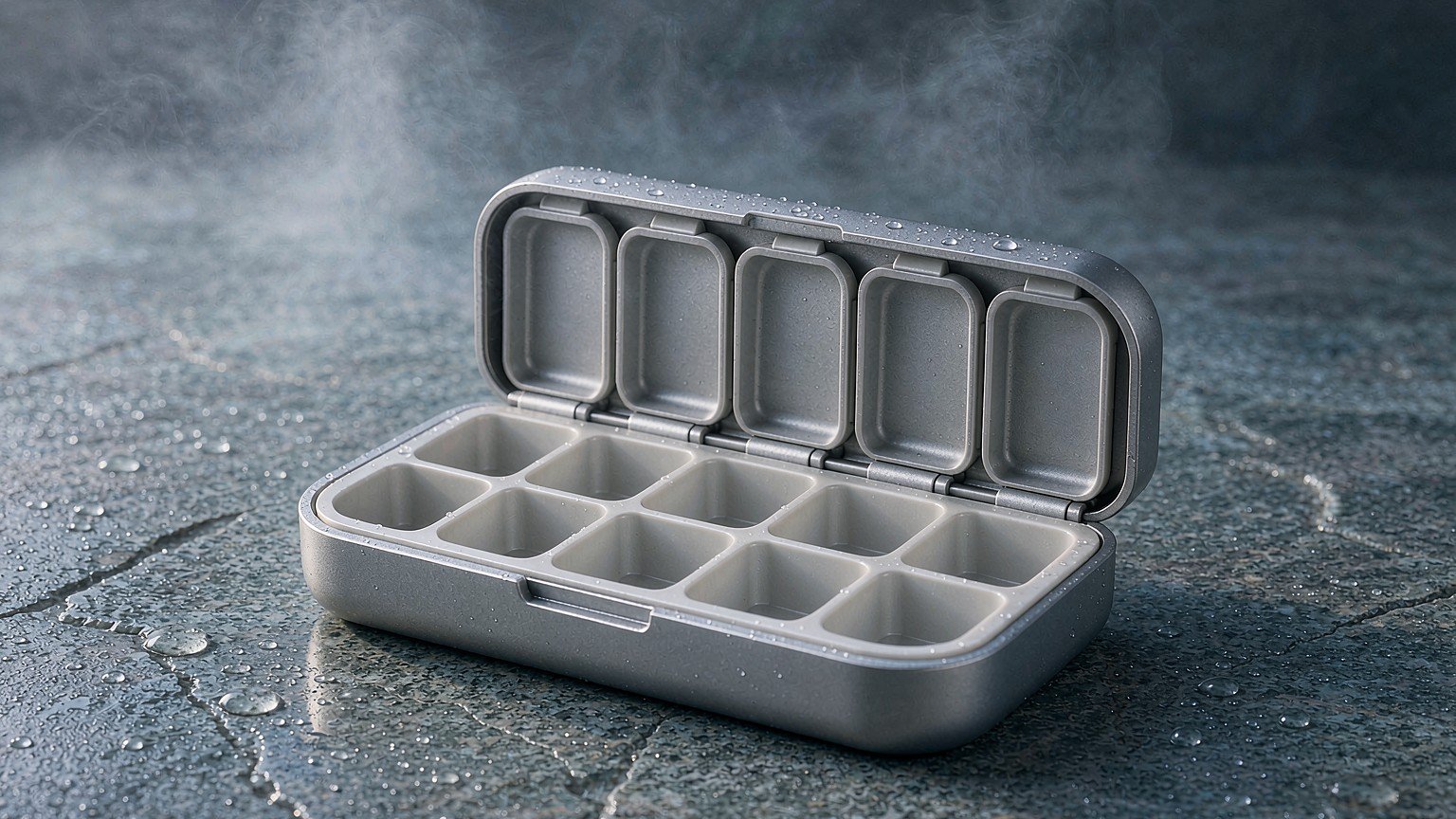
If you want a case that folds flat, holds a full week in seven labeled compartments, and disappears into a carry-on, our 7-compartment suitcase-style pill box (BS1568J) was built for that job — suitcase-form, lightweight, spill-resistant, so it rides in your bag instead of ruling it. Pre-fill it by home-time dose, set your alarms, and time zones stop being the part of the trip you worry about.
Wherever you’re headed, the goal is the same: your medication arrives with you and stays on schedule. Anchor dose times to the last pill, not the local clock, shift gradually, and let a labeled organizer plus an alarm do the remembering. Browse our travel-ready organizers to find the one that fits your trip.
Megastep publishes these guides for general information. This article is not medical advice. Dosing changes — especially across time zones or for prescription medication — should be confirmed with your healthcare provider or pharmacist. Medication laws differ by country; check the destination’s embassy before you travel.
Sources
- Centers for Disease Control and Prevention (CDC). Traveling Abroad with Medicine.
- Travelling with medicines in 2018, PMC (PubMed Central).
- Dear’s Pharmacy. Travelling with Medicines: What to Check Before You Leave.