




When you source a pill organizer, you compare price, material, MOQ, and maybe a factory audit. But there is one question most buyers never ask — and it can take down an entire listing faster than any shipping delay: Is the design patented? If the answer is no, or if the supplier is quietly copying someone else’s design, the brand that ends up on the packaging — yours — is the one that gets sued.
Why a design patent is your insurance policy, not just the factory’s
Most buyers assume a design patent protects the factory that filed it. That is half the story. The other half is what happens when there is no patent — or when the patent belongs to someone else entirely.
If you source a pill organizer from a factory that copied the design, and you private-label it under your brand, you become the visible seller. When the real patent holder finds your listing — and they will, because competitors monitor Amazon listings systematically — the complaint goes to your account, not the factory’s. Amazon does not adjudicate patent disputes. It removes the listing, freezes your funds, and asks you to sort it out with the rights holder. According to Amazon’s own 2023 brand report, the platform processed over 100,000 intellectual property complaints that year, with patent infringement accounting for 27% of them. Three violations and your selling privileges can be permanently revoked. (大数跨境 / 10100.com)
Beyond the platform, the exposure extends to customs and courts. U.S. Customs and Border Protection (CBP) recorded $3.8 billion worth of seized counterfeit and infringing goods in fiscal year 2023. German customs is stricter still — under Section 142 of the German Patent Act, even samples or test units can be detained and fined. And in the United States, a design patent holder can sue under 35 U.S.C. § 289 and recover the total profit the infringer made from the product — not just damages, but every dollar earned. (大数跨境 / 10100.com; Today’s Patent)
There is a real-world pattern behind these numbers. A U.S. e-commerce seller sourced “patented” silicone molds from a supplier in Guangdong. Six months later, their Amazon listings were suspended. The patent had expired, the real holder sued, and the seller lost $320,000 in damages plus their entire inventory to destruction. Verifying the patent at step one would have caught the expiry. (ChinaBizInsight)
What a design patent actually protects (and what it doesn’t)
A design patent — called an “appearance design patent” (外观设计专利) in China and a “design patent” in the United States — protects the ornamental appearance of a product: its shape, pattern, color combinations, and the overall visual impression it creates. It does not protect how the product works, its internal structure, or any functional mechanism. (CNIPA, via 浙江知识产权在线)
This matters for pill organizers specifically, because the thing that makes one box different from another is almost always visual — the silhouette, the way it opens, the texture of the surface — not a functional breakthrough. A design patent on a pill organizer protects the thing your customer actually sees and picks up.
There are two boundaries every buyer should understand:
1. In China, design patents undergo form examination only — no substantive novelty review. The patent office checks that the application is formally complete, but it does not search for prior art. This means a granted design patent is legally valid until someone challenges it, but it is not a guarantee that no similar design exists. For high-value or cross-border orders, buyers should go beyond the patent certificate and check for existing designs independently. (1688百科)
2. A patent granted in China does not automatically protect the design abroad. If you sell in the U.S., Germany, or Japan, you need a design patent registered in that jurisdiction — or a Hague Agreement international registration that covers it. A Chinese patent alone stops copying inside China, but it does not give your buyer legal standing in their own market. (1688百科)
On the timeline: China’s revised Patent Act, effective June 1, 2021, extended the design patent protection period from 10 years to 15 years, counting from the application date. Designs filed before that date still hold 10-year terms. (CNIPA)
Two Megastep lines protected by design patents
At Megastep, two of our flagship product lines carry granted design patents:
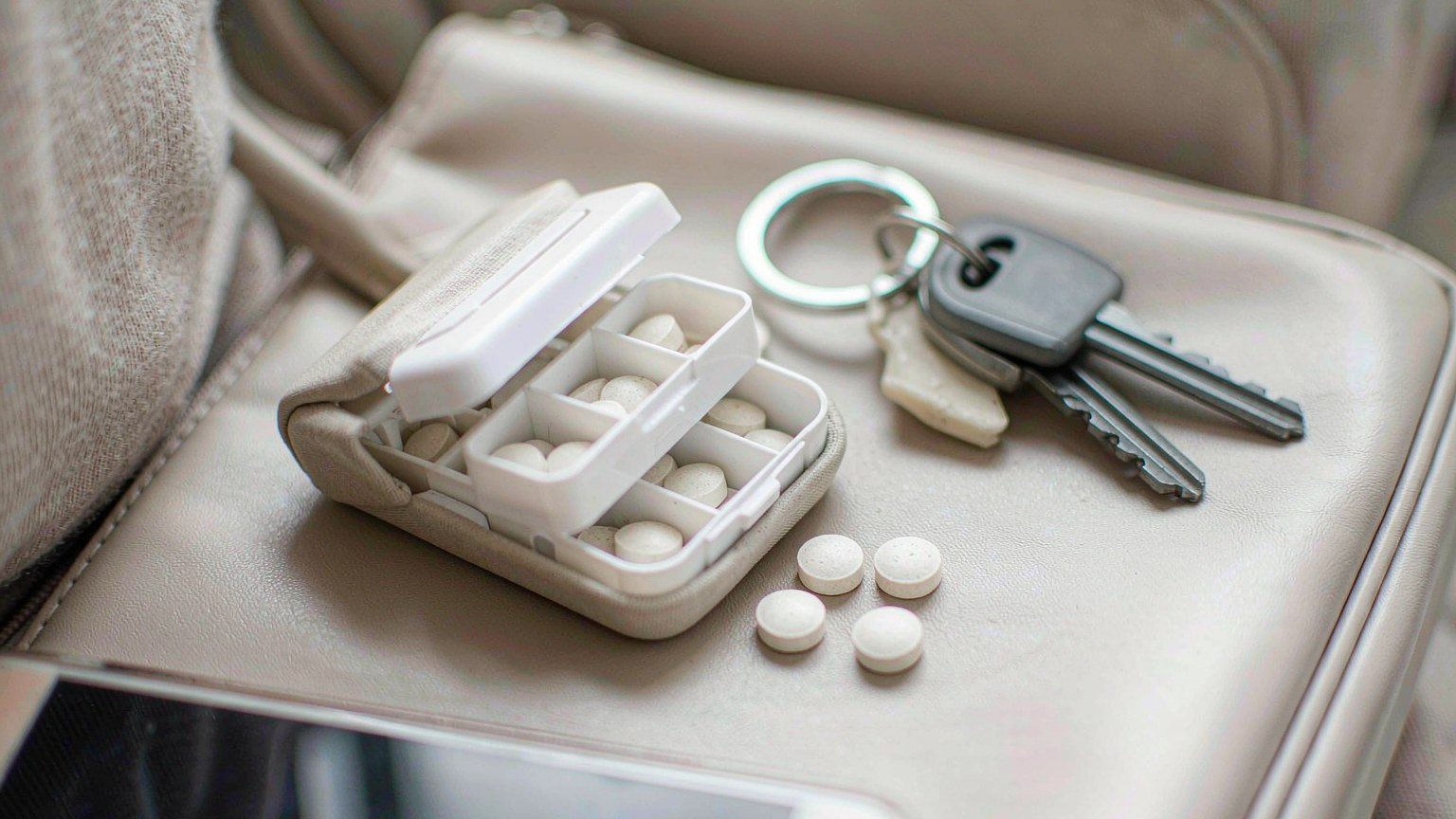
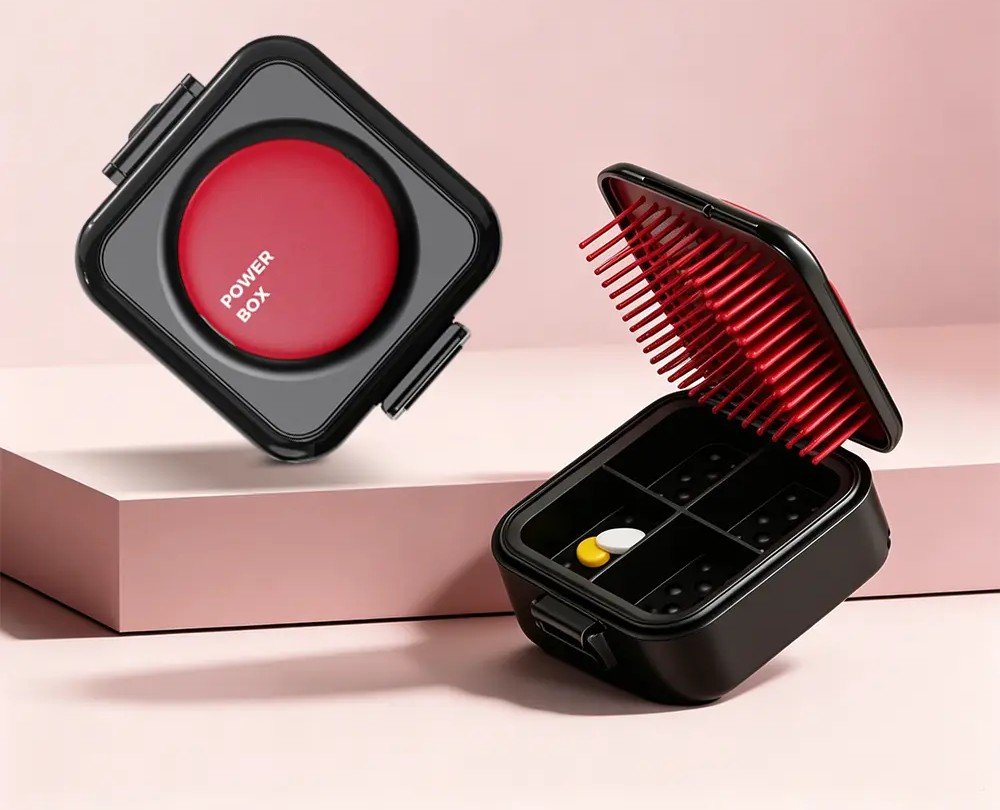
Quiet (BS1564J) — a silent-carry pill organizer designed so pills do not rattle inside a bag and do not chip against each other in transit. The patent covers the overall exterior design: the form factor, the surface treatment, and the visual impression of the complete product. The silence is a function of the internal structure; the patent protects the appearance that makes the product recognizable on a shelf.
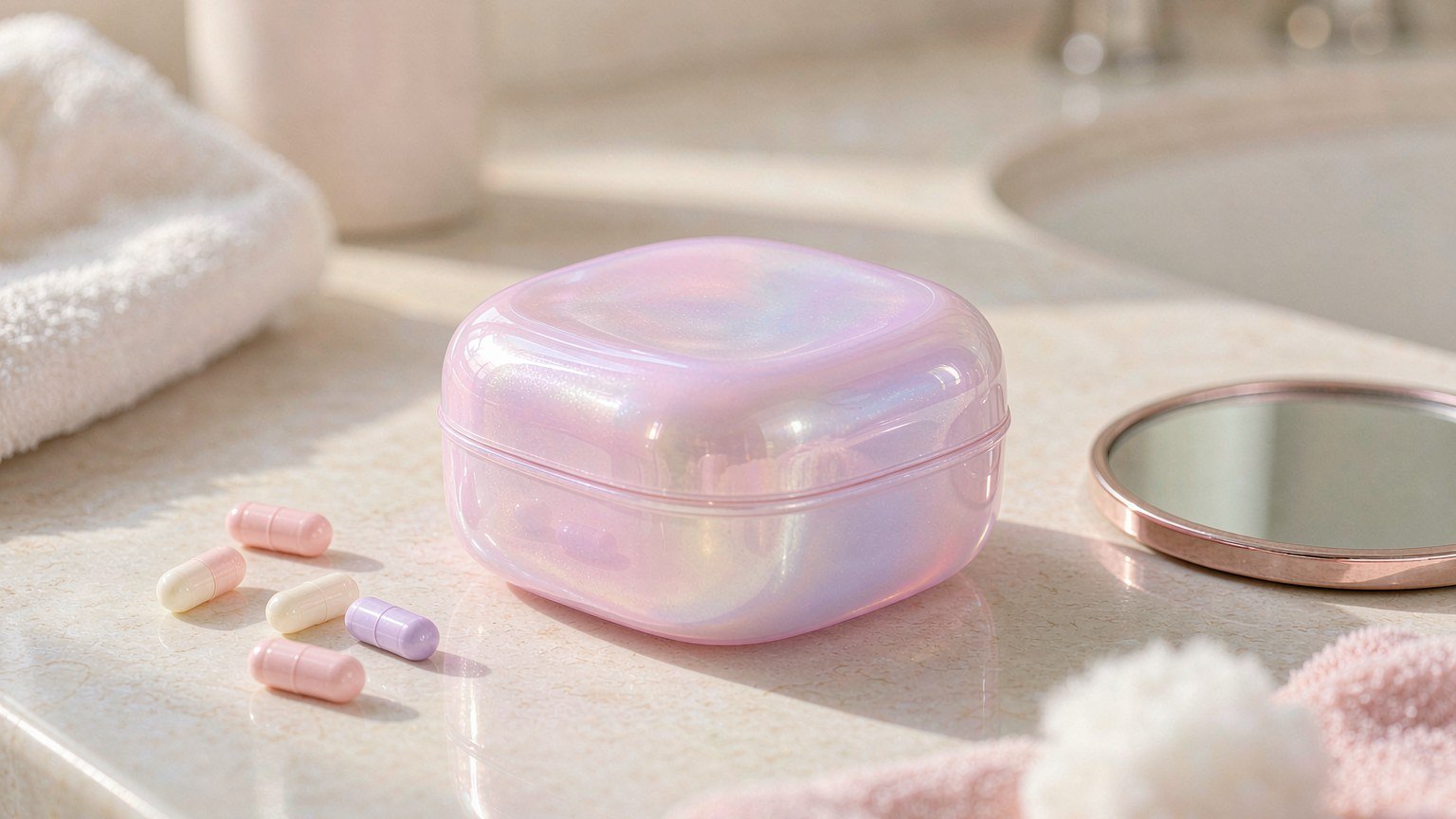
Emotion (BS1568J) — a pill organizer built in the form of a miniature travel case, complete with corner guards, clasp locks, and wheel detailing. It is not marketed as a “pill box” but as a medicine’s own travel case — a carry-on for your daily regimen. The design patent covers this distinctive case silhouette and the integrated travel-case visual language.
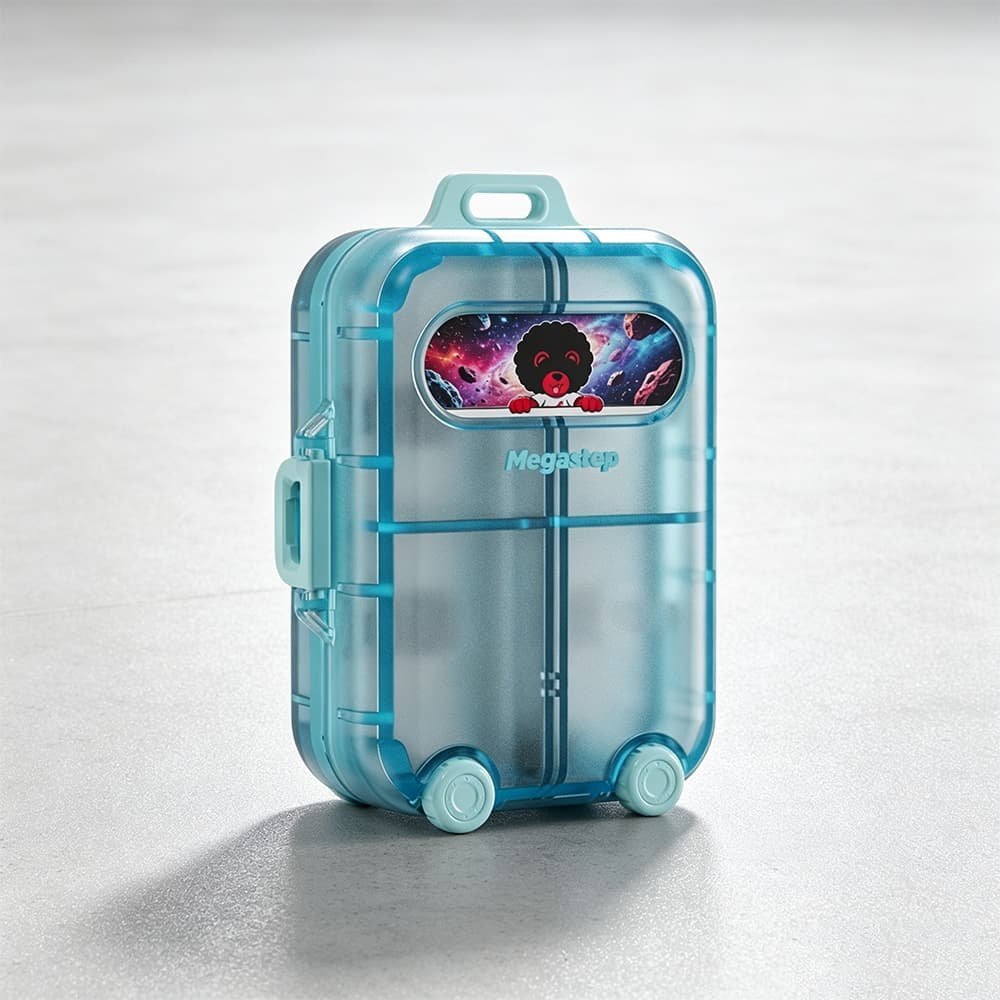
Both patents are granted in China. Patent numbers are available on request.
How to verify a supplier’s patent claim in four steps
Any supplier can say “patented.” The word means nothing without a number you can check. Here is a four-step method that any buyer can run, using free public databases:
Step 1 — Get the patent number. Ask the supplier for the actual patent number (in China, the format is typically ZL followed by digits). If they only give you a name or a certificate scan, that is a starting point — but the number is what you verify with.
Step 2 — Search the official database. In China, use the CNIPA Patent Search system at pss-system.cponline.cnipa.gov.cn. In the U.S., use the USPTO Patent Public Search. Globally, WIPO’s PATENTSCOPE covers multiple jurisdictions. Enter the patent number or the supplier’s company name as the applicant, and check what comes back. (1688百科; ChinaBizInsight)
Step 3 — Confirm the patentee is your supplier. A patent can be sold, licensed, or held by a parent company. Check that the rights holder listed in the database matches the supplier you are dealing with — or is at least an entity they can document their relationship with. If the patent was assigned multiple times in a short period, that can indicate a problem. (ChinaBizInsight)
Step 4 — Check the patent is still alive. A design patent requires annual fee payments to stay valid. If fees are not paid, the patent terminates automatically — even if the certificate looks fine. Check the legal status in the database for “authorized” (not “expired,” “invalidated,” or “terminated for non-payment of fees”). For designs filed after June 1, 2021 in China, the protection runs 15 years; before that, 10 years. (CNIPA; 1688百科)
One more check that is easy to skip: compare the patent drawings to the actual product the supplier is selling. A supplier may hold a patent — but for a different design than the one they are showing you. The patent drawings in the database tell you exactly what shape is protected. (1688百科)
What choosing a patented supplier really saves you
A design patent is not a luxury line item. It is the cheapest insurance a brand can buy against the single most expensive thing that can happen to a listing: a forced takedown after you have already invested in inventory, photography, reviews, and ad spend.
The financial math is stark. The average cost of defending an ITC Section 337 investigation in the United States exceeds $100,000 — and that is before any damages. A TRO (temporary restraining order) can freeze your PayPal and bank accounts within days of the complaint. According to a 2023 survey by the Shenzhen Cross-Border E-Commerce Association, over 15% of small and mid-sized sellers experienced overseas patent litigation, with average losses of 230,000 RMB (roughly $32,000) per case. A Zhejiang University white paper found that 43% of companies that suffered patent disputes lost customers afterward, with resale cycles extending by an average of six months. (大数跨境 / 10100.com)
Beyond avoiding losses, a patented supplier signals something else: they invested in original design. A factory that files design patents has gone through the work of creating a product from scratch — sketching, prototyping, refining — rather than reverse-engineering a competitor’s sample. That investment tends to show up in the product itself, in the fit of the lid, the feel of the finish, the consistency of the molding. A design patent does not guarantee quality, but it does guarantee intent.
The one question to add to your sourcing checklist
If you already have a supplier vetting process — and if you source pill organizers, you should — add one line: “Is this design patented, and can you prove it?” If the answer is a number you can verify in a public database, you have a partner who did the design work. If the answer is a shrug, you have a risk that will show up on your balance sheet eventually — maybe not in the first shipment, but in the first complaint.
If you want to source from a manufacturer that holds granted design patents on its pill organizer lines, talk to us. Our Quiet and Emotion lines are patented, and we can walk you through the verification — patent numbers included, on request. For a broader checklist on vetting a pill box factory, our guide on Si aún no está seguro de que trata con un fabricante real y no con una empresa comercial disfrazada de fábrica, nuestra guía sobre cómo verificar una fábrica de cajas de pastillas antes de pedir cubre las primeras comprobaciones. covers the full due diligence process.
This article is general sourcing guidance, not legal advice. Patent laws and database interfaces change. Confirm current rules with the official sources linked above before making sourcing decisions.