





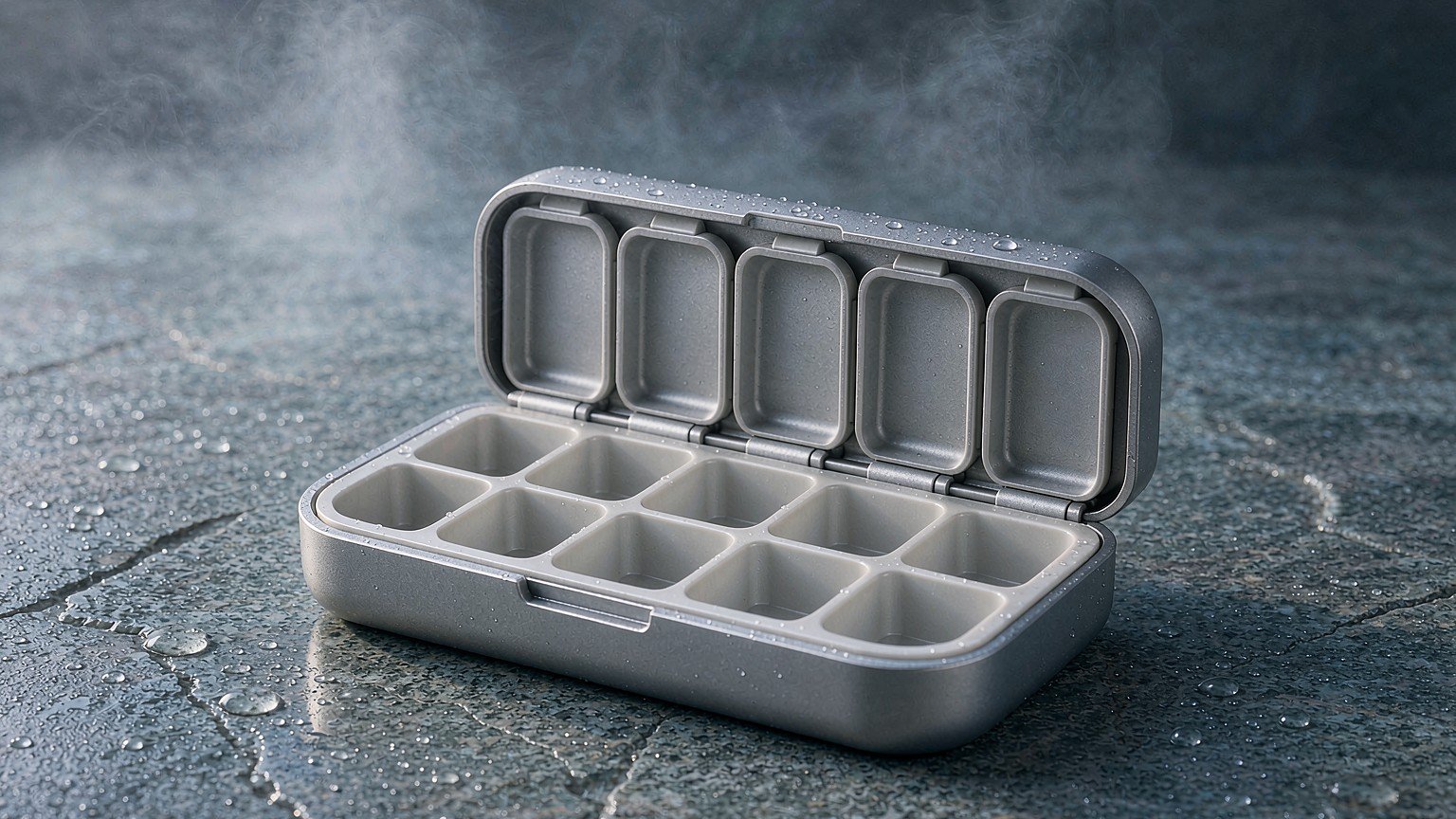
You spent real money on those supplements. Then you left the bottle in the bathroom, or a humid summer afternoon pushed the moisture in the air up, and a chunk of that potency quietly vanished before you took a single dose. Most people blame the brand. The real culprit is often the air in the room.
This guide explains, in plain terms, how humidity breaks down vitamins and other supplements — and what a moisture-proof pill box is actually supposed to do about it.
Why “just keep the lid on” doesn’t cut it
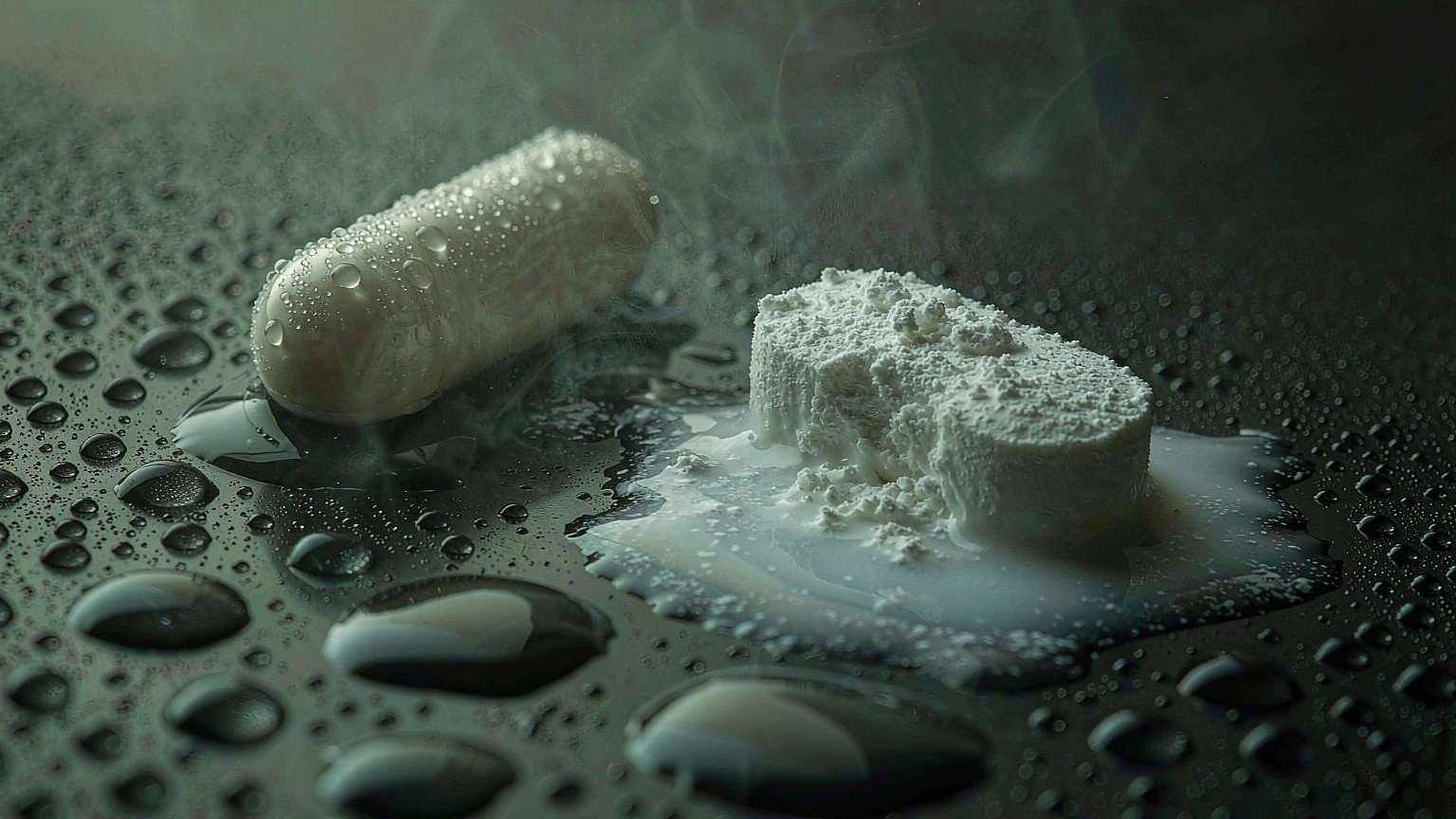
The problem has a name: deliquescence. When the air gets humid enough, water-soluble solids like vitamin C and several B vitamins pull moisture out of the air and start to dissolve on their own. Lisa Mauer, a food-science researcher at Purdue University, showed in work published in the Journal of Agricultural and Food Chemistry that some vitamin-C products can lose their entire content within a week once they deliquesce. The damage does not reverse when the air dries out again.
A bathroom makes this worse than people expect. Humidity in a bathroom can spike past 90% during a shower. Even with the lid on, every time you open the bottle you swap the dry air inside for the damp air of the room. The lid helps; it does not seal the problem away.
Which supplements hate moisture the most
Not everything reacts the same way. A quick way to think about it:
- Vitamin C and B-complex (water-soluble): the most fragile. They break down faster in humidity than fat-soluble vitamins like A, D, and K.
- Probiotics: moisture can “wake” dormant organisms too early; without food, they die before they reach your gut.
- Fish oil and softgels: warmth plus humidity drives hydrolysis, and the capsules turn sticky and clump together.
- Gummies and powders: they cake, and a damp environment invites mold.
If you want the detail on what should and shouldn’t live in a weekly box, we covered it in Can You Put Vitamins in a Pill Box?
The weak point most people miss — the organizer itself
Here is the part that catches people out. The original supplement bottle usually ships with a desiccant pack and a tight cap for a reason: it is built to fight humidity. The moment you pour a week of doses into a standard pill organizer, you have moved them out of that protected environment.
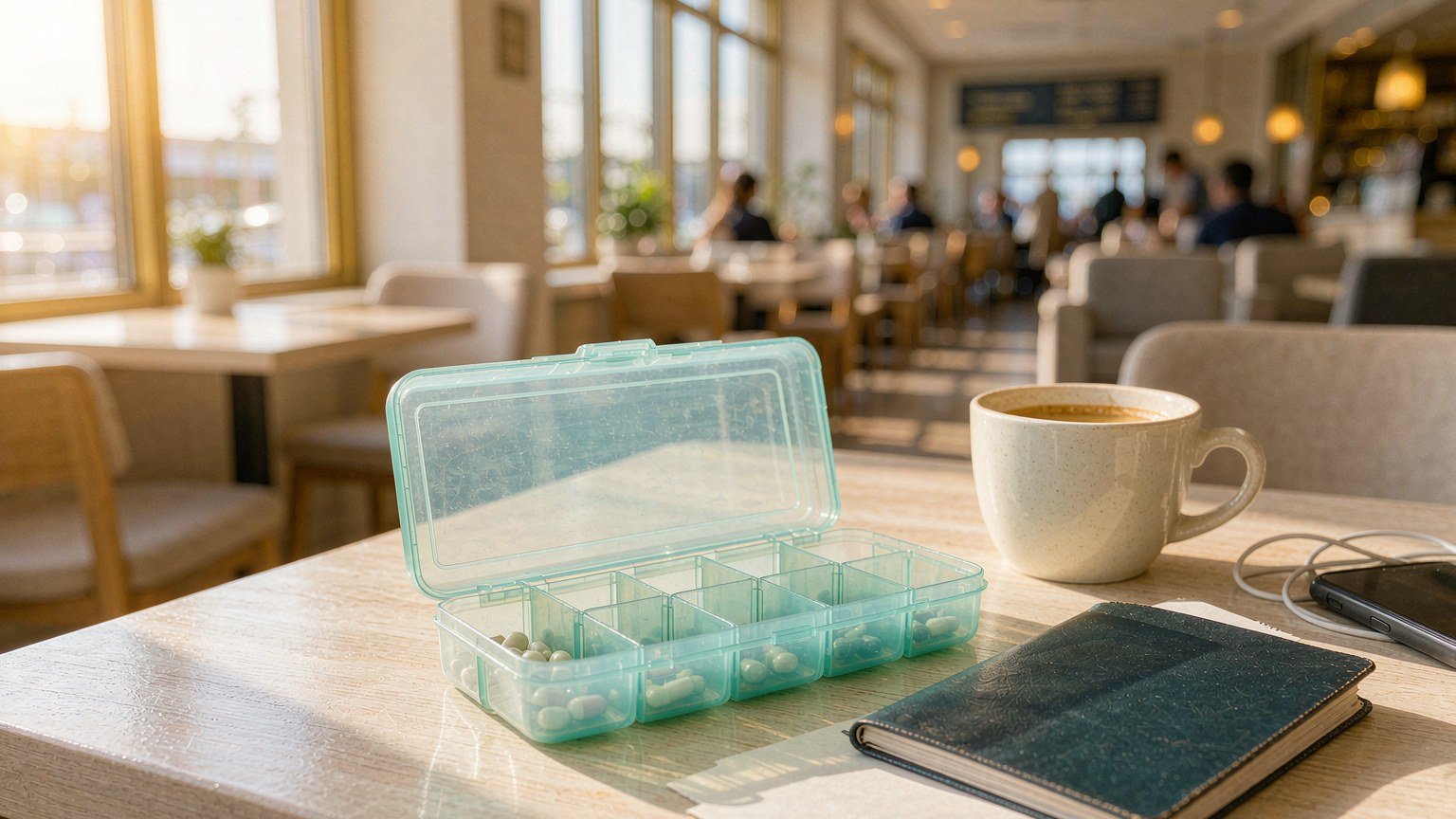
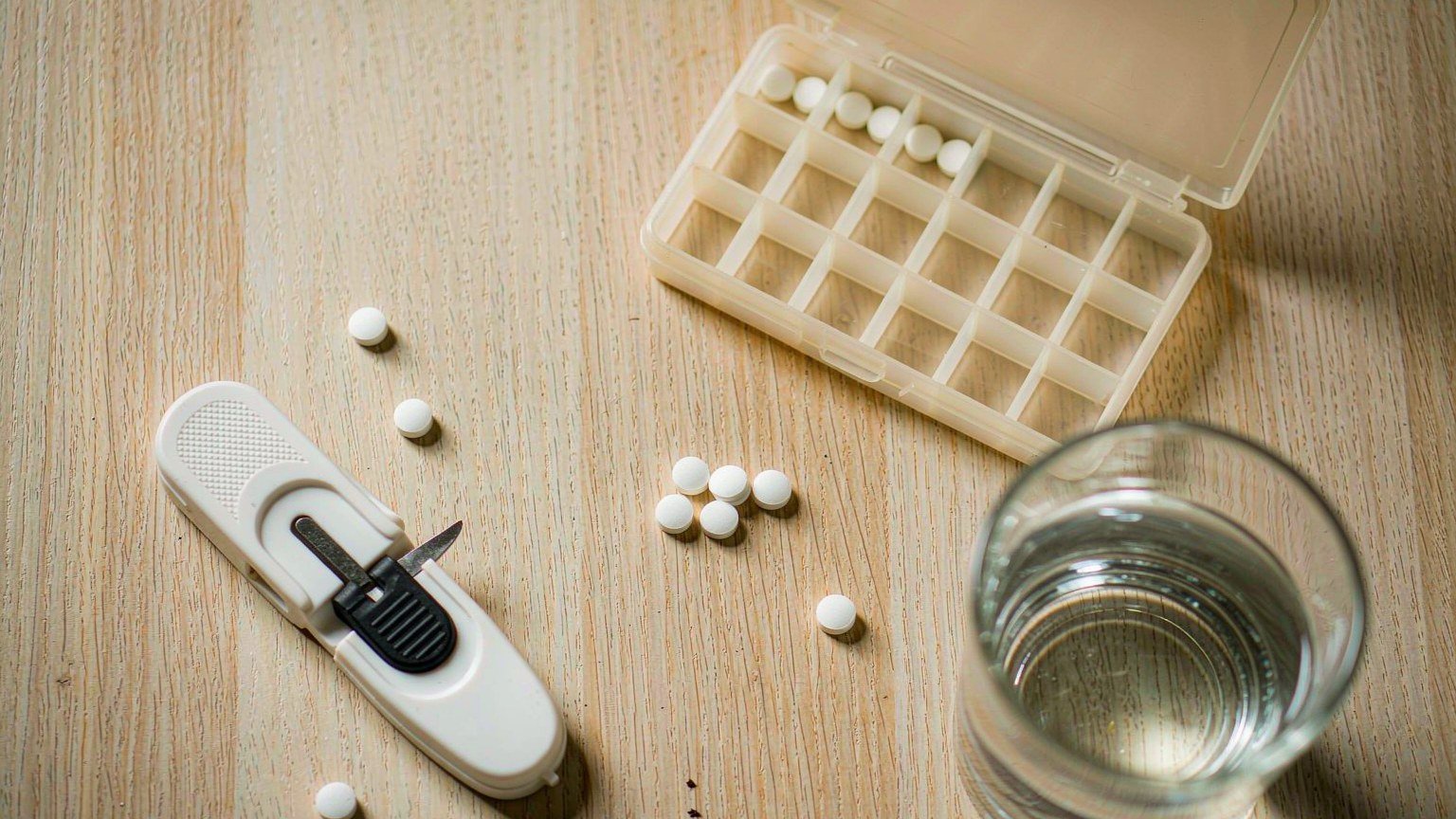
Most everyday organizers are not airtight or waterproof — fine for remembering Tuesday’s dose, less fine for keeping it dry through a humid week. So the very box that keeps you on schedule can become the window where moisture does its work.
More on this in How to Protect Pills in a Pill Organizer.
What actually keeps pills dry
You do not need a lab. A few habits remove most of the risk:
- Keep the desiccant pack from the original bottle; throw away the cotton ball (it holds moisture once opened).
- Store in a cool, dry spot — a bedroom drawer beats the bathroom or kitchen. The World Health Organization points to keeping medicines at or below about 60% relative humidity.
- Skip the fridge for most supplements. Opening a cold container in warm air forms condensation — the opposite of what you want.
- For travel, a sealed bag or waterproof case beats an open tray.
How to pick a moisture-proof pill organizer
If you live somewhere humid, or you pre-fill for a whole week, the organizer itself becomes part of the storage plan. Look for:
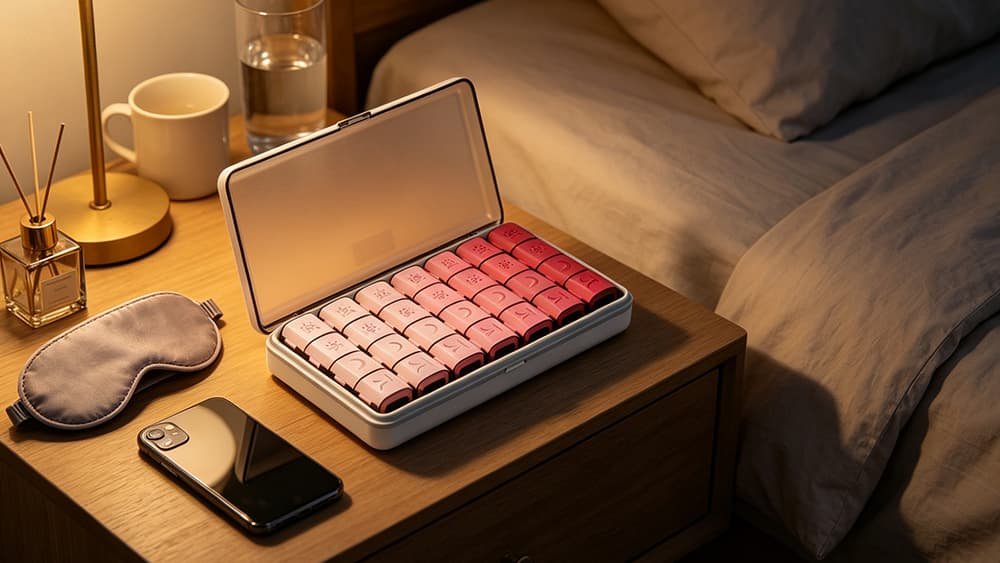
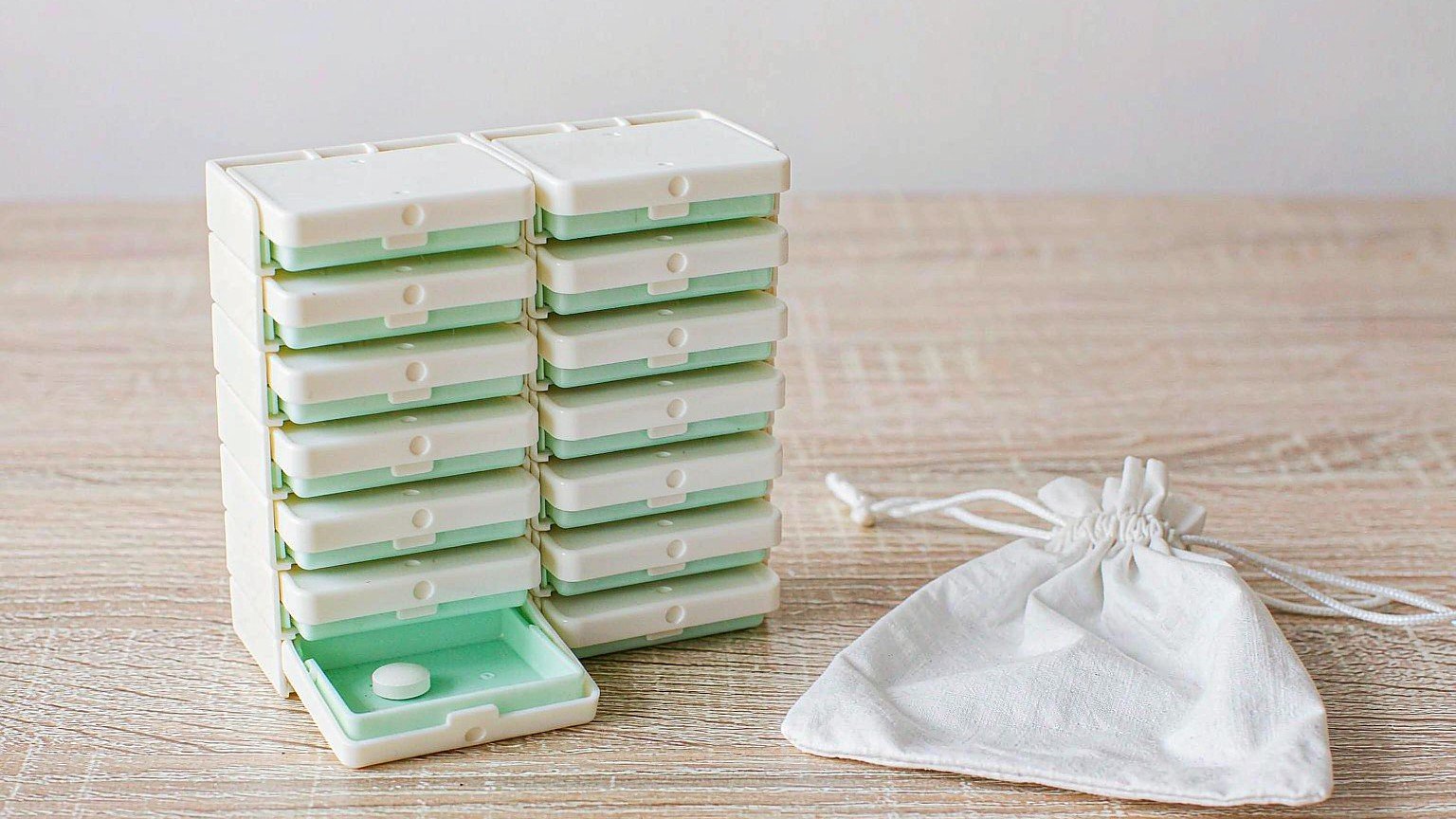
- A seal on each compartment, not just one lid for the whole box. A silicone or rubber gasket is the part that actually blocks damp air.
- Individual, separate lids so one open morning doesn’t expose the other six days.
- An opaque or dark shell — light also degrades riboflavin (B2) and vitamin C, so blocking both at once is a bonus.
- A rigid body that does not flex open at the seams.
One nuance worth knowing: “drier” is not automatically “better.” Gelatin capsules sit happiest around 30–50% relative humidity; too dry and the shell cracks, too wet and they stick. The goal is a stable band, not a race to zero. A good design buffers moisture; a weak one just hopes.
We wrote more on choosing the right portable pill organizer for daily use.
What Megastep is building around this
Moisture is one of the two problems we designed our pill-box thinking around — the other is noise. Our storage philosophy starts from the same fact this article rests on: a supplement only helps if it is still potent when you take it. We are developing organizer lines with sealed, gasketed compartments and desiccant integration, built so your daily doses stay inside their potency band instead of slowly drying out or soaking up the room.
You can see where this is heading on our moisture-and-noise design page.
Until those arrive, the habits above will protect what you already own.
This article is for general information about supplement storage and is not medical advice. Follow the storage instructions on your product label, and check with a pharmacist or doctor about anything specific to your medication.
Sources
- Hiatt, A. N., Ferruzzi, M. G., Taylor, L. S., & Mauer, L. J. (2008). Impact of deliquescence on the chemical stability of vitamins B1, B6, and C in powder blends. Journal of Agricultural and Food Chemistry (Purdue University food science). DOI: 10.1021/jf800709f.
- World Health Organization — Good storage and distribution practices for pharmaceutical products, citing storage at or below ~60% relative humidity for stability.