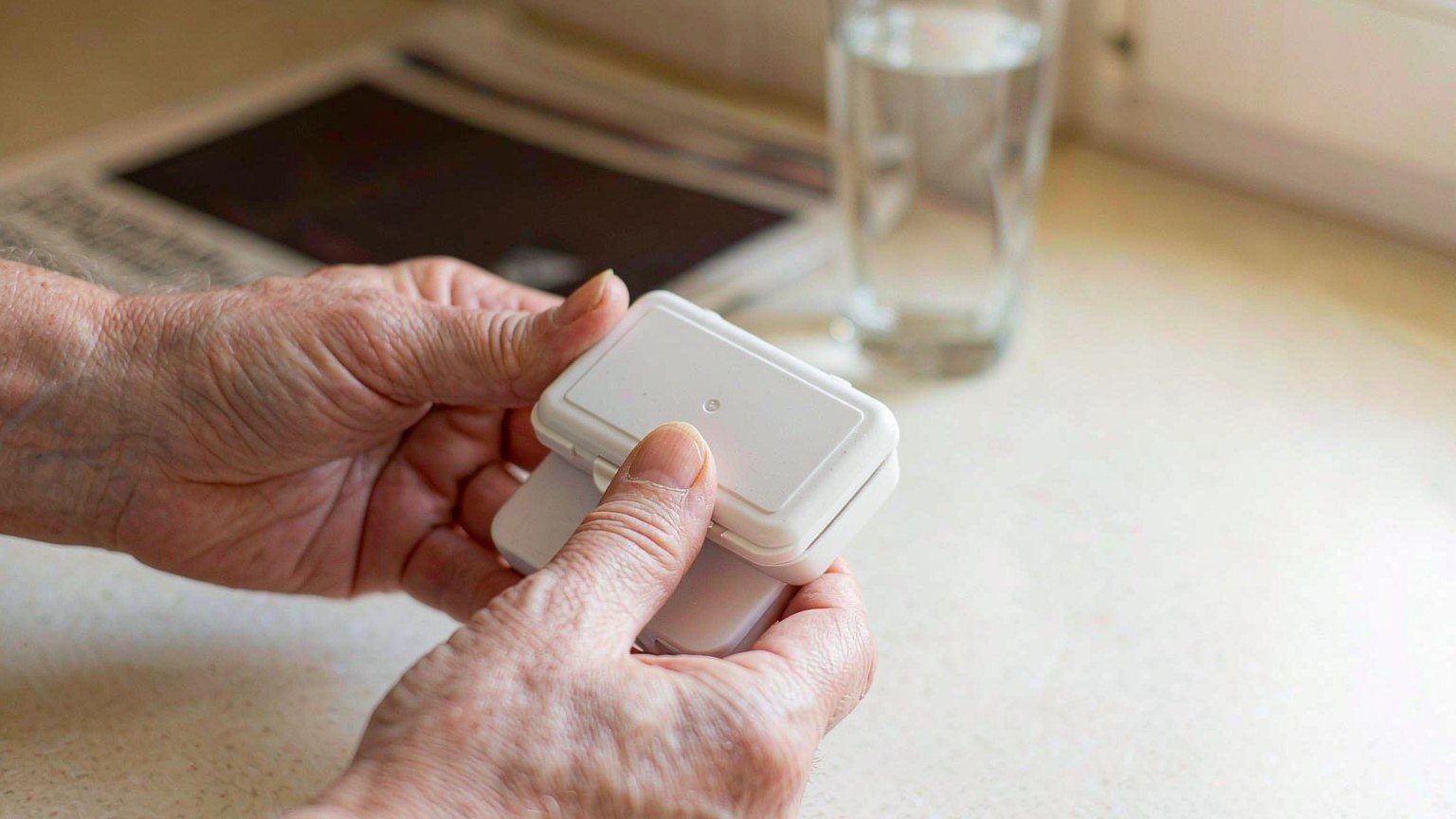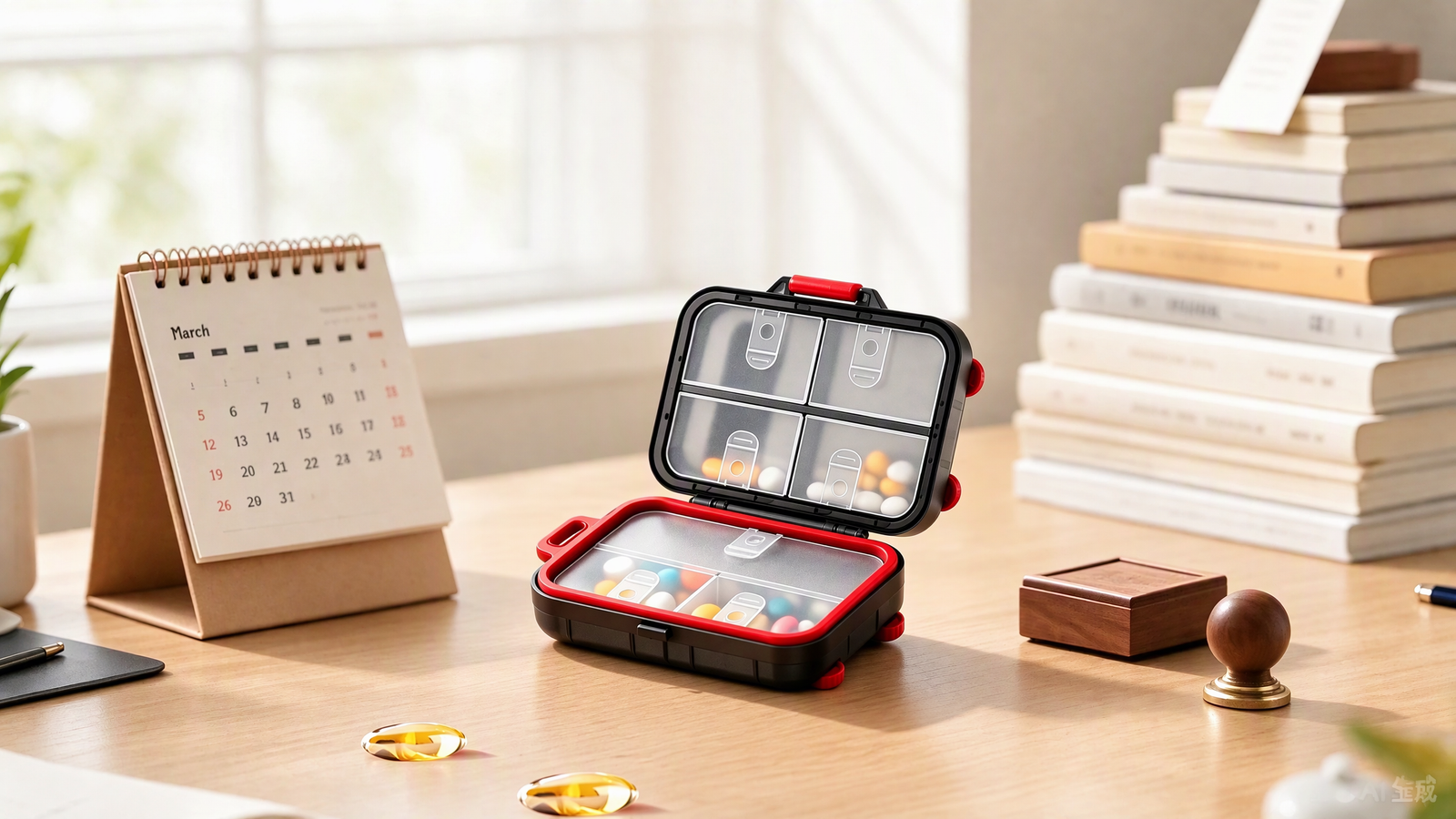







When your parent lives across town — or three states away — the hardest question of the day is also the smallest: did they actually take it? You can call, but a phone call measures reassurance, not reality. A connected (smart) pill box is the first tool that turns that daily guess into something you can actually see. Here is what it does, who it helps, and where the hype ends.
The gap a phone call can’t close
Medication non-adherence is one of the most expensive and deadly problems in healthcare. The World Health Organization has long estimated that around half of people with chronic conditions do not take their medicine as prescribed, and a 2024 review of systematic reviews puts the economic fallout at roughly $100–300 billion per year in the United States alone, with non-adherence linked to about 125,000 deaths annually Frontiers in Pharmacology, 2024. The numbers are staggering, but for a family they land in a quieter place: you simply don’t know whether today’s dose happened.
That is the real gap. Most adherence problems are not defiance — they are forgetting, confusion across five different bottles, or feeling fine and assuming the pill isn’t doing anything. None of that shows up on a phone call. A connected pill box is designed to make the invisible visible.
What a connected pill box actually does
Strip away the marketing and the mechanism is simple. A connected pill box has a sensor — often in the lid or the compartment — that records when a dose is removed and from which slot. That event is timestamped and sent to an app that a family member or caregiver set up in advance. If the scheduled dose doesn’t happen, the app sends an alert. Some newer devices go further and try to confirm the dose was taken, not just opened, because “the box is empty” and “the medicine is in them” are not the same fact UC Davis Health, 2026.
The evidence base is building. A randomized controlled trial at the University of Pennsylvania tested a connected pillbox that detects when pills are removed from its wells, measuring adherence over six months ClinicalTrials.gov NCT02593032. And real-world adherence programs using electronic pillboxes have cut missed-dose rates substantially — one multi-center study found an electronic-pillbox group missed only 17% of doses versus about 30% under usual care, with older adults being the group most willing to use the device Digital Medication Adherence Guideline (China).
What it does not do matters just as much: it is not a diagnosis, it doesn’t replace a clinician, and it can’t fix a treatment someone can’t afford or doesn’t trust. It is a window, not a cure.
For families: know in real time, step in before a missed dose becomes an ER visit
For the adult child who fills the pill case on weekends, the value is peace of mind that used to require a drive across town. A connected box tells you the morning dose was taken — or that it wasn’t, while there is still time to call. That same-day signal is the difference between “I’ll find out at next week’s visit” and “I can text Dad right now.”
It also reduces the quiet anxiety that drives so many reminder calls. Caregivers in the UC Davis trial described the relief of finally knowing a dose went down without constantly checking UC Davis Health, 2026. And the stakes are not just emotional: patients with lower adherence are more than 2.5 times as likely to be readmitted to the hospital within 30 days, and non-adherence is implicated in up to a quarter of all U.S. hospitalizations ScienceInsights, healthcare compliance review.
If a connected box isn’t in the budget yet, start with the free version of the same idea: a simple weekly organizer plus a check-off habit you build together How to Set Up a Weekly Pill System for a Parent With Memory Loss. The connected box is the upgrade that removes the manual signing — not a different job.
For the care team: adherence data that reaches the clinic before the next appointment
Today, a doctor often learns a patient has been missing doses only at the next appointment — or, worse, after a readmission. Medication-related problems account for about 16% of 30-day hospital readmissions, and a large share of those are preventable ScienceInsights, healthcare compliance review. The connected box changes the timing: instead of a vague “I think I’ve been taking them,” the clinician can see a plain adherence report — doses taken on time over the last 30 days — and act on it.
That might mean adjusting a dose, addressing a side effect the patient didn’t mention, or simply knowing the treatment isn’t failing — the patient just isn’t reaching the bottle. Researchers call this the “last mile of care”: the part that happens at home, unwatched, where most medication errors actually occur UC Davis Health, 2026.
The honest caveat: this only works if the patient consents to share the data, and many clinics aren’t yet set up to receive a adherence feed from a consumer device. But the direction is clear, and the families who bridge that gap today — by bringing a printed or screenshot adherence summary to appointments — already give their doctors a sharper picture than most.
The honest limits
A connected pill box is a support, not a substitute for a relationship with a clinician — and a few limits are worth saying out loud:
- Privacy. Someone decides who sees the data. That should be the patient, with the family invited in — not the other way around.
- Setup burden. Most devices need a tech-comfortable person to fill, connect, and troubleshoot. The benefit flows to the parent; the setup work lands on the adult child.
- Cost and coverage. These devices are rarely free, and insurance rarely pays. The math only works if it prevents one expensive event.
- Evidence. Not every “smart” health gadget is proven. A UC Davis researcher warned that many devices are sold to the public with no evidence they actually work UC Davis Health, 2026 — so judge a product by its study, not its slogan.
- Scope. These devices report whether a dose left the compartment; they do not control who can open it. That is a different problem — access control rather than adherence — and we took it apart separately: Who can open your pill box?.
What you can do today
You don’t have to wait for the perfect connected box to start closing the visibility gap. A straightforward weekly organizer makes doses visible at home right now, and pairing it with a simple take-log builds the same habit a sensor would set up a weekly pill system. Megastep’s current organizer line is built for exactly this — clear compartments, a schedule you can see at a glance Aluminum Alloy Slide-Out Drawer Pill Organizer.
And the connected piece is coming. Our Smart line is in development — purpose-built around the problem above: letting families and clinicians see adherence without hovering, and catching a missed dose while there is still time to act. Always There means being present for the dose that matters, even when you’re miles away.
Sources
- Frontiers in Pharmacology (2024), review of systematic reviews on medication nonadherence — economic and clinical consequences: frontiersin.org/articles/10.3389/fphar.2024.1370359/full
- UC Davis Health (2026), clinical trial of an AI-assisted medication device for older adults with memory loss: health.ucdavis.edu
- ClinicalTrials.gov, NCT02593032 — Effects of Use of a Connected Pillbox On Medication Adherence (UPenn / TowerView Health RCT): clinicaltrials.gov/study/NCT02593032
- Digital Medication Adherence Technology Guideline (China) — electronic pillbox efficacy and older-adult preference: guide.medlive.cn/guideline/34844
- ScienceInsights, Why Is Compliance Important in Healthcare? — readmissions and adherence economics: scienceinsights.org
This article is for information only and is not medical advice. Medication decisions — including whether a connected device fits your situation — should be made with a clinician or pharmacist. Always follow the prescribed regimen and contact a healthcare professional with questions about a specific treatment.