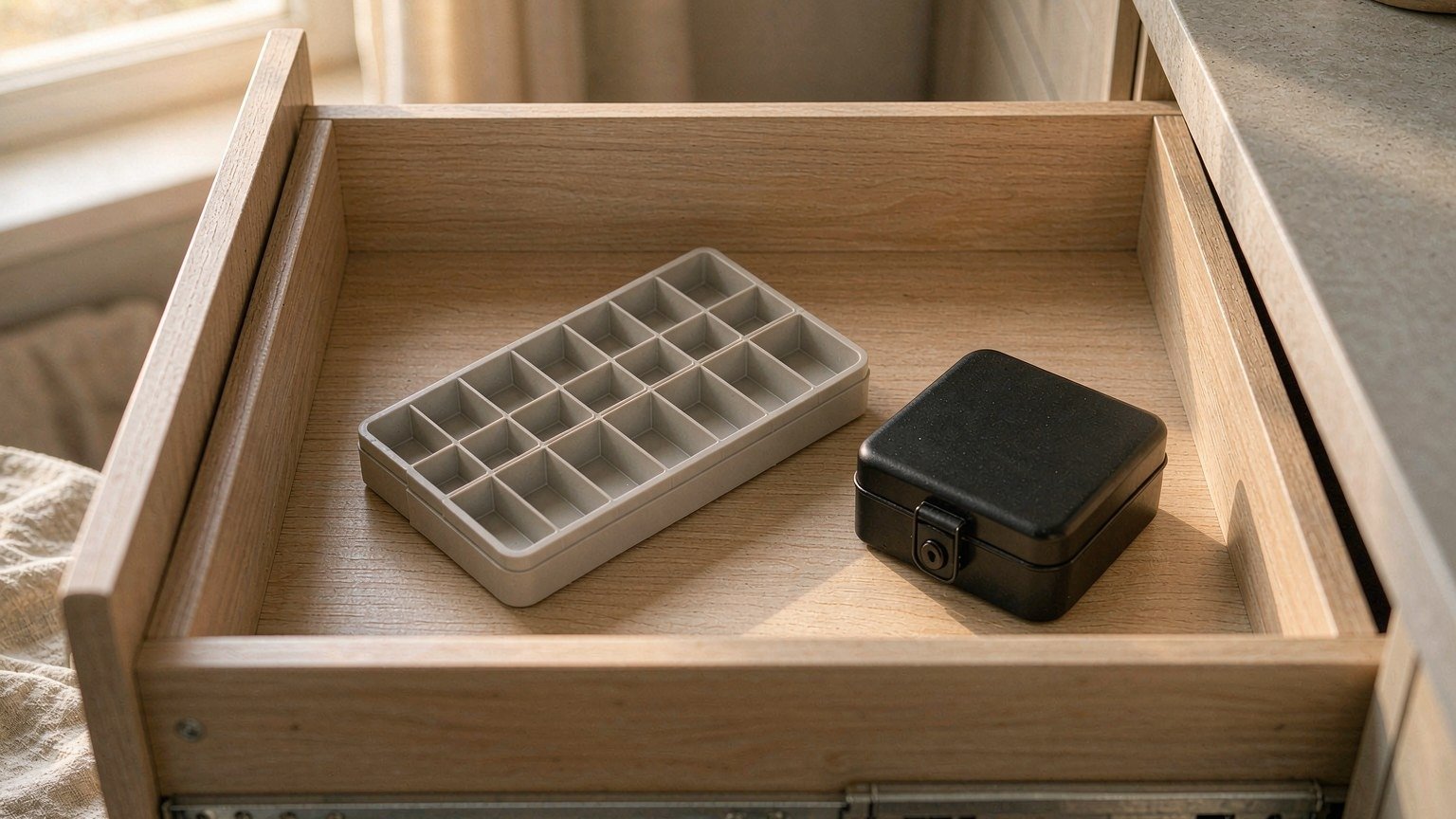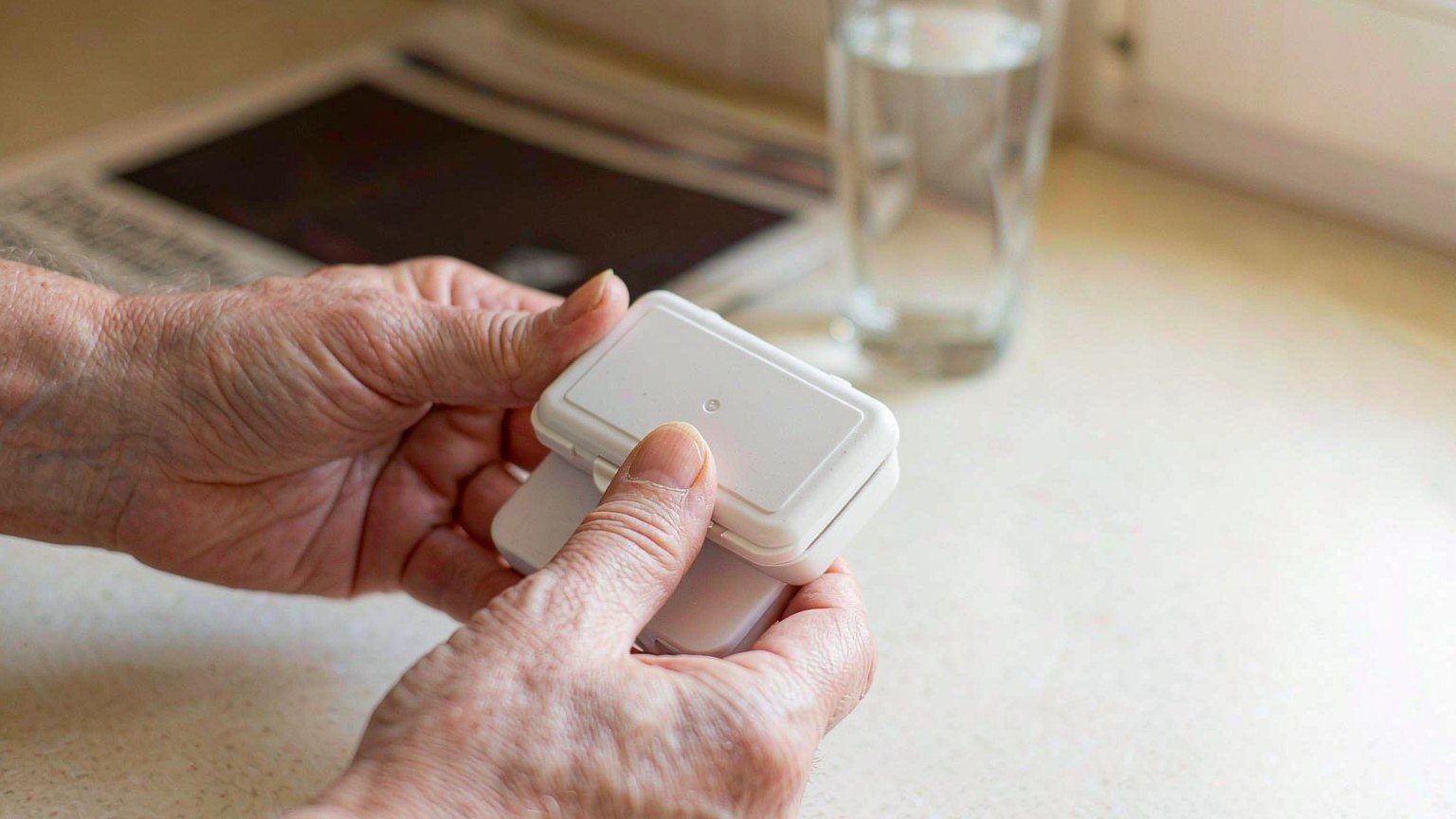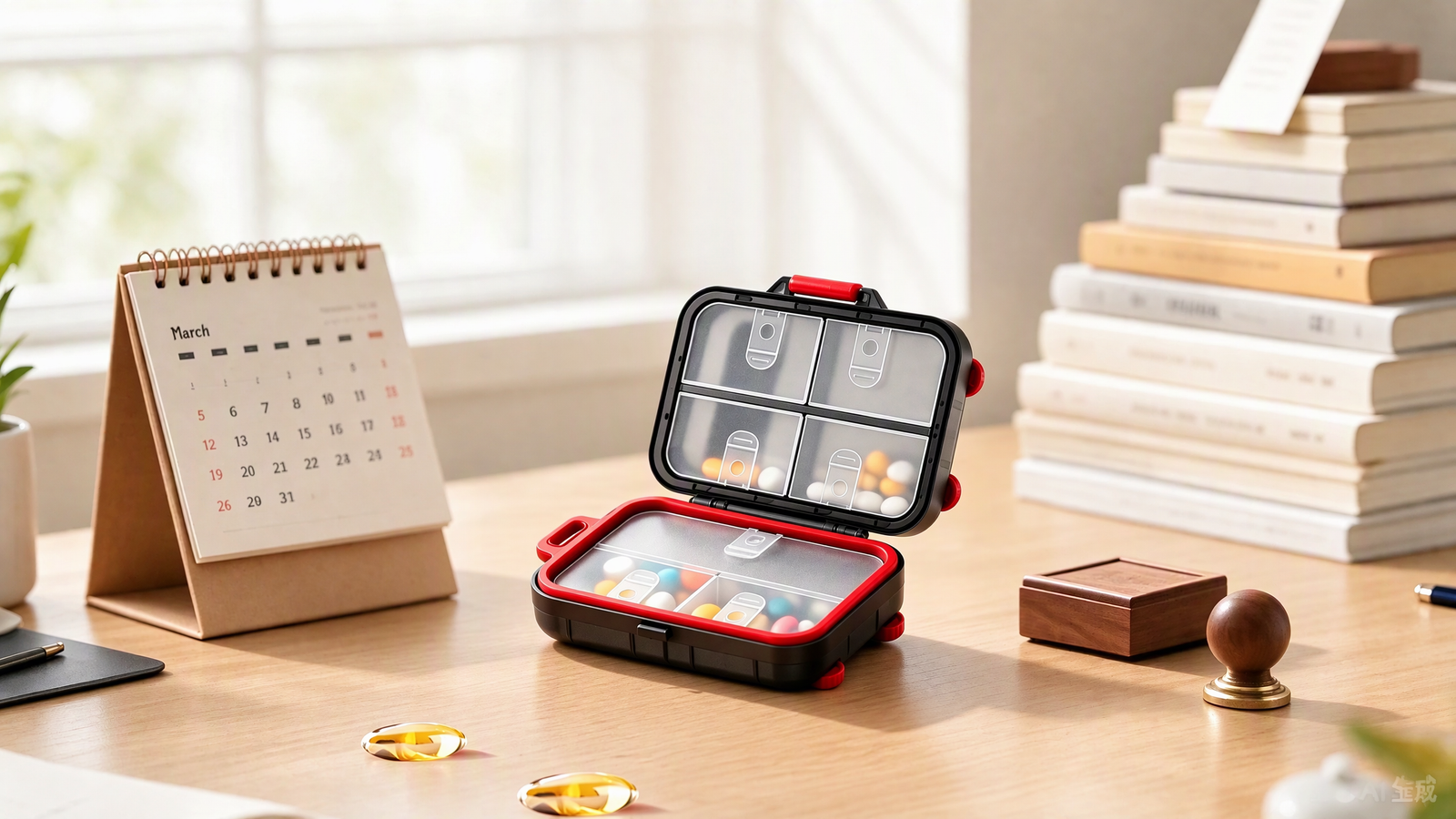







When flu moves through the house, the medicine cabinet fills up fast. There is the fever reducer, the antiviral the doctor prescribed, rehydration salts for the child who will not drink, and the cough syrup someone grabbed on the way home. With two or three people sick at once, it is easy to lose track of whose dose is whose — and that is exactly when mix-ups happen.
Why flu season turns one pill box into a family problem
A single weekly box works when one person takes one steady prescription. It falls apart in flu season, when every member of the house may be on a different clock: Dad’s fever reducer every six hours, the toddler’s weight-based dose twice a day, Grandma’s heart pills that must not sit next to the cold medicine. The more people and the more products, the more a plain “one box for everyone” setup invites a wrong pill into the wrong mouth.
Divide by person first, then by medicine
The layout that causes the fewest errors is not “all the fever reducers together, all the vitamins together” across the whole family. It is by person. Give each member their own section or their own small box, and inside that, separate the morning, noon, and evening doses. When a child asks for medicine at 3 p.m., you are reaching for their spot, not scanning a shared tray wondering which white tablet belongs to whom.
Keep adult and children’s medicines in separate compartments
This step carries the most weight. Young children explore with their mouths, and unsupervised medicine ingestion is the leading cause of medication-related emergency visits for U.S. kids aged five and under (CDC, PROTECT Initiative). On top of that, children are not small adults: liquid acetaminophen made for kids is dosed by weight, and an adult product can hold far too much for a toddler (MedlinePlus, Acetaminophen). Keep children’s meds in their own locked-away compartment, never loose on the counter next to the grown-up bottles. If a visitor’s bag holds medicine, ask them to keep it out of reach too — purses and backpacks are a common source of toddler exposures.
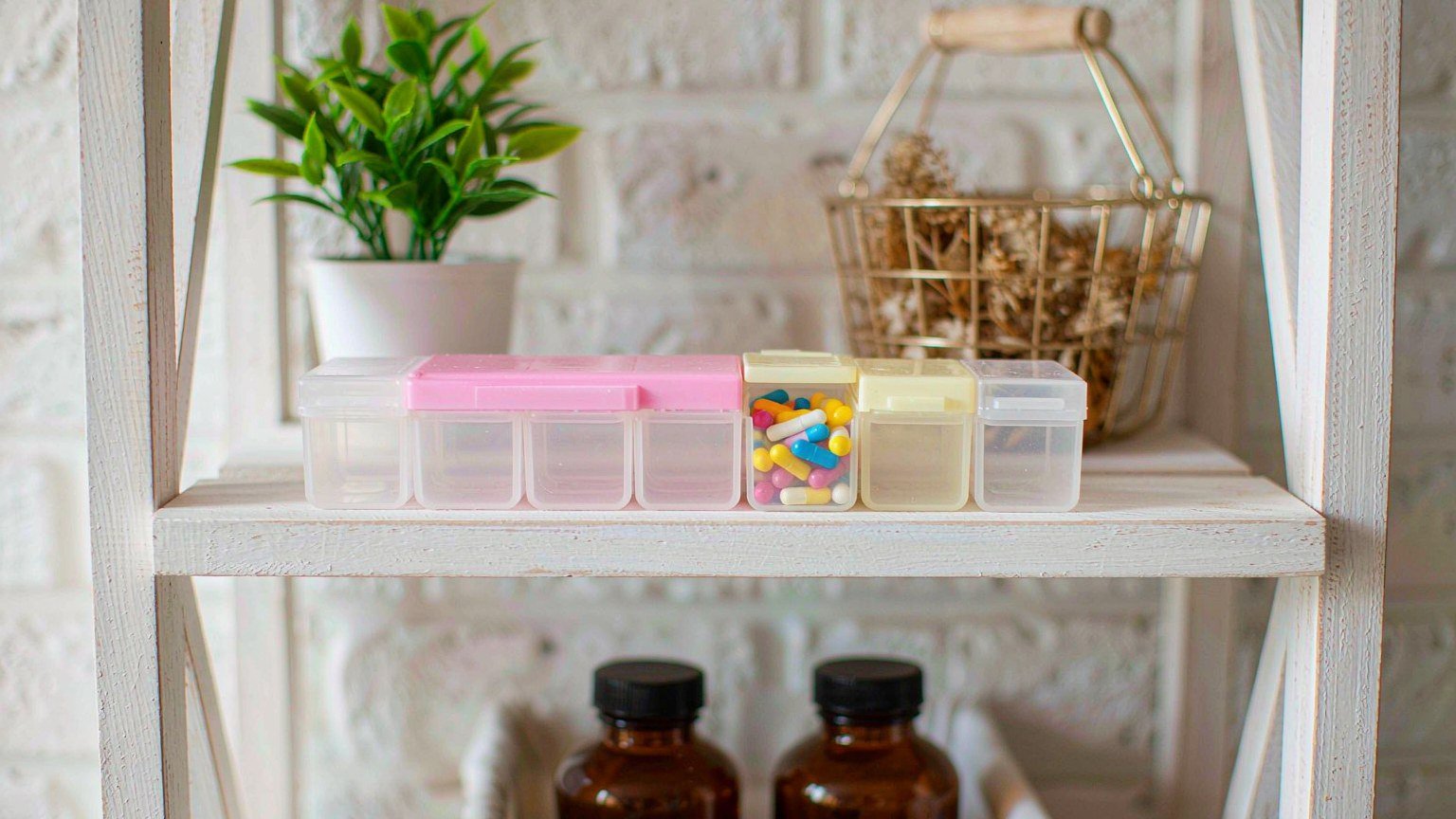
Don’t mix fever reducers, antivirals, and rehydration salts
Three common flu-season medicines do very different jobs, and confusing them is a real risk:
- Fever reducers (acetaminophen / ibuprofen). Acetaminophen alone sits in more than 600 over-the-counter and prescription products, including many cold-and-flu combos. The U.S. FDA warns against taking more than one acetaminophen-containing product at the same time, because doubling up can push past the 4,000 mg daily limit and damage the liver (FDA, Acetaminophen). Always read the active ingredients before stacking a pill on top of a syrup.
- Antivirals (oseltamivir and similar). These are prescription, and they work best started within 1–2 days of symptom onset — so they belong in their own clearly labeled spot, not mixed into the daily vitamin tray (CDC, Treating Flu with Antiviral Drugs).
- Oral rehydration salts. Fever and sweating flush fluids out, especially in children and older adults. The WHO recommends oral rehydration salts to prevent or treat that dehydration (WHO, Oral rehydration salts). Keep the packets with the rest, but mark them as “fluid,” not “pill.”
One drug family per compartment, label each, and never pour two products into the same slot just because they look alike.
Let one weekly box carry the whole household
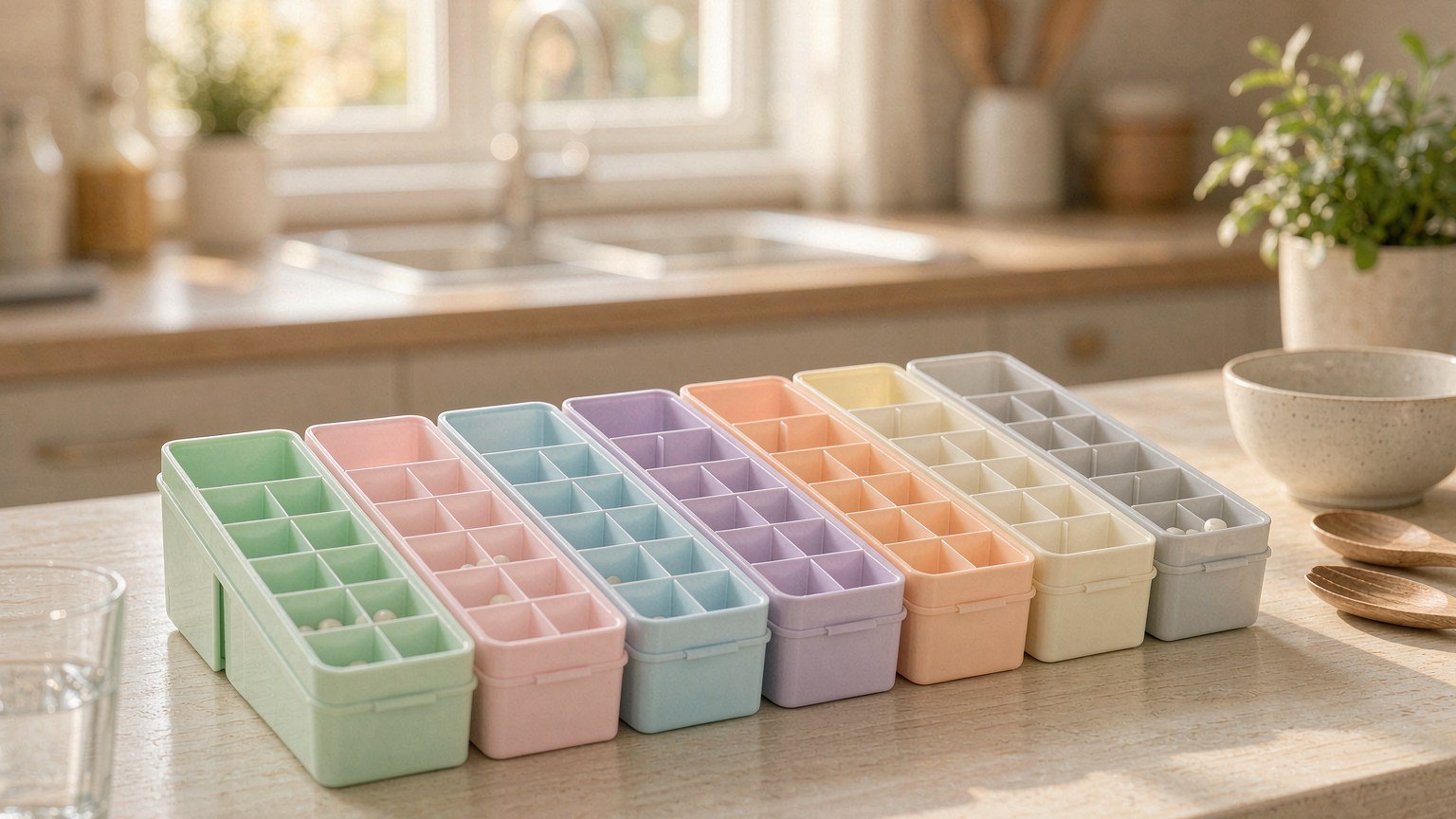
You do not need a separate organizer per person cluttering the shelf. A weekly box with enough compartments can hold the whole household if you assign each person a row or a marked section, then refill it the same way every week. If you are rebuilding your routine after a cabinet clean-out, the same box does the daily job once the expired stock is gone (see our medicine clean-out guide). For a parent or grandparent who needs a steadier system, the “one filler, one log” approach keeps a single person in charge of the whole family’s doses (set up a weekly pill system).
A 10-second daily check prevents double dosing
Before each round of doses, do a quick scan: whose compartment, what date, and has this slot already been tipped out today? That habit is your backup against “I think I already gave that.” Remember the acetaminophen ceiling is a daily total across everything you take — a tablet plus a cold syrup can add up faster than people expect (FDA, Acetaminophen). Ten seconds of looking beats a late-night trip to the ER.
Make the box itself the safety system
When the whole family is on medicines at once, the organizer stops being a convenience and becomes the control point. A weekly box with clearly divided, spill-resistant compartments lets you assign each person a section and see at a glance what has been taken and what has not. Our aluminum alloy slide-out drawer pill organizer is built for exactly this: separate drawers per day, a slide-out design that will not tip the wrong pills out, and a solid case that survives a busy household. Set it up once, label each section by name, and flu season gets a lot less chaotic.
This article is for general information only and is not medical advice. Doses, age limits, and drug interactions vary by person and product. Follow the label and your healthcare provider, and call your local poison help line if you suspect an overdose.
Sources
- U.S. FDA — Acetaminophen: safe use, including “do not use more than one acetaminophen-containing product at a time” and the 4,000 mg daily limit. fda.gov
- CDC — Treating Flu with Antiviral Drugs (start within 1–2 days of symptom onset). cdc.gov
- WHO — Oral rehydration salts, to prevent or treat dehydration. who.int
- CDC PROTECT Initiative — unsupervised medicine ingestion as the leading cause of medication-related ED visits in young children. cdc.gov
- MedlinePlus — Acetaminophen, including weight-based dosing for children and not giving adult products to kids. medlineplus.gov